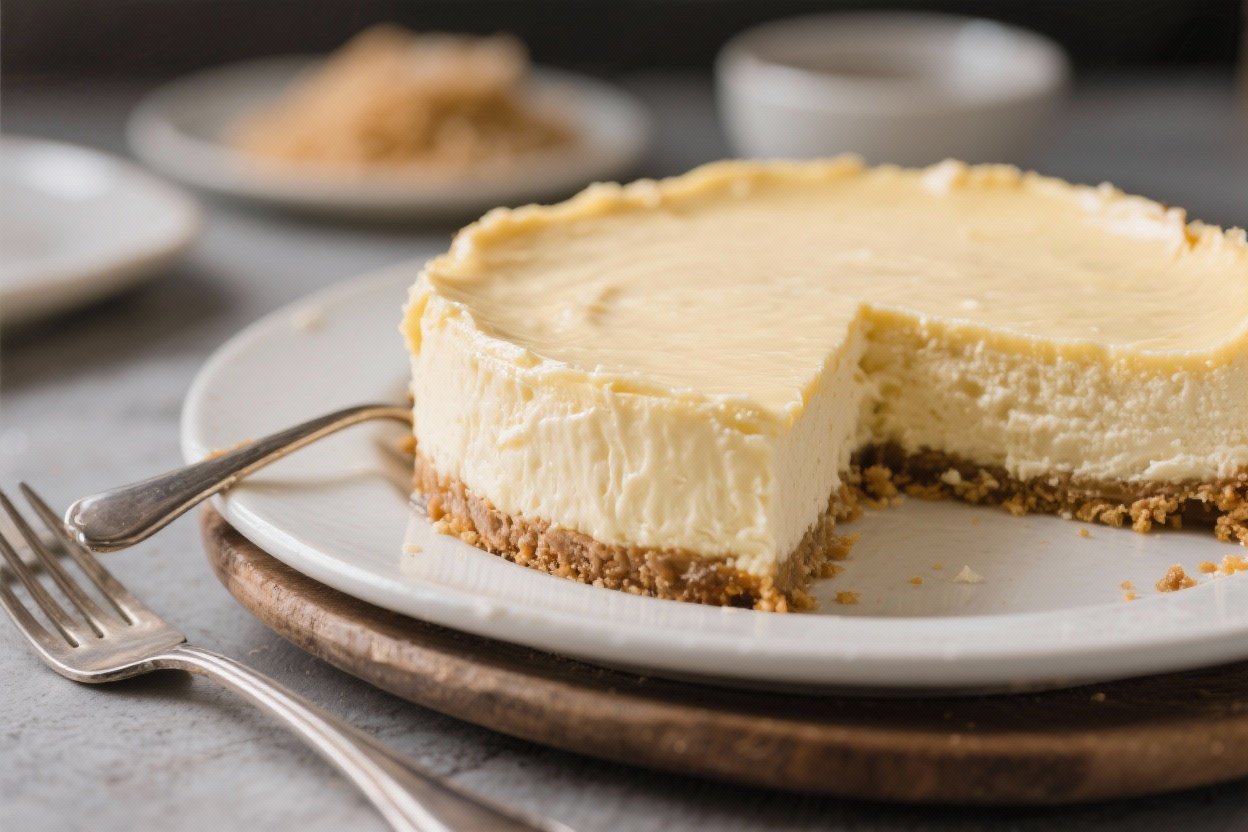
No-Stress Cheesecake Recipe That Always Sets Perfectly – Simple, Reliable, and Creamy
If you’ve ever worried about cracks, soggy crusts, or a cheesecake that won’t set, this recipe changes all that. It’s creamy, smooth, and foolproof, with a set you can count on every time. No special equipment beyond a mixer and a pan, and no complicated steps.
You’ll get a bakery-level cheesecake with simple, clear instructions. It’s the kind of recipe you make once and keep for life.
What Makes This Special
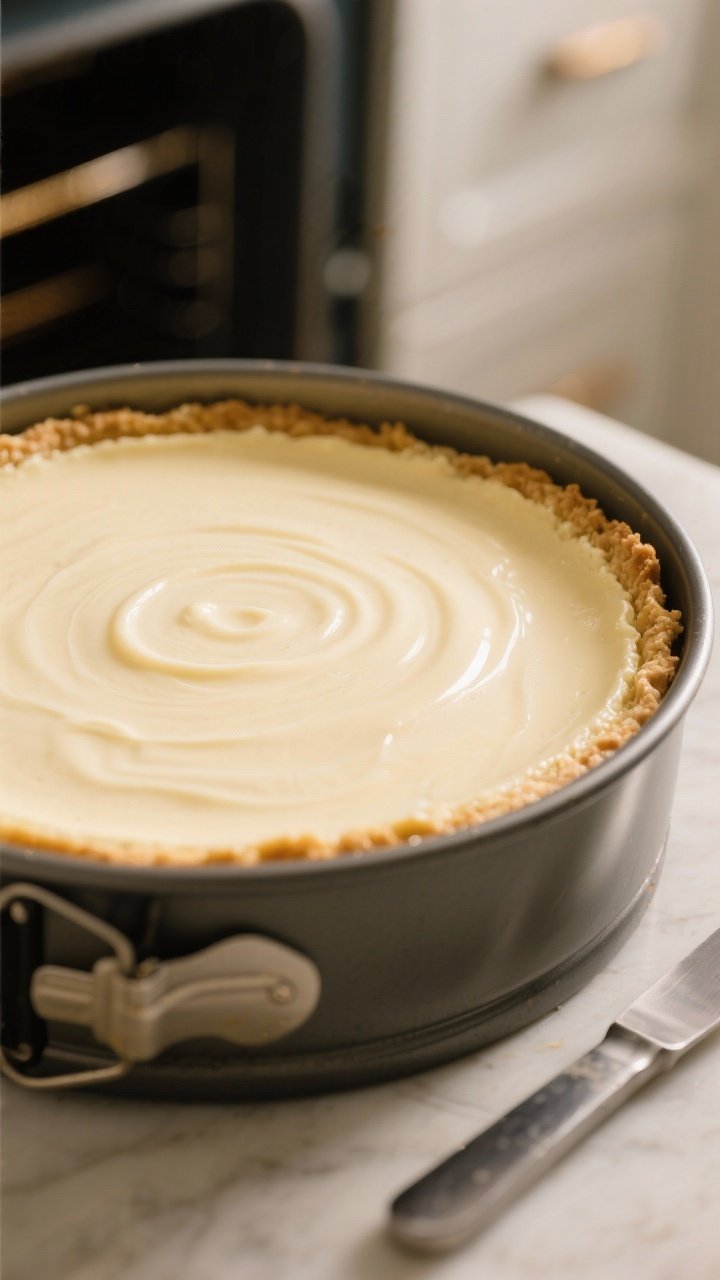
This cheesecake is designed to be low-stress and predictable. The batter uses a smart mix of cream cheese and sour cream for a silky texture that sets without fuss.
A gentle bake and a slow cool-down keep cracks at bay. The crust is buttery, crisp, and never soggy thanks to a quick pre-bake. No water bath required, but you’ll still get a smooth top and perfect slice.
What You’ll Need
- For the crust:
- 1 1/2 cups (150 g) graham cracker crumbs
- 2 tablespoons granulated sugar
- 1/4 teaspoon fine salt
- 6 tablespoons (85 g) unsalted butter, melted
- For the filling:
- 24 ounces (680 g) full-fat cream cheese, room temperature
- 1 cup (200 g) granulated sugar
- 1/4 teaspoon fine salt
- 1 tablespoon cornstarch
- 3 large eggs, room temperature
- 1 cup (240 ml) sour cream, room temperature
- 1/3 cup (80 ml) heavy cream
- 2 teaspoons pure vanilla extract
- 1 teaspoon fresh lemon juice (optional, for brightness)
- For the pan:
- 9-inch springform pan
- Nonstick spray or butter, for greasing
How to Make It
- Prep the pan and oven. Heat the oven to 350°F (175°C).
Lightly grease a 9-inch springform pan. Cut a round of parchment for the bottom if you want easier release.
- Make the crust. Stir graham crumbs, sugar, and salt. Add melted butter and mix until the texture looks like wet sand.
Press firmly into the bottom of the pan and slightly up the sides. Use the bottom of a measuring cup to compact.
- Pre-bake the crust. Bake for 10 minutes. Set aside to cool while you make the filling.
Reduce oven temperature to 325°F (160°C).
- Soften and smooth the cream cheese. In a large bowl with a hand mixer or stand mixer (paddle), beat the cream cheese on medium until completely smooth, 1–2 minutes. Scrape the bowl.
- Add sugar, salt, and cornstarch. Beat until well combined and creamy, about 1 minute. Scrape the bowl again.
The mixture should be silky with no lumps.
- Mix in eggs one at a time. Add each egg and mix on low just until incorporated before adding the next. Avoid overmixing to keep air out of the batter.
- Finish with sour cream, heavy cream, vanilla, and lemon juice. Mix on low until smooth. The batter will be pourable but thick.
Give the bowl a final scrape.
- Pour and level. Pour the filling over the crust. Tap the pan gently on the counter a few times to release air bubbles. Smooth the top with an offset spatula if needed.
- Bake low and slow. Bake at 325°F (160°C) for 55–70 minutes.
The edges should be set and slightly puffed. The center should jiggle like Jell-O, not slosh.
- Use residual heat to finish. Turn off the oven. Crack the door open a couple inches and let the cheesecake sit inside for 45 minutes.
This gradual cool prevents cracks.
- Cool completely. Remove from the oven and place on a rack. Run a thin knife around the edge to release the sides. Cool to room temperature, about 1–2 hours.
- Chill to set. Cover and refrigerate for at least 6 hours, preferably overnight.
Don’t rush this step—the texture finishes setting in the fridge.
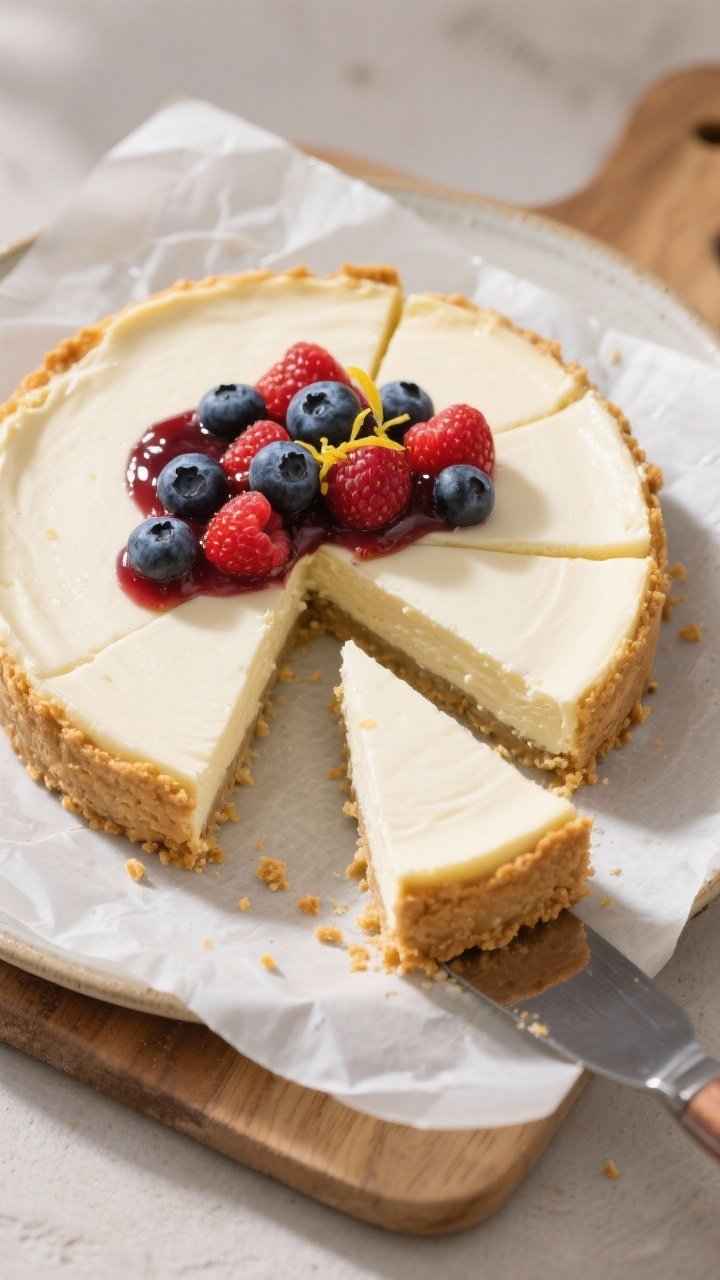
- Serve. Remove the ring. Slice with a hot, clean knife (wipe between cuts). Top with fresh berries, fruit compote, or a drizzle of caramel if you like.
How to Store
- Refrigerator: Cover tightly and keep for up to 5 days.
Store without toppings for best texture.
- Freezer: Freeze whole or in slices. Wrap tightly in plastic, then foil, and freeze up to 2 months. Thaw overnight in the fridge.
- Make-ahead: Cheesecake is best made a day ahead.
Add toppings right before serving.
Why This is Good for You
This dessert is about balance—not health food, but made with simple, recognizable ingredients. The cornstarch helps stabilize the batter, so you get a consistent, set texture without guesswork. The sour cream and heavy cream give body and creaminess, so you don’t need excessive sugar.
Portioning thoughtfully lets you enjoy something special without overdoing it.
Common Mistakes to Avoid
- Cold ingredients. Cold cream cheese leads to lumps. Bring everything to room temperature for a smooth batter.
- Overmixing. Too much air creates cracks. Mix on low and stop as soon as ingredients combine.
- Overbaking. If the center is fully set in the oven, it will be dry.
Pull it when the middle still jiggles.
- Skipping the cool-down. Rapid temperature changes cause cracks. Let it rest in the turned-off oven before cooling on the counter.
- Soggy crust. Pre-bake the crust so it stays crisp, especially if you add a fruit topping later.
Recipe Variations
- Lemon Cheesecake: Add 1 tablespoon lemon zest and 2 tablespoons lemon juice. Top with lemon curd.
- Chocolate Swirl: Melt 4 ounces dark chocolate, cool slightly, and swirl into the batter before baking.
- Biscoff Crust: Swap graham crackers for Biscoff cookies and reduce added sugar in the crust to 1 tablespoon.
- Berry Topped: Simmer 2 cups mixed berries with 3 tablespoons sugar and 1 teaspoon lemon juice until syrupy.
Cool and spoon over slices.
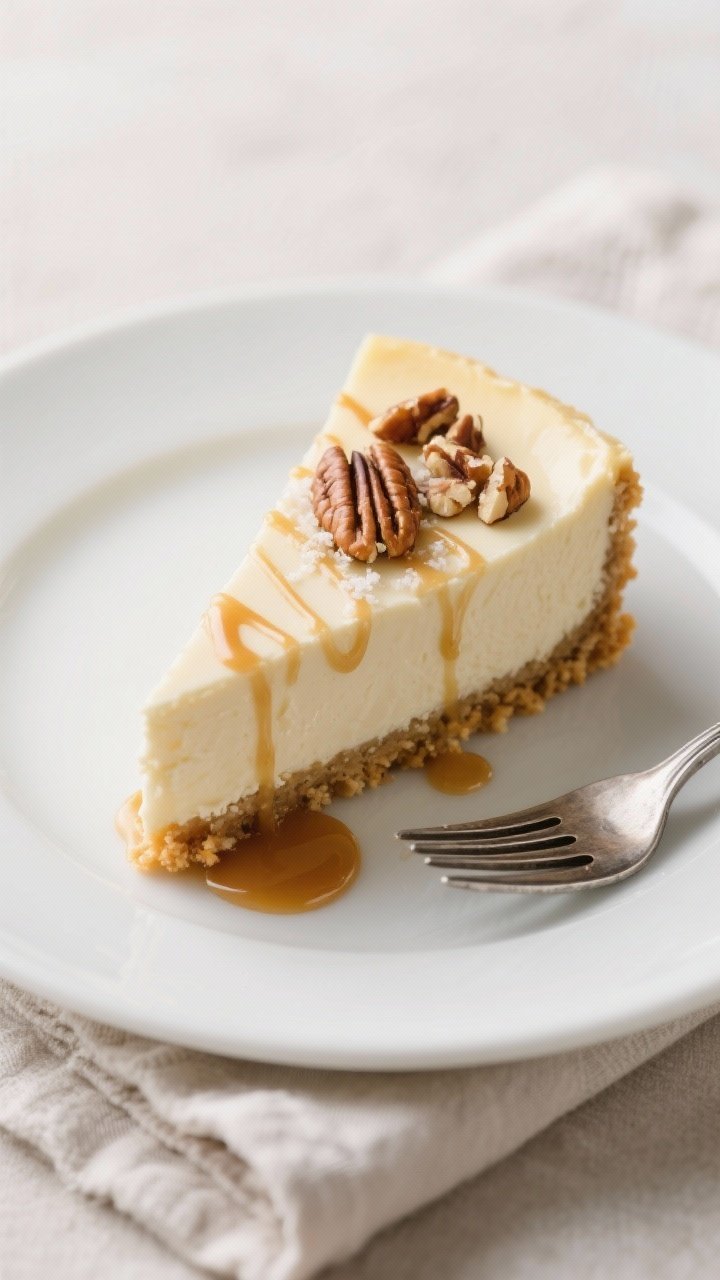
- Salted Caramel Pecan: Drizzle salted caramel over the chilled cake and finish with toasted chopped pecans.
- Mini Cheesecakes: Use a muffin tin with liners. Bake crusts 5 minutes and fillings 16–20 minutes.
FAQ
Do I need a water bath?
No. This recipe uses a lower temperature and gradual cooling to prevent cracks.
If you prefer a water bath, you can use one, but it’s not required for a smooth, set cheesecake.
How do I know when it’s done?
Look for set edges and a 2–3 inch jiggly center. It should wobble like Jell-O, not ripple like liquid. It will firm up in the fridge.
Can I use low-fat cream cheese?
Full-fat cream cheese gives the best texture and flavor.
Low-fat versions can turn grainy and don’t set as well. If you must, expect a softer set.
Why did my cheesecake crack?
Common reasons include overbaking, overmixing, or cooling too fast. Next time, pull it earlier, mix on low, and let it rest in the turned-off oven.
A fruit topping can also hide minor cracks.
Can I make it gluten-free?
Yes. Use gluten-free graham crackers or almond flour crust (1 1/2 cups almond flour, 3 tablespoons sugar, pinch of salt, 5 tablespoons butter). Bake as directed.
What if I don’t have a springform pan?
Use a deep 9-inch cake pan lined with a parchment sling for easy lift-out.
Cool completely before removing.
How long should I chill it?
At least 6 hours, but overnight is best. The texture and flavor improve with a longer chill.
Can I cut the sugar?
You can reduce the sugar in the filling to 3/4 cup without hurting the texture. Less than that may taste tangy and emphasize the cream cheese.
Final Thoughts
This no-stress cheesecake is all about reliable steps that deliver a creamy, clean slice every time.
With room-temperature ingredients, gentle mixing, and a slow cool-down, you’ll skip the drama and keep the reward. Keep this base recipe handy, then dress it up with whatever topping fits the moment. It’s simple, steady, and always a crowd-pleaser.
Printable Recipe Card
Want just the essential recipe details without scrolling through the article? Get our printable recipe card with just the ingredients and instructions.