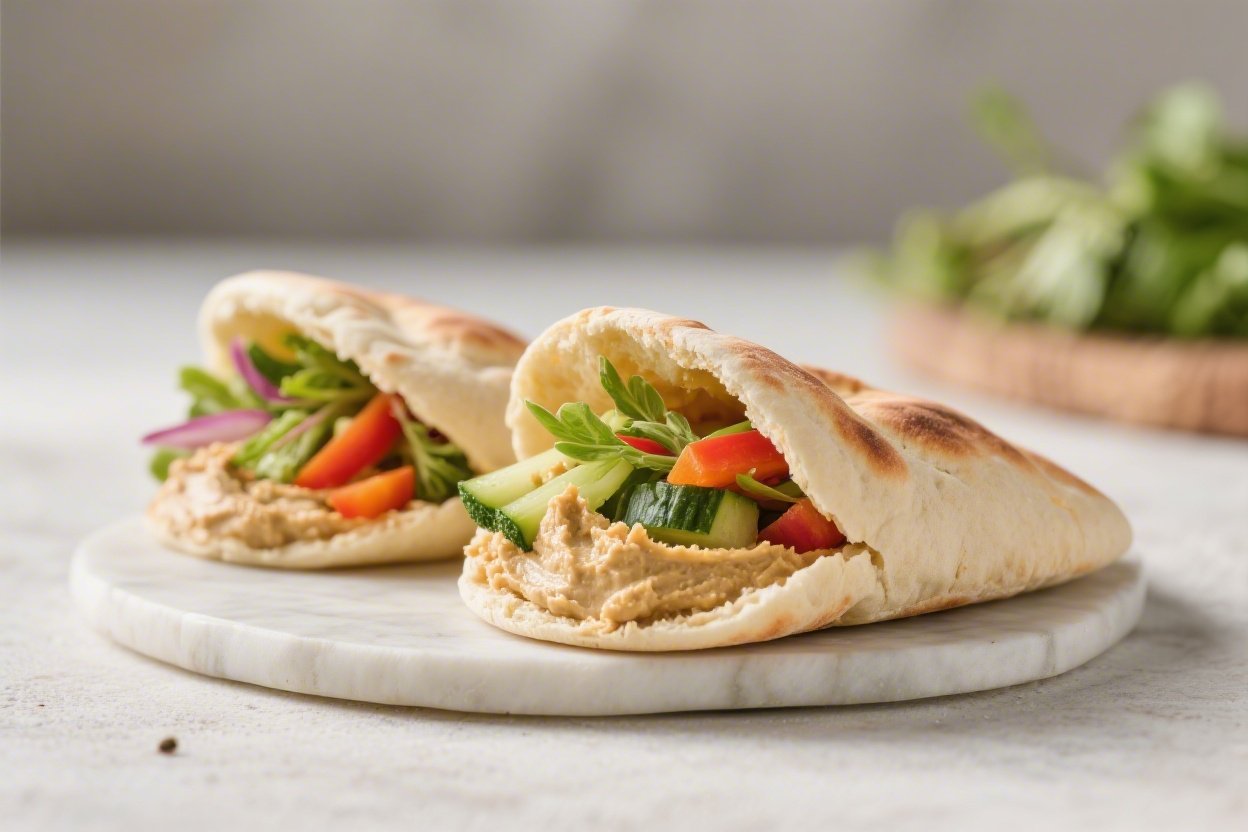
Spring Veggie Hummus Pita Pockets – Fresh, Fast, and Satisfying
These Spring Veggie Hummus Pita Pockets are the kind of meal you make once and crave all week. They’re crisp, colorful, and loaded with fresh flavor, but still simple enough for a quick lunch. No stove, no oven—just a bit of chopping and you’re done.
They’re perfect for picnics, meal prep, or days when you want something light yet filling. If you love crunchy vegetables and creamy hummus, this one’s an easy win.
What Makes This Recipe So Good
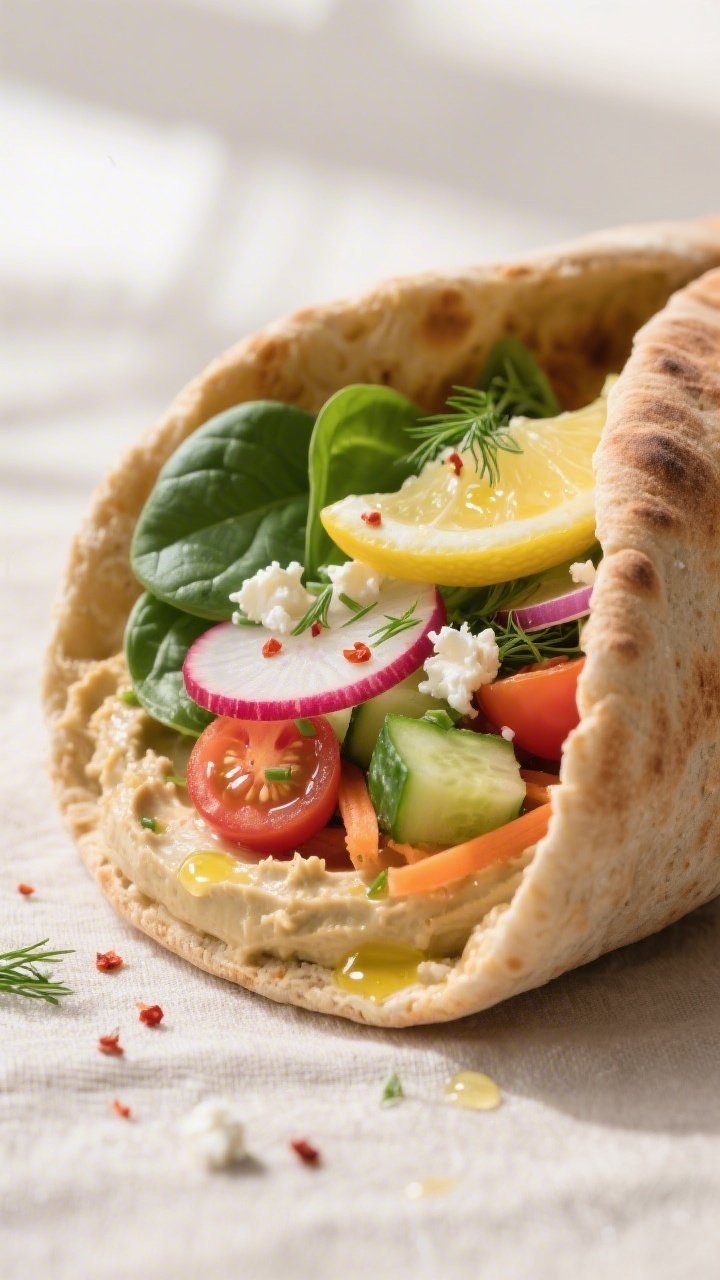
- Quick and no-cook: Everything comes together in minutes with basic prep. Ideal for busy weekdays.
- Fresh seasonal flavors: Spring vegetables like cucumber, radishes, and tender greens keep things crisp and bright.
- Balanced and satisfying: Hummus adds protein and creaminess, while pita and veggies bring fiber and crunch.
- Make-ahead friendly: Prep the veggies and hummus in advance, then assemble when you’re ready to eat.
- Flexible: Swap in what you have—this recipe works with many veggies and flavors.
Ingredients
- 4 whole wheat pitas (or white pitas, halved to form pockets)
- 1 1/2 cups hummus (classic or lemon-garlic; store-bought or homemade)
- 1 cup English cucumber, thinly sliced or diced
- 1 cup cherry tomatoes, halved
- 1 cup radishes, thinly sliced
- 1 cup shredded carrots (pre-shredded is fine)
- 1 cup baby spinach or spring mix
- 1/4 small red onion, very thinly sliced
- 1/2 cup fresh herbs (dill, parsley, or mint), chopped
- 1/3 cup crumbled feta (optional, for a salty finish)
- 2 tablespoons extra-virgin olive oil
- 1 tablespoon fresh lemon juice (plus extra wedges for serving)
- 1/2 teaspoon ground cumin (optional)
- Salt and black pepper, to taste
- Red pepper flakes (optional, for heat)
Instructions
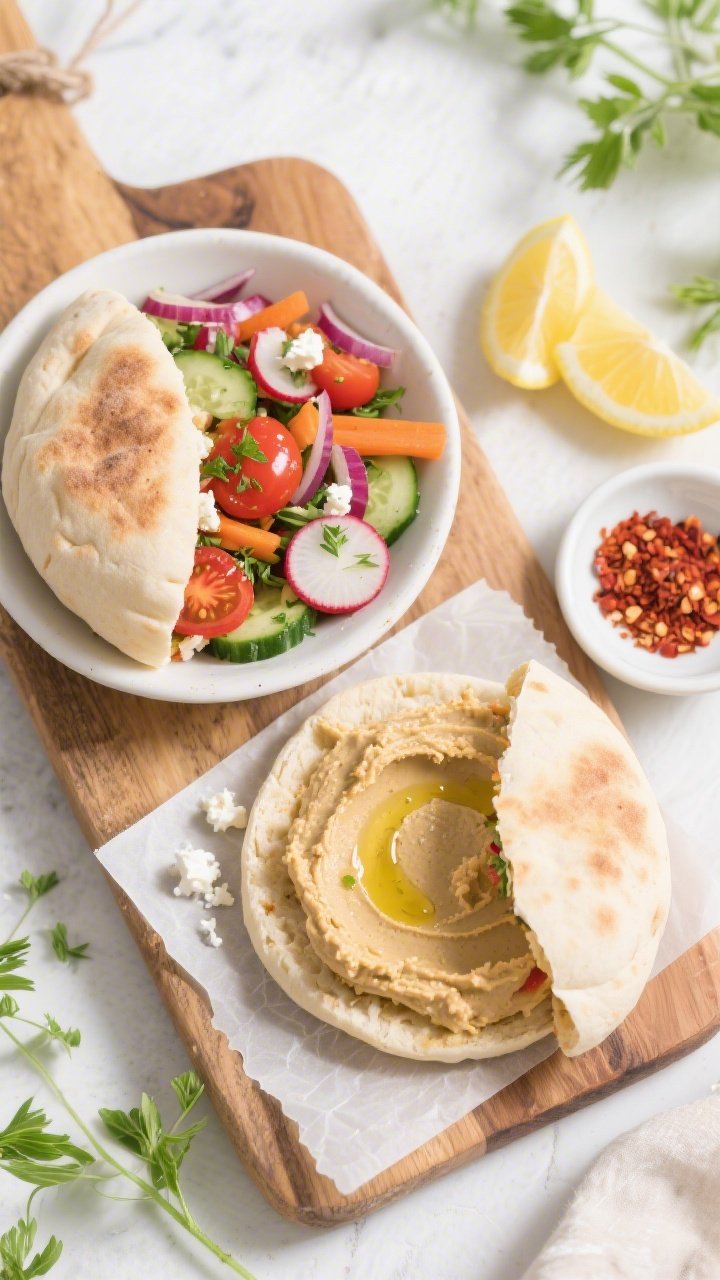
- Prep the veggies: Wash and slice the cucumber, tomatoes, radishes, and onion.
Shred the carrots if needed. Pat everything dry so the pitas don’t get soggy.
- Make a quick lemon drizzle: In a small bowl, whisk olive oil, lemon juice, cumin, a pinch of salt, and black pepper. This brightens the veggies and ties the flavors together.
- Toss the veggies: In a mixing bowl, combine cucumber, tomatoes, radishes, carrots, red onion, and herbs.
Drizzle with the lemon mixture and toss gently. Taste and adjust seasoning.
- Warm the pitas (optional): Lightly warm on a dry skillet for 30–60 seconds per side or in the toaster for a minute. Warm pitas are softer and less likely to tear.
- Spread the hummus: Cut each pita in half to form pockets.
Carefully open each pocket and spread 2–3 tablespoons of hummus inside the walls of the pita. This creates a barrier against moisture.
- Fill the pockets: Add a small handful of greens, then spoon in the veggie mixture. Don’t overpack—aim for a snug, not stuffed, pocket.
- Finish and serve: Sprinkle with feta and red pepper flakes if using.
Give each pocket a gentle squeeze of lemon. Serve right away.
How to Store
- Veggies: Store the chopped vegetables and herbs in an airtight container with a paper towel to absorb moisture. They’ll stay crisp for 2–3 days.
- Dressing: Keep the lemon-olive oil mixture separate and add just before assembling to prevent sogginess.
- Hummus: Refrigerate in a sealed container for up to 5–7 days.
- Pitas: Store at room temperature for 2–3 days or freeze for up to 2 months.
Toast to refresh.
- Assembled pockets: Best eaten right away. If packing for lunch, assemble up to 2 hours before eating and wrap snugly in parchment.
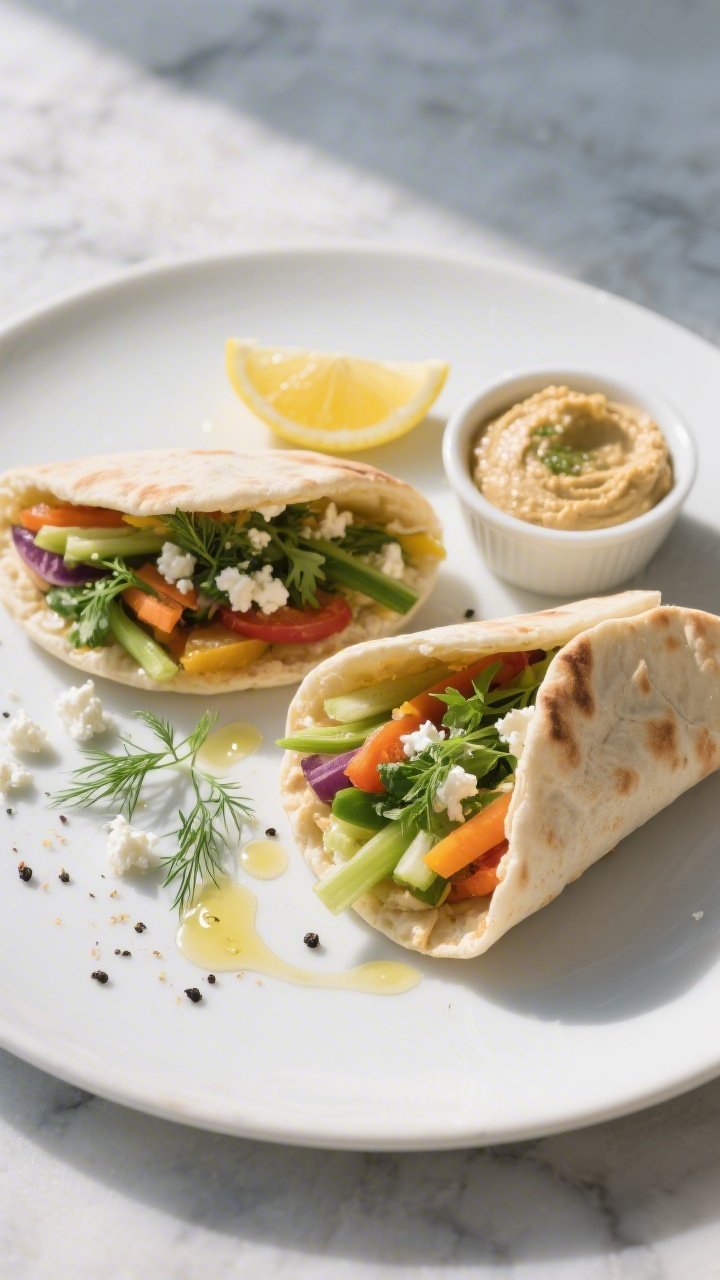
Health Benefits
- Plant-powered protein: Hummus, made from chickpeas, provides protein and fiber that help you stay full without feeling heavy.
- Fiber-rich: Whole wheat pita and a variety of vegetables support digestion and steady energy.
- Healthy fats: Olive oil and tahini in hummus offer unsaturated fats that support heart health.
- Micronutrient boost: Radishes and spinach bring vitamin C and folate, carrots offer beta carotene, and tomatoes add lycopene.
- Lower-sodium option: Making your own hummus or choosing a low-sodium version keeps salt in check.
Common Mistakes to Avoid
- Overstuffing the pockets: Too much filling causes tearing and mess. Keep a bit of space so the pita holds its structure.
- Skipping the hummus barrier: Spreading hummus inside the pita walls prevents moisture from soaking through.
- Wet vegetables: If your veggies are watery, pat them dry.
Excess moisture leads to soggy pockets.
- Thick onion slices: Slice onions very thin to add flavor without overpowering the other ingredients.
- Forgetting acidity: A splash of lemon lifts the whole pocket. Without it, flavors can taste flat.
Variations You Can Try
- Mediterranean crunch: Add sliced olives, chopped roasted red peppers, and extra dill. Swap feta for crumbled goat cheese.
- Spicy harissa: Stir a teaspoon of harissa or sriracha into the hummus and top with pickled onions.
- Green goddess: Use herbed hummus (blend basil, parsley, and a squeeze of lemon into plain hummus) and add avocado slices.
- Protein boost: Add grilled chicken strips, canned tuna, or roasted chickpeas for extra protein.
- Pickle party: Toss in quick-pickled cucumbers or radishes for extra tang and crunch.
- Gluten-free option: Use gluten-free pita or wrap the filling in large lettuce leaves or gluten-free tortillas.
- Roasted veggie twist: If you want something cozier, roast asparagus, zucchini, and cherry tomatoes, then cool slightly before stuffing.
FAQ
Can I use another spread instead of hummus?
Yes.
Baba ganoush, whipped feta, or a white bean spread all work well. Keep in mind you may lose some of the protein and fiber that hummus provides.
How can I keep the pita from tearing?
Warm the pita briefly so it’s pliable, then cut gently and open the pocket with your fingers. Spread hummus first and avoid overfilling.
Thicker pitas are more durable than very thin ones.
What if I don’t like radishes?
Swap them for thin-sliced bell pepper, snap peas, or extra cucumber. The goal is to keep a crunchy element for texture.
Is this recipe good for meal prep?
Absolutely. Chop the veggies, mix the dressing, and portion the hummus in advance.
Store everything separately and assemble just before eating to keep it fresh.
Can I make this dairy-free?
Yes. Simply skip the feta or use a dairy-free alternative. The rest of the ingredients are naturally dairy-free.
What type of hummus is best?
Classic or lemon-garlic hummus pairs well with spring vegetables.
If you like bolder flavors, try roasted red pepper or spicy hummus.
How can I add more protein without meat?
Add roasted chickpeas, sliced hard-boiled eggs, or edamame. You can also use high-protein or Greek-style hummus.
Final Thoughts
Spring Veggie Hummus Pita Pockets are the kind of meal that proves simple can be special. With fresh produce, a creamy spread, and a bright squeeze of lemon, every bite tastes clean and satisfying.
Keep the components on hand and you’ll always have a quick, colorful lunch ready to go. Whether you’re packing a picnic or powering through a busy day, these pockets deliver freshness without fuss.
Printable Recipe Card
Want just the essential recipe details without scrolling through the article? Get our printable recipe card with just the ingredients and instructions.