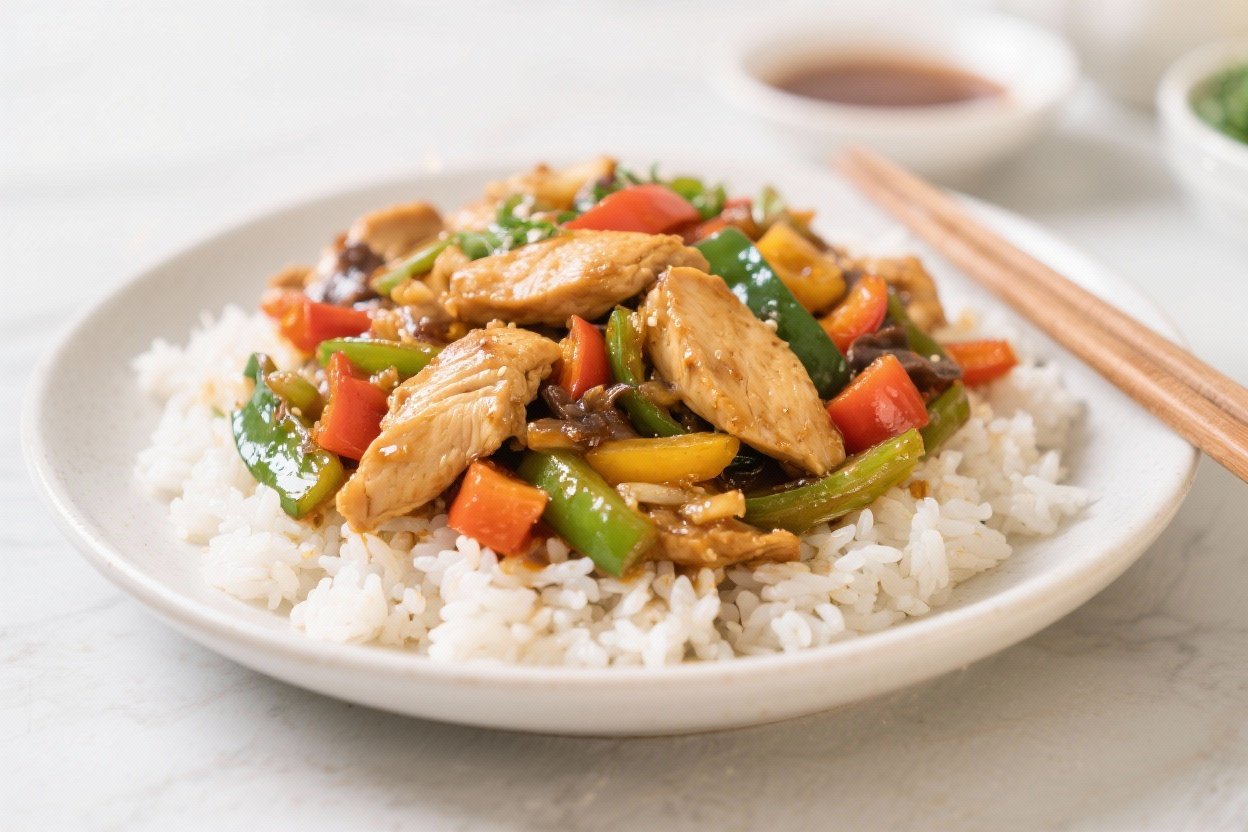
Budget-Friendly Chicken and Vegetable Stir-Fry Over Rice – Quick, Tasty, and Affordable
This stir-fry is the kind of weeknight meal that makes you feel like you’ve got it together. It’s fast, colorful, and easy on the wallet without tasting like a compromise. You’ll use simple pantry staples, a few fresh vegetables, and a small amount of chicken to create a balanced, satisfying bowl.
The sauce is savory with a touch of sweetness, and everything lands over warm rice for a comforting finish. It’s a flexible recipe that works with what you already have.
Why This Recipe Works

This recipe stretches a small amount of chicken by pairing it with hearty vegetables and rice, so you get great value and a full plate. The sauce uses common ingredients like soy sauce, garlic, and a hint of sugar to deliver big flavor without fancy items.
Quick cooking over medium-high heat keeps the vegetables crisp and the chicken tender. Best of all, it’s designed to be flexible, so you can swap in budget-friendly produce and still get a delicious result.
Ingredients
- For the rice:
- 1 1/2 cups uncooked white or brown rice
- 3 cups water (or as package directs)
- Pinch of salt (optional)
- For the stir-fry:
- 1 pound boneless, skinless chicken thighs or breasts, thinly sliced
- 2 tablespoons neutral oil (vegetable, canola, or peanut), divided
- 1 medium onion, sliced
- 2 cups mixed vegetables (e.g., bell peppers, broccoli, carrots, snap peas, or frozen mixed veg)
- 2 cloves garlic, minced
- 1 teaspoon fresh ginger, grated (or 1/2 teaspoon ground ginger)
- For the sauce:
- 1/4 cup low-sodium soy sauce
- 1 tablespoon brown sugar or honey
- 2 teaspoons rice vinegar or apple cider vinegar
- 1 teaspoon sesame oil (optional but great for flavor)
- 1/2 cup chicken broth or water
- 1 tablespoon cornstarch (for thickening)
- 1/4 teaspoon red pepper flakes or a dash of hot sauce (optional)
- To finish:
- Sliced green onions (optional)
- Toasted sesame seeds (optional)
- Fresh lime or lemon wedge (optional)
How to Make It

- Cook the rice. Rinse the rice under cold water until it runs clear. Combine with water and a pinch of salt in a pot or rice cooker.
Cook according to package directions and keep warm.
- Prep the chicken and vegetables. Slice the chicken thin so it cooks quickly and stays tender. Cut vegetables into bite-sized pieces for even cooking.
- Mix the sauce. In a small bowl, whisk soy sauce, brown sugar, vinegar, sesame oil, broth, cornstarch, and red pepper flakes. Set aside near the stove.
- Heat the pan. Place a large skillet or wok over medium-high heat.
Add 1 tablespoon oil and swirl to coat.
- Sear the chicken. Add the sliced chicken in a single layer. Season lightly with salt and pepper. Cook 3–4 minutes, stirring once or twice, until just cooked through.
Transfer to a plate.
- Stir-fry the aromatics. Add the remaining 1 tablespoon oil to the pan. Add onion and carrots (or the firmest vegetables) first. Stir-fry 2 minutes.
- Add remaining vegetables. Toss in bell peppers, broccoli, snap peas, or frozen mix.
Cook 2–3 minutes until crisp-tender.
- Add garlic and ginger. Stir for 30 seconds until fragrant. Don’t let them burn.
- Return chicken and add sauce. Pour in the sauce and toss everything to coat. Cook 1–2 minutes until the sauce thickens and glazes the chicken and vegetables.
- Finish and serve. Taste and adjust seasoning with more soy sauce or a squeeze of citrus.
Spoon over warm rice. Garnish with green onions and sesame seeds if you have them.
Keeping It Fresh
Leftovers keep well for up to 4 days in the fridge. Store rice and stir-fry separately if possible to avoid soggy grains.
Reheat in a skillet over medium heat with a splash of water to loosen the sauce, or microwave in short intervals, stirring in between. For longer storage, freeze the stir-fry (without rice) in airtight containers for up to 2 months, then reheat on the stove.

Benefits of This Recipe
- Budget-friendly: Uses affordable chicken cuts and stretches the protein with vegetables and rice.
- Fast: Cooks in about 20 minutes once your ingredients are prepped.
- Flexible: Works with fresh or frozen veggies, and the sauce relies on pantry staples.
- Balanced: Protein, fiber, and complex carbs keep you full and energized.
- Meal-prep friendly: Scales up easily and reheats well for lunches.
What Not to Do
- Don’t overcrowd the pan. Too much at once lowers the heat and steams the ingredients. Cook in batches if your skillet is small.
- Don’t skip slicing thinly. Thick pieces of chicken or large vegetable chunks cook unevenly.
- Don’t add the garlic too early. It burns quickly and turns bitter.
Add near the end.
- Don’t forget the cornstarch. It’s key for a glossy, clingy sauce that coats everything.
- Don’t overcook the vegetables. Crisp-tender is the goal for the best texture and color.
Recipe Variations
- Extra-savory mushroom boost: Add sliced mushrooms with the onions and a splash of Worcestershire or a bit of miso for depth.
- Peanut or cashew twist: Stir in 2 tablespoons peanut butter to the sauce, or toss in roasted peanuts/cashews at the end for crunch.
- Teriyaki-style: Increase brown sugar to 2 tablespoons and add a bit more cornstarch for a sweeter, stickier glaze.
- Spicy garlic: Add more red pepper flakes or a teaspoon of chili-garlic sauce. Finish with a squeeze of lime.
- Veg-heavy version: Halve the chicken and double the vegetables. Still filling, still flavorful.
- Noodle swap: Skip the rice and toss the stir-fry with cooked noodles (udon, ramen, or spaghetti) plus a splash of cooking water.
- Gluten-free: Use tamari or certified gluten-free soy sauce, and confirm your broth and vinegar are GF.
FAQ
Can I use frozen vegetables?
Yes.
Use them straight from the freezer. Add them after the onions, and cook a minute longer to evaporate excess moisture before adding the sauce.
What’s the best chicken cut for this?
Chicken thighs are more forgiving and stay juicy, but breasts work well if sliced thinly and not overcooked.
Do I need a wok?
No. A large, heavy skillet works great.
Just keep the heat medium-high and avoid crowding the pan.
How can I make it lower sodium?
Use low-sodium soy sauce, skip added salt, and thin the sauce with extra water or broth. Citrus at the end boosts flavor without more salt.
What if I don’t have cornstarch?
Use 2 teaspoons of flour or 1 teaspoon of arrowroot. Simmer a bit longer to thicken.
The sauce won’t be as glossy but will still taste great.
Can I make it vegetarian?
Absolutely. Use tofu or tempeh instead of chicken, or go heavy on vegetables and add edamame or chickpeas for protein.
How do I keep the chicken tender?
Slice thinly, cook quickly over medium-high heat, and pull it as soon as it’s done. You can also toss the chicken with 1 teaspoon soy sauce and 1 teaspoon cornstarch before cooking for extra tenderness.
What rice should I use?
Long-grain white rice is classic and fluffy.
Brown rice adds nuttiness and fiber. Jasmine or basmati also work well.
Wrapping Up
Budget-Friendly Chicken and Vegetable Stir-Fry Over Rice is a reliable meal that’s fast, flexible, and easy to love. With simple ingredients and a no-fuss method, it delivers big flavor without a big price tag.
Keep the sauce formula handy and swap in whatever veggies you have. You’ll have a satisfying dinner on the table in minutes, and leftovers that taste just as good tomorrow.