
Creamy Chicken Florentine Soup – Cozy, Comforting, and Satisfying
This is the kind of soup that makes weeknights feel special. It’s rich without being heavy, full of tender chicken, soft vegetables, and silky spinach that melts into every spoonful. The flavors are classic—garlic, onions, a little white wine, and Parmesan—but the texture is what keeps you coming back.
If you love a bowl that’s comforting, bright, and a little elegant, this Creamy Chicken Florentine Soup will do the trick. It’s simple to make, easy to customize, and tastes even better the next day.
What Makes This Special

- Balanced richness: Cream and Parmesan give a velvety finish, while lemon and white wine add brightness so it never feels heavy.
- Real weeknight convenience: Uses basic pantry staples and rotisserie chicken or quick-cooked chicken breasts.
- Hearty but not heavy: Veggies, spinach, and protein make it filling without weighing you down.
- Restaurant flavor at home: Classic Florentine notes—garlic, spinach, cream—come together in a cozy soup you’ll crave.
Shopping List
- 2 tablespoons olive oil
- 2 tablespoons unsalted butter
- 1 medium yellow onion, finely chopped
- 2 medium carrots, diced
- 2 celery ribs, diced
- 4 garlic cloves, minced
- 1 teaspoon dried thyme (or 2 teaspoons fresh)
- 1 teaspoon Italian seasoning (optional, but nice)
- 1/4 teaspoon red pepper flakes (optional for gentle heat)
- 1/2 cup dry white wine (such as Sauvignon Blanc) or extra broth
- 1/4 cup all-purpose flour
- 6 cups low-sodium chicken broth
- 1 cup heavy cream (or half-and-half for lighter)
- 3 cups cooked chicken, shredded or chopped (rotisserie works great)
- 4–5 cups fresh baby spinach (about 5 ounces)
- 1/2 cup freshly grated Parmesan cheese, plus more for serving
- 1 teaspoon kosher salt, plus more to taste
- 1/2 teaspoon freshly ground black pepper
- Juice of 1/2 lemon, plus wedges for serving
- Optional add-ins: 1 cup small pasta (like ditalini or orzo) or 1 can cannellini beans, drained and rinsed
Step-by-Step Instructions
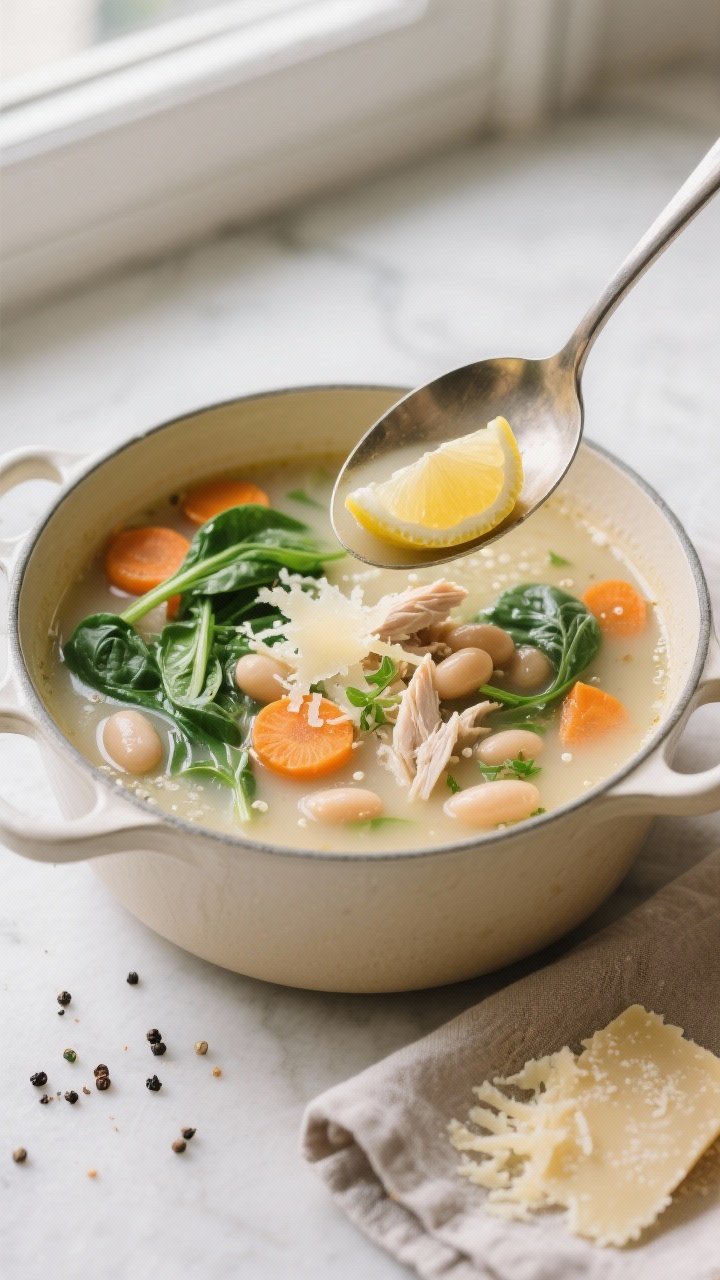
- Prep your ingredients. Chop the onion, carrots, and celery. Mince the garlic.
Shred or cube the cooked chicken. Grate the Parmesan so it melts easily.
- Sauté the aromatics. In a large pot, heat the olive oil and butter over medium heat. Add onion, carrots, and celery.
Cook, stirring occasionally, until softened and fragrant, about 6–8 minutes. Season with a pinch of salt.
- Add garlic and herbs. Stir in garlic, thyme, Italian seasoning, and red pepper flakes. Cook 30–60 seconds until the garlic smells toasty.
Don’t let it brown.
- Deglaze with wine. Pour in the white wine and scrape up any browned bits. Let it simmer for 1–2 minutes to reduce slightly and cook off the sharpness.
- Make a light roux. Sprinkle flour over the veggies and stir well to coat. Cook for 1–2 minutes, stirring, to remove the raw flour taste.
- Add broth gradually. Pour in the chicken broth slowly while stirring to avoid lumps.
Bring to a gentle simmer and cook 10 minutes to thicken slightly and soften the vegetables.
- Cook pasta or add beans (optional). If using small pasta, add it now and simmer until just al dente, stirring occasionally so it doesn’t stick. If using beans, add them now to warm through.
- Stir in chicken and cream. Add the cooked chicken and heavy cream. Simmer gently for 5–7 minutes.
Keep the heat moderate; a hard boil can cause the dairy to split.
- Add spinach and Parmesan. Stir in the spinach and cook until just wilted, about 1–2 minutes. Off the heat, add Parmesan and stir until melted and smooth.
- Finish with lemon and adjust seasoning. Squeeze in the lemon juice. Taste and season with more salt and pepper as needed.
The flavors should be cozy but bright.
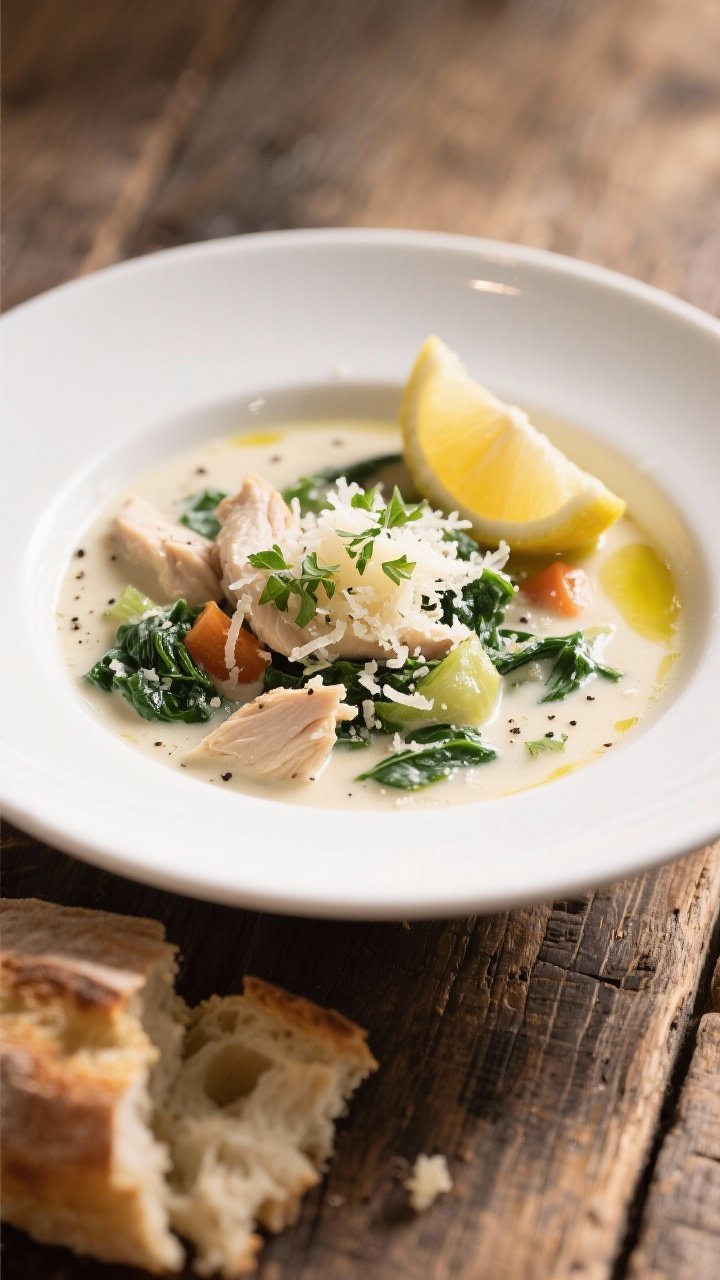
- Serve warm. Ladle into bowls and top with extra Parmesan and a crack of black pepper. Add a lemon wedge on the side if you like.
Storage Instructions
- Refrigerator: Cool completely, then store in an airtight container for up to 3–4 days.
- Reheating: Warm gently on the stove over low heat, stirring often. If it thickens, add a splash of broth or water to loosen.
- Freezing: Cream-based soups can separate when frozen.
If you plan to freeze, make the soup without the cream and spinach. Freeze up to 2 months, thaw in the fridge, then reheat and add cream and spinach just before serving.
Why This is Good for You
- Protein-rich: Chicken provides steady energy and helps keep you full.
- Vegetable boost: Carrots, celery, onions, and especially spinach deliver fiber, vitamins A and K, and minerals.
- Balanced comfort: A creamy soup that still includes whole ingredients and greens—comfort with a bit of nutrition.
- Customizable: You can lighten the dairy, add beans for extra fiber, or use whole-grain pasta for more staying power.
What Not to Do
- Don’t boil after adding cream. High heat can cause the soup to split and lose its silky texture.
- Don’t add spinach too early. It will turn dull and stringy. Add it near the end for bright color and a tender bite.
- Don’t skip fresh lemon. That little squeeze balances the richness and wakes up the flavor.
- Don’t use pre-shredded Parmesan. It often contains anti-caking agents and won’t melt smoothly.
- Don’t overcook the pasta. If using pasta, slightly undercook it—it will continue to soften in the hot soup.
Variations You Can Try
- Mushroom Florentine: Sauté 8 ounces sliced cremini mushrooms with the onions for earthy depth.
- Lighter version: Use half-and-half instead of heavy cream, and add an extra cup of broth.
Thicken with an extra teaspoon of flour if needed.
- Gluten-free: Swap flour for 1 tablespoon cornstarch mixed with 2 tablespoons cold water. Add the slurry after the broth comes to a simmer.
- Herb-forward: Stir in fresh basil or parsley with the spinach for a bright, garden-fresh finish.
- Spicy Tuscan twist: Add 1/2 teaspoon crushed red pepper and a pinch of fennel seeds. Finish with a drizzle of good olive oil.
- Potato boost: Add 2 cups small-diced Yukon gold potatoes after the broth and simmer until tender before adding cream and chicken.
- No wine: Replace with extra broth and add a splash more lemon for brightness.
FAQ
Can I use raw chicken instead of cooked?
Yes.
Dice 1–1.5 pounds of boneless, skinless chicken breasts or thighs. Sauté with a bit of oil and salt in the pot after the aromatics, until lightly browned and mostly cooked through. Remove, continue the recipe, then return the chicken with the broth to finish cooking.
What can I use instead of heavy cream?
Half-and-half works well, or use evaporated milk for a lighter but still creamy texture.
For a dairy-light option, blend 1 cup of the soup with a small cooked potato and stir it back in, then add just a splash of milk.
How do I keep the soup from curdling?
Keep the heat gentle after adding the cream, and avoid boiling. Also, temper colder dairy by adding a small ladle of hot soup to it first, then pour the warmed dairy into the pot while stirring.
Is there a good vegetarian version?
Yes. Use vegetable broth, skip the chicken, and add cannellini beans or sautéed mushrooms for protein and texture.
A Parmesan rind simmered in the broth (remove before serving) adds savory depth.
Can I make it in a slow cooker?
Yes, but add the dairy and spinach at the end. Cook aromatics and flour on the stove first for best flavor, then transfer to the slow cooker with broth and chicken. Cook on Low 4–6 hours.
Stir in cream, spinach, and Parmesan during the last 15–20 minutes.
What should I serve with it?
Crusty bread, garlic toast, or a simple green salad works perfectly. A sprinkle of extra Parmesan and a squeeze of lemon at the table ties it all together.
In Conclusion
Creamy Chicken Florentine Soup is the kind of meal that feels warm, welcoming, and easy to love. It’s simple to make, flexible with what you have, and full of flavor.
Keep it classic or try a variation—either way, you’ll have a pot of something cozy that tastes like home. Save some for tomorrow if you can; it’s even better after a night in the fridge.
Printable Recipe Card
Want just the essential recipe details without scrolling through the article? Get our printable recipe card with just the ingredients and instructions.