Pork and Apple Skillet (Light + Cozy) – Weeknight Comfort Without the Heaviness
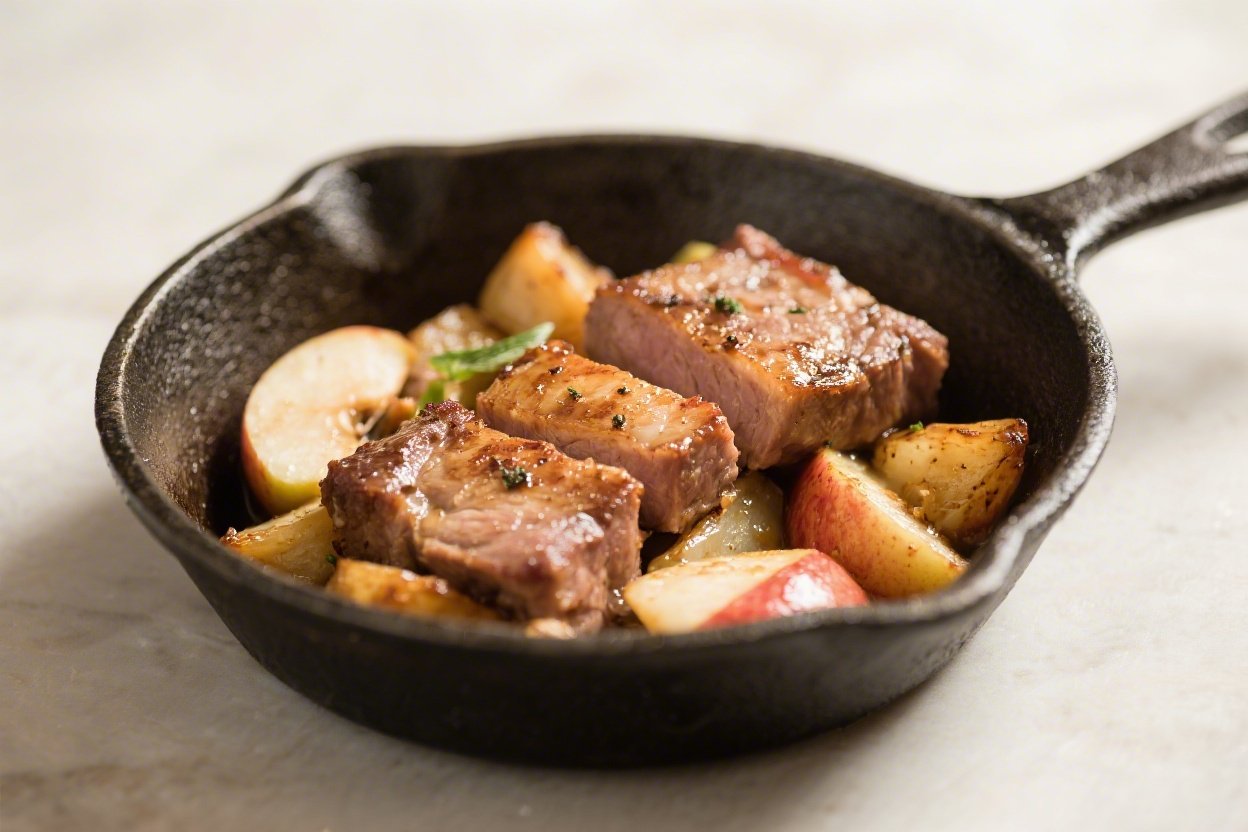
This pork and apple skillet brings warm fall vibes any night of the year. It’s bright, lightly savory, and just rich enough to feel comforting without weighing you down. Think tender seared pork, sweet-tart apples, and a quick pan sauce that tastes like you cooked all afternoon.
It’s a one-pan recipe you can make on a busy weeknight yet still serve proudly to guests. Grab a skillet and 30 minutes—you’ll be set.
What Makes This Special
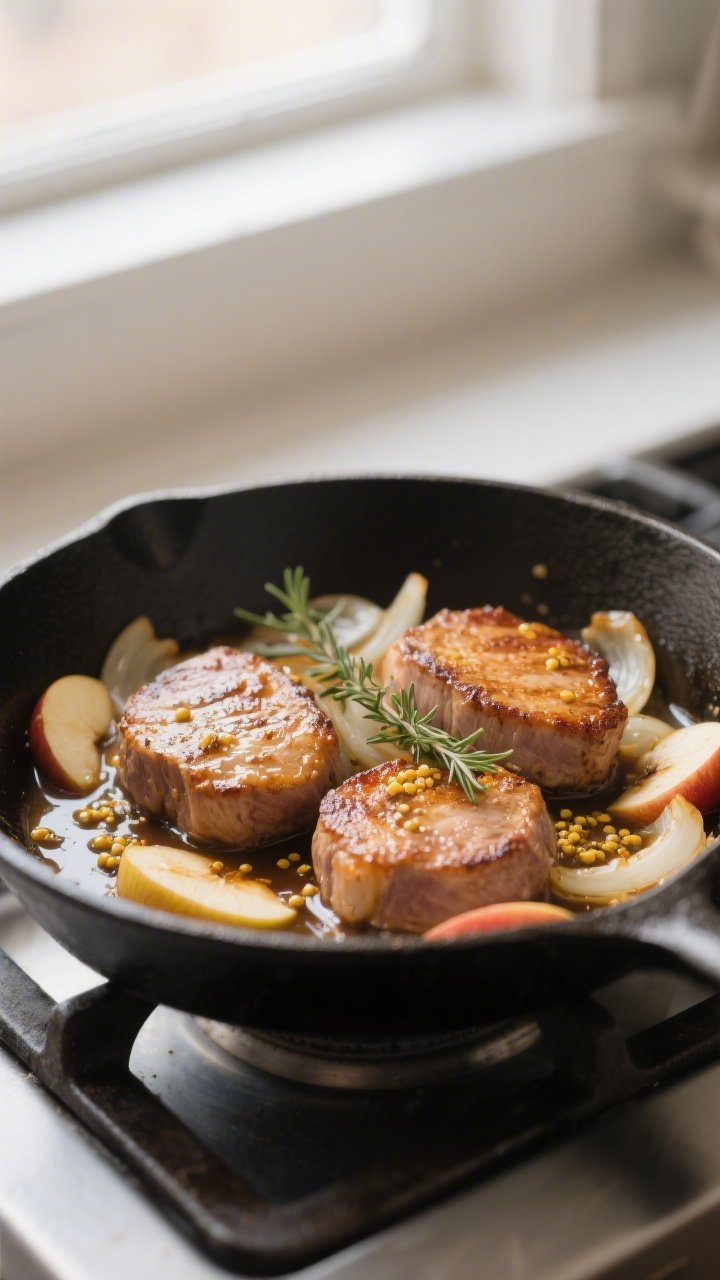
- Balanced flavor: Pork’s savory richness pairs perfectly with the gentle sweetness and acidity of apples.
- Light but satisfying: Minimal butter and a clean pan sauce keep things cozy without being heavy.
- One pan, easy cleanup: Brown, sauté, and simmer right in the same skillet.
- Flexible: Works with pork chops, tenderloin medallions, or even leftover roasted pork.
- Quick: From prep to plate in about 30 minutes.
Ingredients
- 1 to 1.25 pounds pork chops or pork tenderloin medallions (about 4 pieces, 3/4-inch thick)
- 2 crisp apples, cored and sliced (Honeycrisp, Pink Lady, or Gala work well)
- 1 medium yellow onion, thinly sliced
- 2 cloves garlic, minced
- 1 tablespoon Dijon mustard
- 1/2 cup low-sodium chicken broth
- 1/3 cup dry apple cider or unsweetened apple juice (or white wine)
- 1 teaspoon fresh thyme leaves (or 1/2 teaspoon dried)
- 1 teaspoon fresh rosemary, finely chopped (optional)
- 1 tablespoon apple cider vinegar (to finish)
- 1 tablespoon olive oil
- 1 tablespoon unsalted butter (optional but encouraged for gloss)
- Salt and black pepper, to taste
- Pinch of red pepper flakes (optional)
How to Make It

- Prep the pork: Pat the pork dry. Season both sides generously with salt and pepper.
If using tenderloin, slice into 1-inch medallions and gently flatten to even thickness for quick, even cooking.
- Heat the skillet: Set a large skillet over medium-high heat. Add the olive oil. When it shimmers, add the pork in a single layer.
Don’t crowd the pan—work in batches if needed.
- Brown the pork: Sear without moving for 2–3 minutes per side, until golden. You’re building flavor here. Transfer pork to a plate; it will finish cooking in the sauce later.
- Sauté the aromatics: Reduce heat to medium.
In the same skillet, add the onion with a pinch of salt. Cook 3–4 minutes, stirring, until it softens and picks up the browned bits. Add garlic and cook 30 seconds, just until fragrant.
- Add apples and herbs: Stir in the sliced apples, thyme, and rosemary if using.
Cook 2–3 minutes until apples soften slightly but still hold shape.
- Deglaze: Pour in the cider (or apple juice/wine). Scrape the pan to loosen any browned bits. Let it bubble for 1–2 minutes to reduce slightly.
- Build the sauce: Stir in the chicken broth and Dijon mustard.
Add a pinch of red pepper flakes if you like a little heat. Simmer 2 minutes to meld flavors.
- Finish the pork: Nestle the pork and any juices back into the skillet. Reduce heat to medium-low and simmer 3–5 minutes, turning once, until the pork is just cooked through.
Aim for 145°F internal temperature for juicy results.
- Adjust and enrich: Turn off heat. Stir in the butter for a silky finish and the apple cider vinegar for brightness. Taste and adjust salt and pepper.
The sauce should be balanced—lightly tangy, savory, and a touch sweet.
- Serve: Spoon apples, onions, and sauce over the pork. Finish with extra thyme leaves if you have them.
How to Store
- Refrigerate: Cool completely, then store in an airtight container for up to 3 days.
- Reheat gently: Warm over low heat on the stovetop with a splash of broth or water. Avoid boiling to keep the pork tender.
- Freeze: Not ideal, as apples can turn mealy after thawing.
If you must, freeze the pork and sauce without apples for up to 2 months.
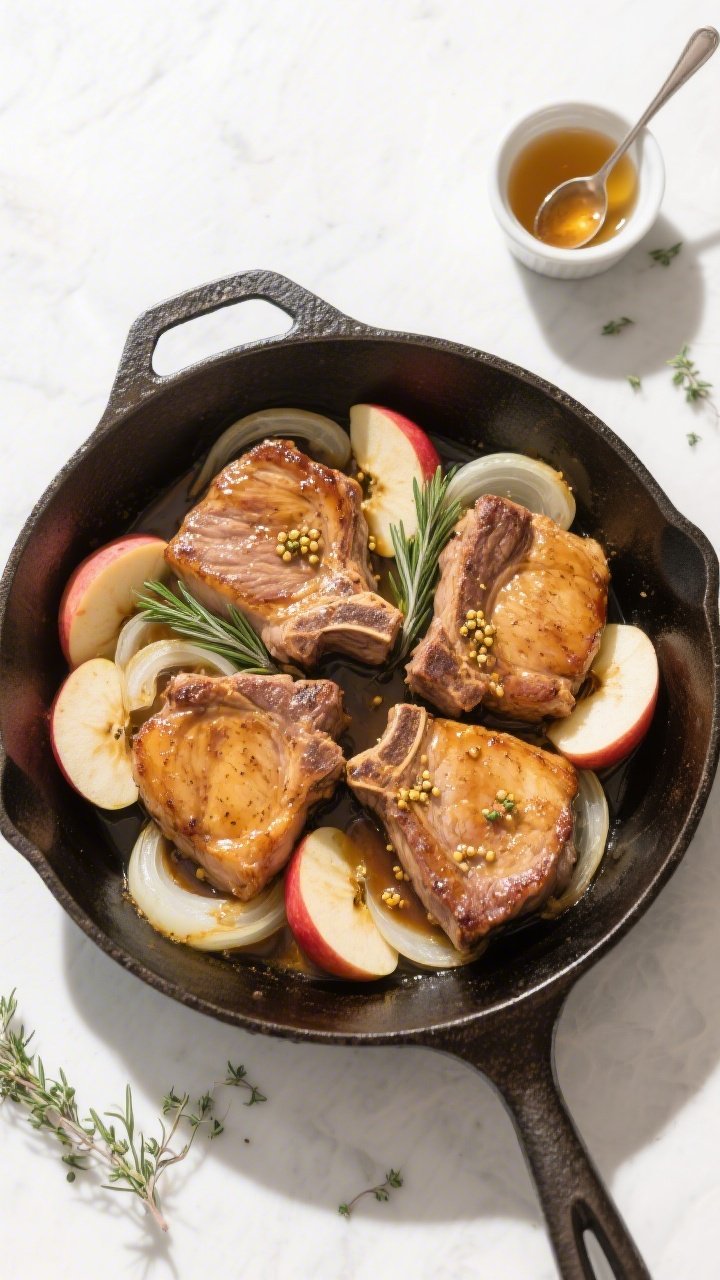
Health Benefits
- Lean protein: Pork loin and tenderloin are relatively lean cuts that support muscle repair and satiety.
- Fiber and antioxidants: Apples bring fiber and polyphenols, which support gut health and may help reduce oxidative stress.
- Lower sodium option: Using low-sodium broth keeps the dish heart-friendly while still flavorful.
- Balanced plate: Pairing protein with fruit and onions adds natural sweetness and micronutrients, reducing the need for heavy cream or excess oil.
Pitfalls to Watch Out For
- Overcooking the pork: This is the fastest way to make it dry. Pull it at 145°F and let it rest briefly in the sauce.
- Skipping the sear: Browning builds flavor. Don’t rush it, and make sure the pan is hot before adding the pork.
- Overly sweet apples: If using a very sweet apple, balance with a bit more Dijon or vinegar.
You want contrast, not dessert.
- Watery sauce: If the sauce seems thin, let it simmer uncovered for a couple of minutes before adding the pork back in, or swirl in a touch more mustard to add body.
Variations You Can Try
- Savory-forward: Add a splash of soy sauce or Worcestershire to the sauce for deeper umami.
- Herb swap: Use sage instead of thyme and rosemary for a classic fall note.
- Creamy twist: For a slightly richer finish, stir in 2 tablespoons of light cream or crème fraîche at the end instead of butter.
- All-in-one meal: Add thinly sliced fennel or shredded cabbage with the onions for extra veg.
- Grain bowl style: Serve over farro, brown rice, or quinoa to soak up the sauce.
- Apple swap: Use pears for a gentle floral sweetness and a softer bite.
- Spice it up: Add a pinch of ground mustard, smoked paprika, or five-spice for a new angle.
FAQ
What kind of pork works best?
Pork tenderloin medallions or boneless center-cut pork chops are ideal. They cook quickly and stay tender, especially when you keep them to about 3/4-inch thickness.
Do I have to use alcohol?
No. Dry apple cider adds depth, but unsweetened apple juice or extra broth works well.
If using juice, add a splash more vinegar to balance the sweetness.
Which apples are best?
Choose firm, crisp apples that hold their shape, like Honeycrisp, Pink Lady, Braeburn, or Granny Smith. Softer apples can turn mushy in the pan.
Can I make this ahead?
You can slice onions and apples in advance and store them in the fridge. Cook the dish fresh if possible for best texture, but leftovers reheat nicely with a splash of broth.
How do I know when the pork is done?
Use an instant-read thermometer.
Pull the pork at 145°F. It may have a faint blush in the center and will be juicy and safe to eat.
What can I serve with it?
Mashed or roasted potatoes, cauliflower mash, buttered egg noodles, or a simple green salad all pair well. Steamed green beans or sautéed kale round out the plate.
Can I use bone-in chops?
Yes, but they may take a bit longer.
Sear as directed, then finish simmering in the sauce until the center reaches 145°F.
How do I thicken the sauce without cream?
Let it reduce a little longer, or whisk in an extra teaspoon of Dijon. The mustard adds body and tang without heaviness.
Is this gluten-free?
Yes, as written. Just make sure your broth and mustard are certified gluten-free if needed.
Can I make it dairy-free?
Absolutely.
Skip the butter and finish with an extra teaspoon of olive oil or a pat of dairy-free butter for sheen.
Final Thoughts
This pork and apple skillet is the sweet spot between cozy and light. It delivers warmth and comfort without the post-dinner slump, and it’s flexible enough to fit whatever you have on hand. Keep the sear hot, the sauce bright, and the apples just tender.
With that, you’ll have a reliable, weeknight-friendly favorite that feels special every time.