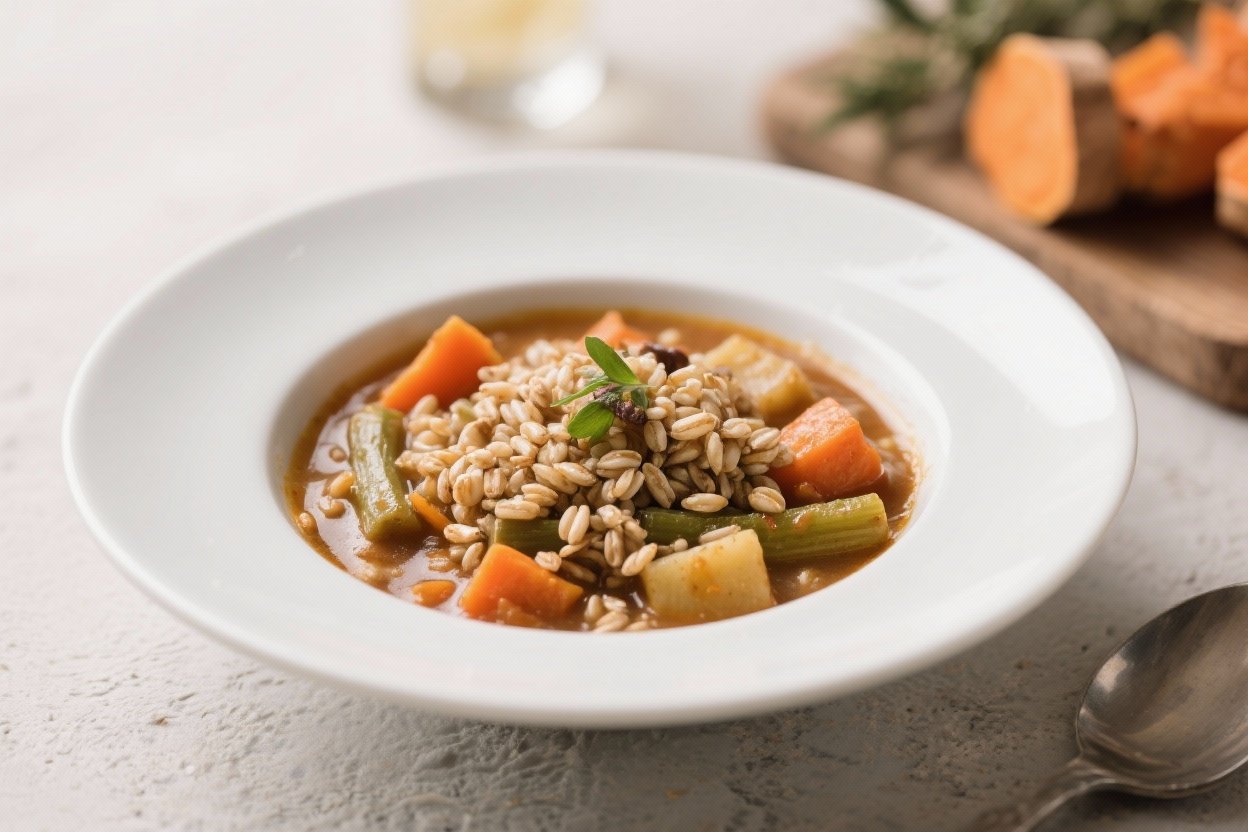
Winter Vegetable Barley Stew: The Cozy One-Pot Powerhouse You’ll Crave All Season
Cold hits different when you’ve got a bowl that feels like a weighted blanket for your soul. This Winter Vegetable Barley Stew is hearty, rich, and shockingly affordable—like meal-prep gold that also tastes like you spent the afternoon at a farmhouse. You get deep flavor, loads of fiber, and serious texture without babysitting a Dutch oven for hours.
Think “comfort food,” but with a nutrition label your future self will brag about. And the kicker? It reheats like a dream, so you basically get better returns with every bowl.
The Secret Behind This Recipe
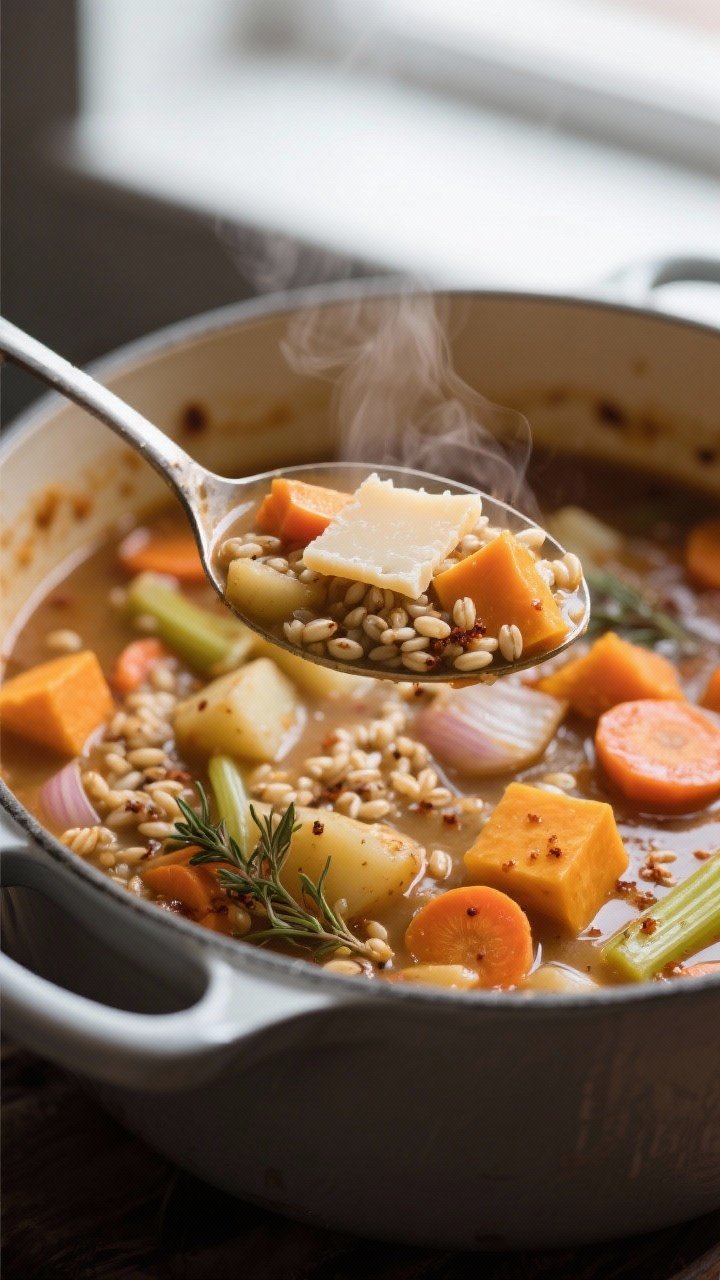
Great stew equals three things: layered aromatics, slow-simmered grains, and umami boosters that make vegetables taste like they’ve been training for a flavor marathon.
The foundation here is a classic mirepoix—onion, carrot, celery—sweated just long enough to go sweet and glossy. Then barley steps in with its chewy bite and silky starch, turning the broth into something spoon-hugging. To push it over the top, we use a few strategic add-ins: tomato paste for depth, soy sauce or tamari for savory backbone, and a splash of balsamic at the end for brightness.
A Parm rind (optional) brings stealthy richness without dairy overload. Finish with lemon and fresh herbs, and boom—restaurant-level stew with grocery-store effort.
Shopping List – Ingredients
- Olive oil – 2 tablespoons
- Yellow onion – 1 large, diced
- Carrots – 3 medium, diced
- Celery – 3 ribs, diced
- Parsnips – 2 medium, diced (optional but excellent)
- Garlic – 4 cloves, minced
- Tomato paste – 2 tablespoons
- Pearl barley – 1 cup, rinsed
- Russet or Yukon potato – 1 large, peeled and cubed
- Butternut squash or sweet potato – 2 cups, cubed
- Kale or Swiss chard – 3 cups, chopped, stems removed
- Crushed tomatoes – 1 cup
- Vegetable broth – 6 to 7 cups (low sodium)
- Soy sauce or tamari – 1 tablespoon
- Bay leaves – 2
- Dried thyme – 1 teaspoon
- Smoked paprika – 1 teaspoon
- Ground black pepper – 1/2 teaspoon
- Kosher salt – to taste
- Balsamic vinegar – 1 to 2 teaspoons, to finish
- Lemon – 1, for zest and juice
- Fresh parsley – 1/4 cup, chopped
- Optional umami boosters: Parmesan rind, a splash of Worcestershire (use vegan if needed), or a teaspoon of white miso
Let’s Get Cooking – Instructions
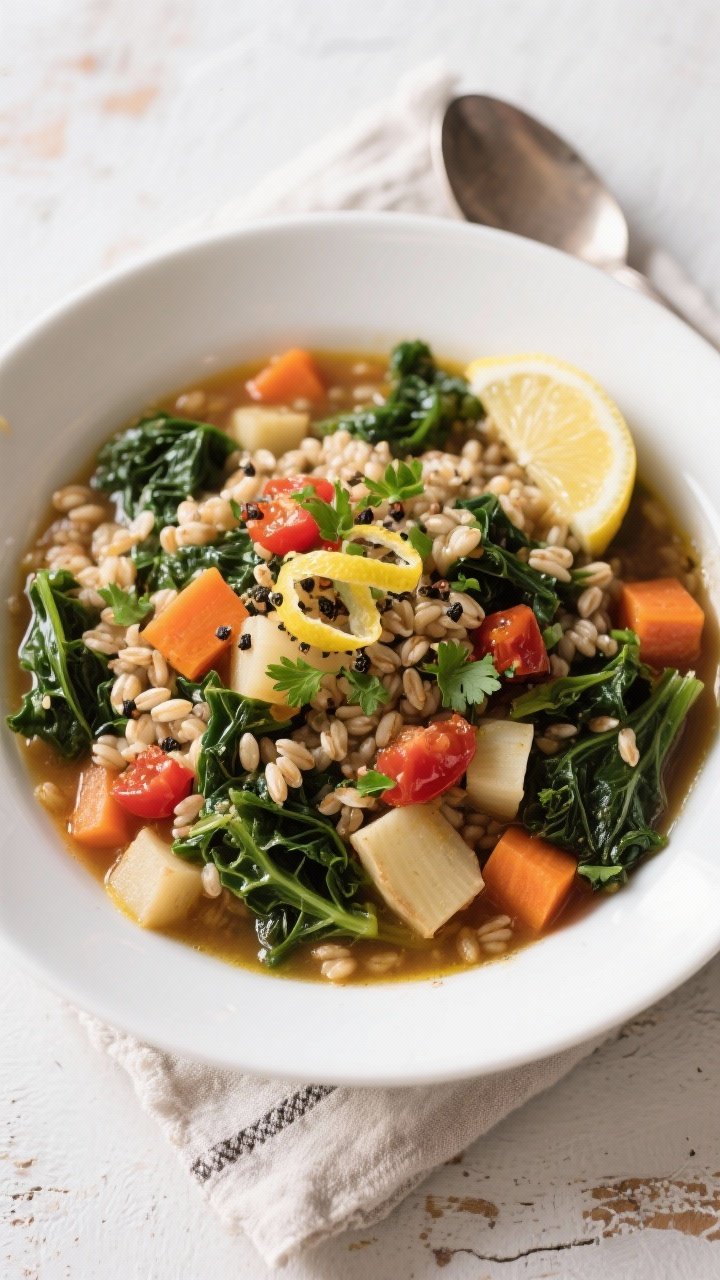
- Sweat the aromatics. Heat olive oil in a large pot over medium. Add onion, carrot, and celery with a pinch of salt.
Cook 6–8 minutes until soft and lightly golden.
- Build the base. Add garlic; cook 1 minute until fragrant. Stir in tomato paste and cook 2 minutes to caramelize. Add smoked paprika and thyme; toast 30 seconds.
- Deglaze and load up. Pour in 1 cup broth to loosen browned bits.
Add barley, potatoes, squash, crushed tomatoes, soy sauce, bay leaves, and remaining broth. If using a Parm rind, drop it in now.
- Simmer to tender perfection. Bring to a boil, then reduce to a steady simmer. Cook uncovered 35–45 minutes, stirring occasionally, until barley is tender and stew thickens.
Add water if it gets too thick.
- Greens go last. Stir in kale or chard and cook 5–7 minutes until wilted and tender.
- Finish with brightness. Remove bay leaves (and Parm rind). Stir in balsamic, a squeeze of lemon juice, and lemon zest. Season with salt and pepper.
Taste and adjust—this is where the magic locks in.
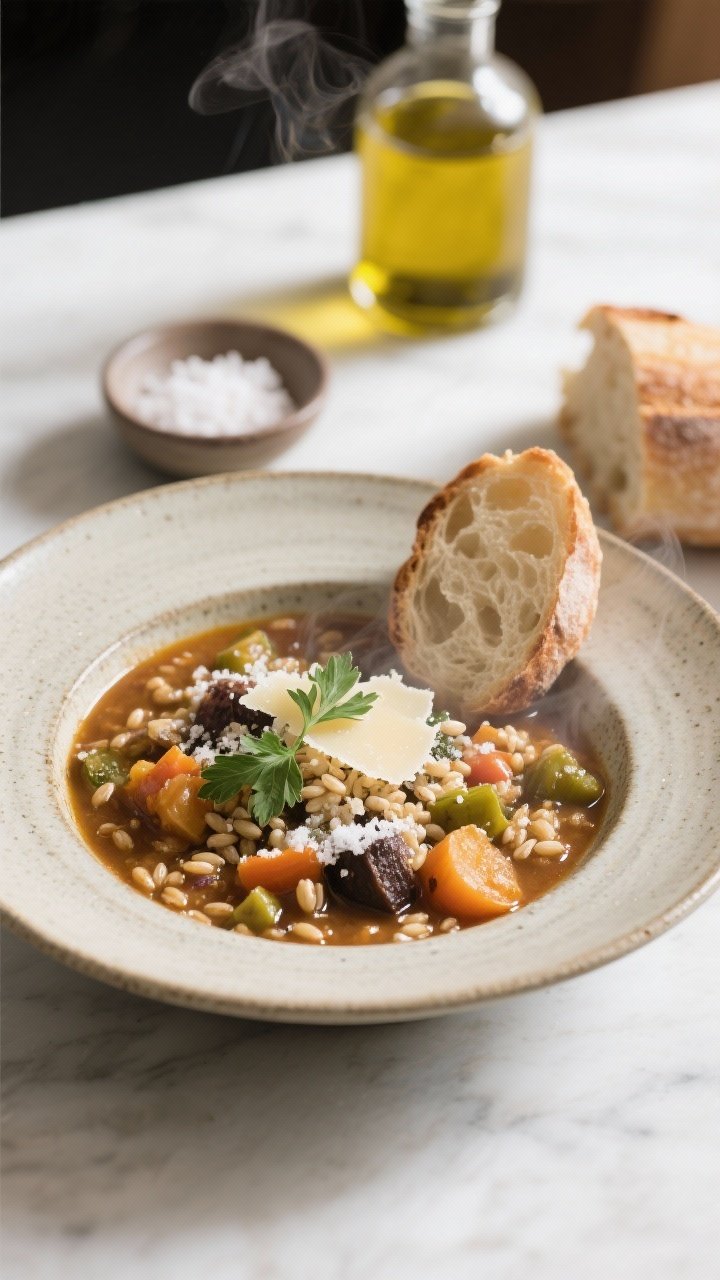
- Herb it up. Fold in parsley before serving. For extra richness, drizzle with good olive oil or sprinkle with grated Parmesan (optional).
Storage Instructions
This stew thickens as it cools—barley loves to drink broth like it’s happy hour. Store in airtight containers for up to 4–5 days in the fridge.
Add a splash of water or broth when reheating on the stove or microwave.
For longer storage, freeze in portions for up to 3 months. Thaw overnight in the fridge or warm gently from frozen with extra liquid. FYI, the vegetables stay sturdy and the barley remains pleasantly chewy.
Why This is Good for You
- High-fiber barley supports digestion, fullness, and steadier energy.
It’s the quiet MVP that keeps you satisfied.
- Winter veggies bring antioxidants, vitamins A and C, potassium, and complex carbs—basically immune support in a bowl.
- Low saturated fat but high satisfaction. The umami tricks make it taste indulgent without the heavy lift.
- Balanced macros with complex carbs, a touch of protein from barley, and optional healthy fats from olive oil and Parmesan.
Pitfalls to Watch Out For
- Under-seasoning. Vegetables need salt love. Season at the start and finish.
Taste after adding lemon and balsamic.
- Barley timing. Pearl barley usually takes 35–45 minutes; hulled barley can take 60–75. Check your package to avoid al dente regret.
- Mushy vegetables. Cut potatoes and squash into even cubes. Don’t overcook after they’re tender.
- Too thick? Add broth or water while simmering.
This stew should be hearty, not paste.
- Flat flavor. Missing brightness? Add another splash of lemon or balsamic. Still dull?
A teaspoon of miso or a dash more soy sauce saves the day.
Different Ways to Make This
- Protein boost: Add white beans or chickpeas during the last 15 minutes. For non-vegetarian, shredded rotisserie chicken or cooked Italian sausage works.
- Mediterranean twist: Swap kale for spinach, add chopped olives, and finish with feta and oregano.
- Smoky campfire vibes: Stir in fire-roasted tomatoes and a pinch of chili flakes; garnish with smoked salt.
- Creamy comfort: Stir in 1/3 cup cashew cream or a splash of half-and-half right before serving for velvety richness.
- Gluten-free swap: Use short-grain brown rice or quinoa instead of barley; adjust simmer time and liquid as needed.
FAQ
Can I make this in a slow cooker?
Yes.
Sauté aromatics and tomato paste on the stovetop first for best flavor, then transfer everything (except greens and acid) to a slow cooker. Cook on Low 6–7 hours or High 3–4 hours. Stir in greens, balsamic, and lemon for the last 20–30 minutes.
What’s the difference between pearl and hulled barley?
Pearl barley is polished and cooks faster with a softer bite.
Hulled barley is less processed, chewier, and higher in fiber but takes longer. Both work; just adjust the simmer time and liquid.
How do I keep leftovers from turning into cement?
Barley absorbs broth over time. When reheating, add 1/4–1/2 cup water or broth per serving and warm gently.
Back to silky in minutes.
Can I skip the tomatoes?
Sure. Replace crushed tomatoes with extra broth and add a teaspoon of miso or a splash more soy sauce for depth. You’ll get a more brothy, savory profile.
What if I don’t have kale?
Use spinach, chard, or even shredded cabbage.
Add tender greens at the end so they don’t overcook and ghost on you.
Does this freeze well?
Absolutely. Freeze flat in zip bags or in lidded containers. Reheat with extra liquid, and it tastes like day two—aka the best day.
My Take
This Winter Vegetable Barley Stew is the kind of recipe that makes weeknights feel put-together and weekends feel lazy in the best way.
It’s thrifty, unfussy, and still delivers layered flavor like it has a publicist. IMO, the balsamic-and-lemon finish is non-negotiable—it’s the chef’s kiss that wakes everything up.
Make it once, tweak it twice, and it becomes your winter signature. And if anyone asks for the “secret,” tell them it’s patience, salt, and a little swagger.
Because yes, your stew can have swagger.
Printable Recipe Card
Want just the essential recipe details without scrolling through the article? Get our printable recipe card with just the ingredients and instructions.