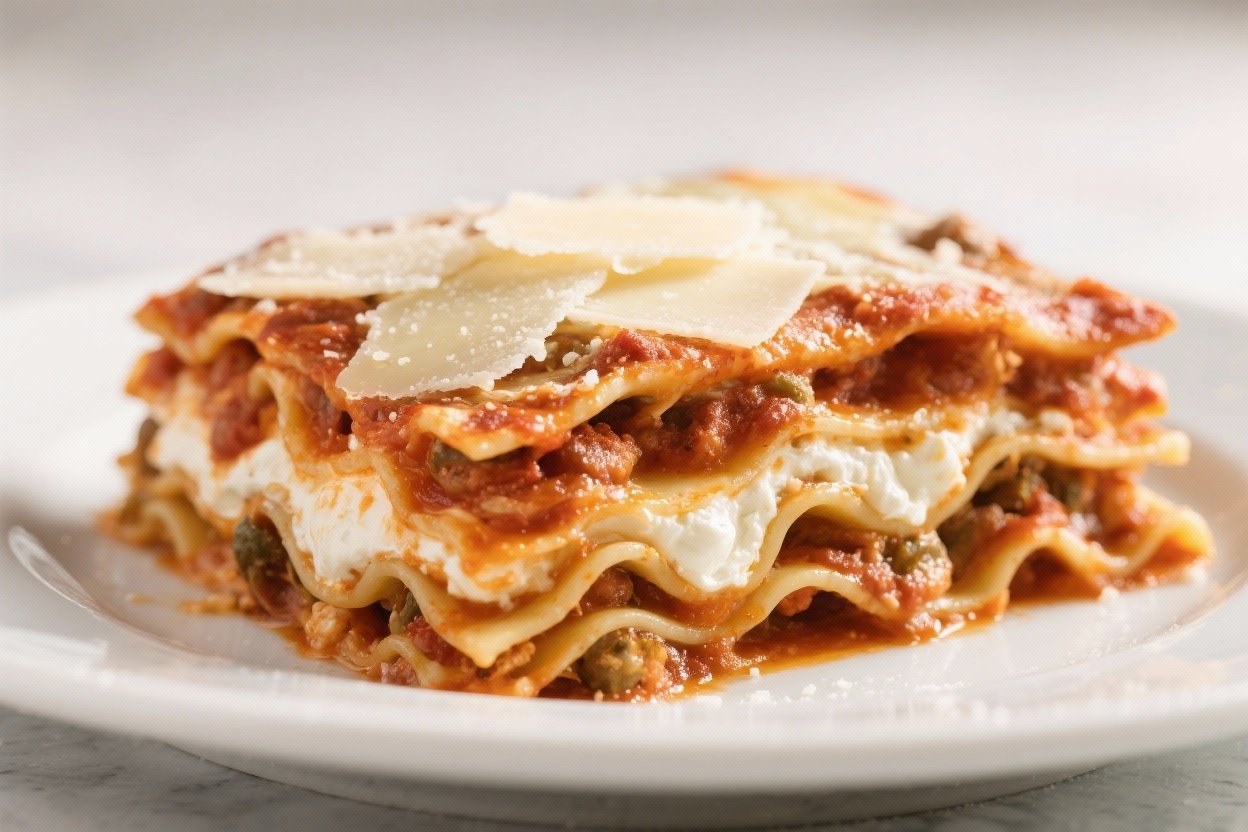
Three-Cheese Lasagna with Ricotta, Mozzarella, and Parmesan – Cozy, Classic Comfort
Few meals feel as comforting as a bubbling pan of lasagna. This three-cheese version brings together creamy ricotta, stretchy mozzarella, and nutty Parmesan in layers that feel simple yet special. It’s the kind of recipe you make on a Sunday, enjoy that night, and love again for leftovers.
The flavors are familiar, the method is straightforward, and the payoff is a golden, cheesy bake that makes the table go quiet for a moment. If you’re craving a classic that never disappoints, this one delivers.
What Makes This Special
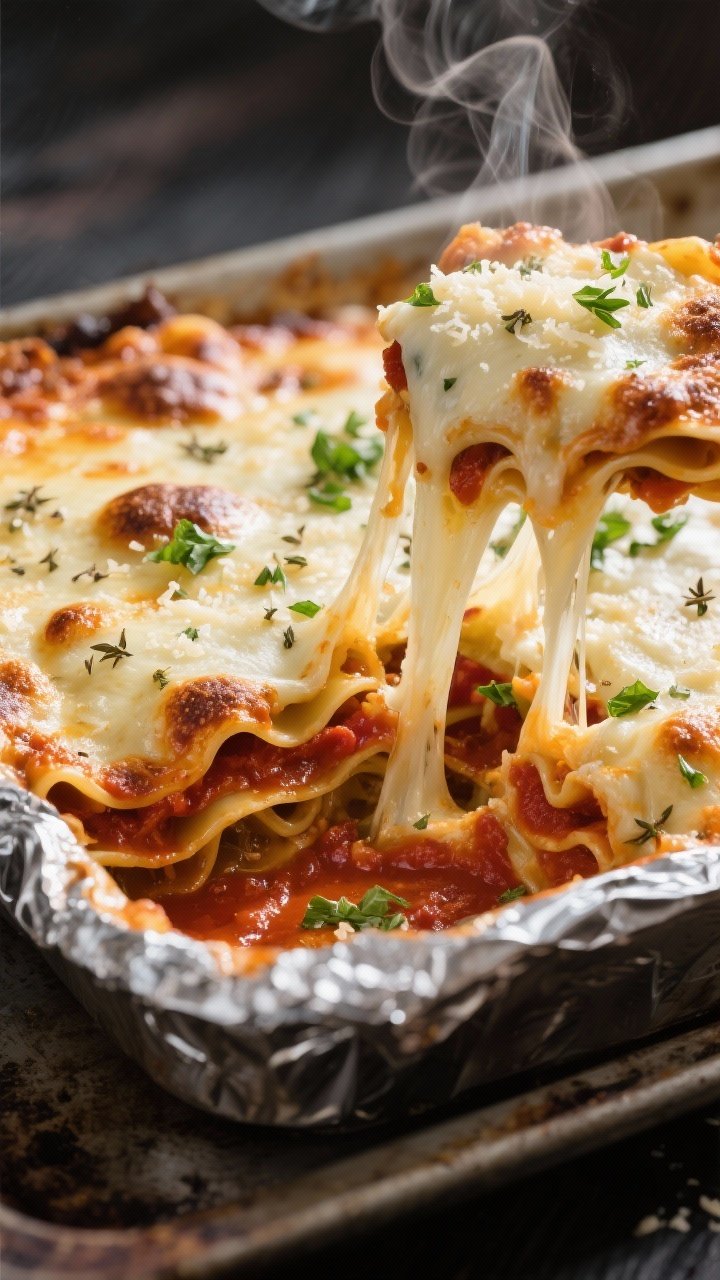
This lasagna leans on three cheeses that each do a different job. Ricotta adds a smooth, mild creaminess; mozzarella brings the melty pull; Parmesan gives sharp, salty depth.
Together, they make each bite balanced and satisfying. It’s also flexible. You can use store-bought sauce on a busy night or simmer your own.
The method works with no-boil or traditional noodles, and you can slip in spinach or mushrooms without changing the spirit of the dish. It’s comfort food you can customize without stress.
What You’ll Need
- Lasagna noodles: 12 sheets (no-boil or regular)
- Olive oil: 2 tablespoons
- Yellow onion: 1 medium, finely chopped
- Garlic: 3–4 cloves, minced
- Crushed tomatoes or marinara sauce: 4 cups (about 32 ounces)
- Tomato paste: 1 tablespoon (optional, for richer sauce)
- Dried oregano: 1 teaspoon
- Dried basil: 1 teaspoon
- Red pepper flakes: Pinch (optional)
- Salt and black pepper: To taste
- Ricotta cheese: 2 cups (whole milk preferred for creaminess)
- Shredded mozzarella: 3 cups
- Grated Parmesan: 1 cup, plus extra for serving
- Egg: 1 (to bind the ricotta mixture)
- Fresh parsley or basil: 2–3 tablespoons, chopped
- Butter: 1 tablespoon (for greasing the dish, optional)
Instructions
- Heat the oven: Set to 375°F (190°C). Lightly grease a 9×13-inch baking dish with olive oil or butter.
- Make the sauce: In a large saucepan, warm olive oil over medium heat.
Add onion and a pinch of salt. Cook until soft and translucent, about 5–7 minutes. Stir in garlic for 30 seconds.
- Season the tomatoes: Add crushed tomatoes (and tomato paste if using), oregano, basil, red pepper flakes, salt, and pepper.
Simmer uncovered for 10–15 minutes to thicken slightly. Taste and adjust seasoning.
- Mix the ricotta layer: In a bowl, combine ricotta, egg, half of the Parmesan, half of the chopped herbs, 1/2 teaspoon salt, and a few grinds of pepper. Stir until smooth.
- Prep the noodles: If using regular noodles, boil in salted water until just shy of al dente.
Drain and lay flat on a lightly oiled sheet to prevent sticking. If using no-boil noodles, you’re ready to assemble.
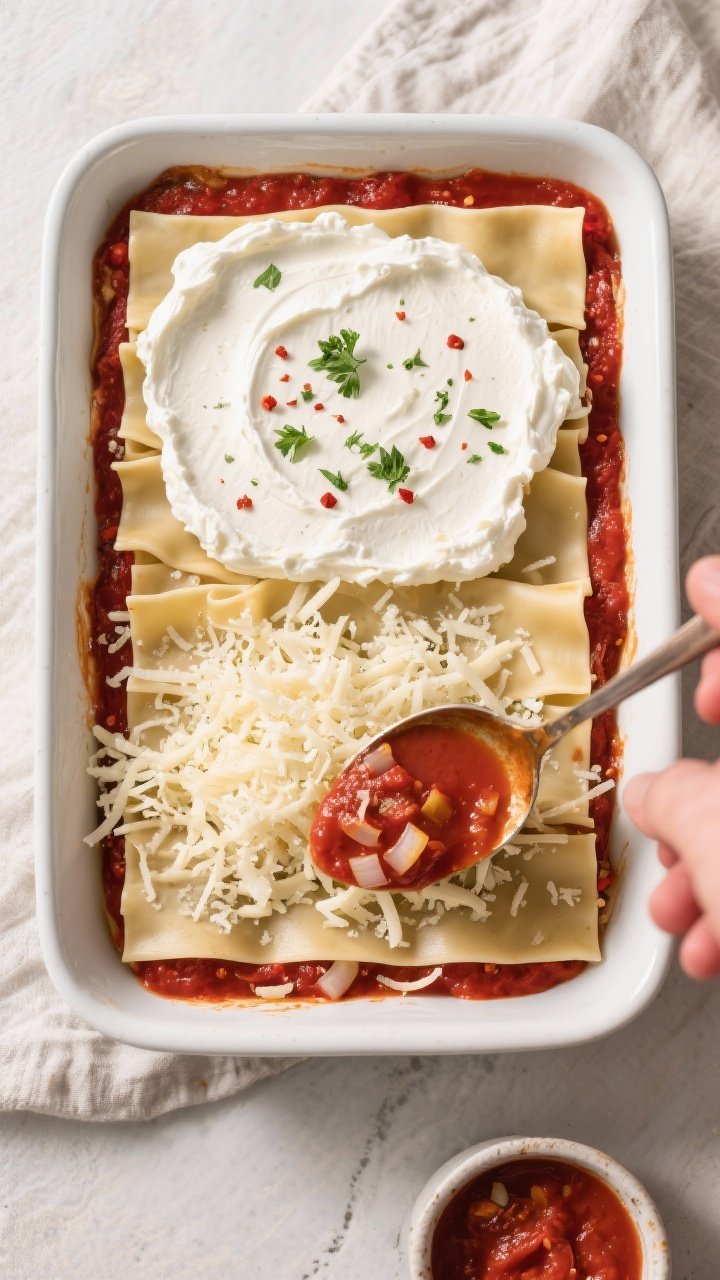
- Layer one: Spread a thin layer of sauce on the bottom of the baking dish to prevent sticking. Add a layer of noodles, slightly overlapping.
- Layer two: Dollop and spread a third of the ricotta mixture over the noodles.
Sprinkle a generous handful of mozzarella and a spoonful of Parmesan over the ricotta. Spoon a layer of sauce on top.
- Repeat: Continue layering noodles, ricotta, mozzarella, Parmesan, and sauce for two more layers. Finish with a final layer of noodles, a generous amount of sauce, and the remaining mozzarella and Parmesan on top.
- Bake covered: Cover the dish loosely with foil (tent it so it doesn’t stick to the cheese).
Bake for 25 minutes.
- Finish uncovered: Remove the foil and bake another 15–20 minutes, until the cheese is bubbling and golden around the edges.
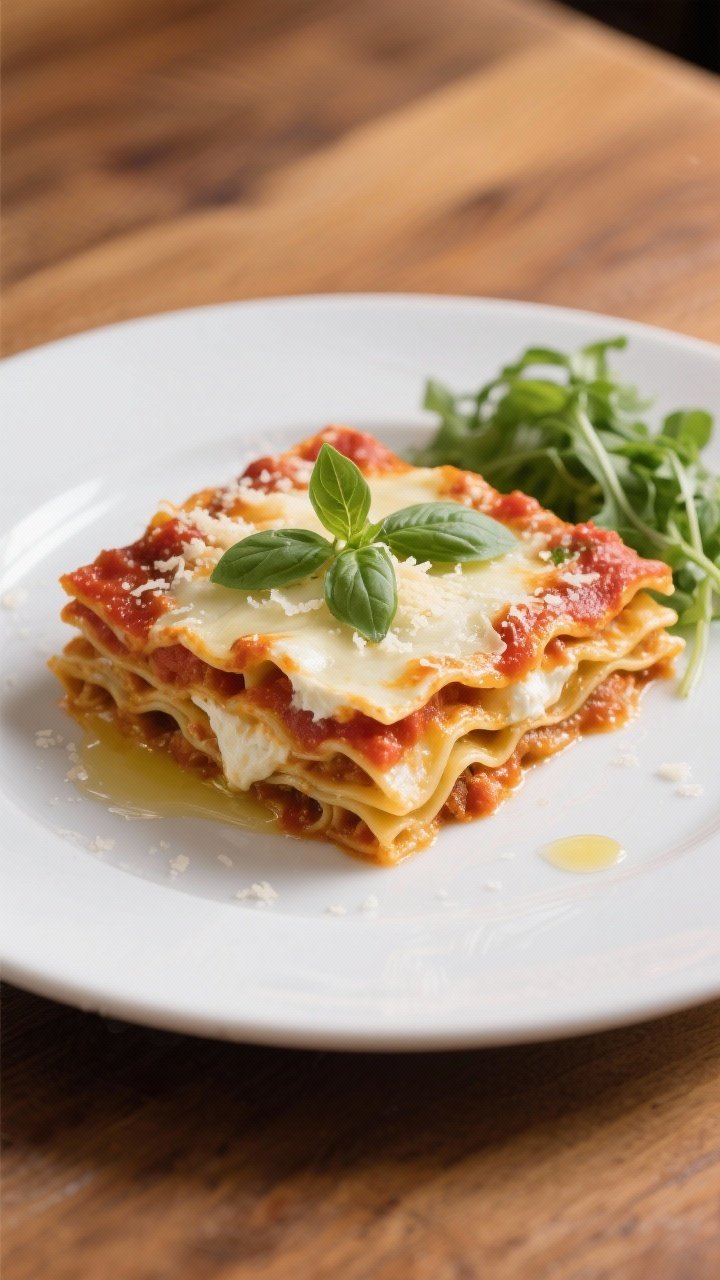
- Rest and garnish: Let the lasagna rest for 15–20 minutes before slicing so the layers set. Sprinkle with remaining fresh herbs. Serve with extra Parmesan at the table.
Keeping It Fresh
Leftovers keep well and actually taste better the next day.
Store slices in an airtight container in the fridge for up to 4 days. Reheat, covered, in a 325°F oven until warmed through, or microwave in short bursts. For freezing, cool completely, then wrap the whole pan tightly in plastic and foil, or freeze individual portions.
It will keep for up to 3 months. To reheat from frozen, thaw overnight in the fridge, then bake at 350°F until hot and bubbly.
Why This is Good for You
This dish offers a balance of protein from the cheese and a satisfying dose of carbohydrates from the noodles. Parmesan adds calcium and a flavor punch so you can use less salt overall.
If you include a simple side salad or steamed vegetables, you get a more rounded meal with fiber and freshness. You can also make small tweaks for a lighter profile. Use part-skim ricotta, choose whole wheat noodles, or add a layer of sautéed spinach or zucchini.
These changes keep the comfort while nudging the nutrition in a positive direction.
What Not to Do
- Don’t skip resting time: Cutting too soon causes slumping and messy slices.
- Don’t under-season the sauce: The noodles and ricotta are mild; the sauce should be well-seasoned to carry the dish.
- Don’t overload with watery vegetables: If adding veggies like mushrooms or spinach, cook off moisture first to avoid a soggy bake.
- Don’t use pre-shredded cheese if you can help it: It often contains anti-caking agents that affect melt and texture. Freshly shredded melts better.
- Don’t bake uncovered the whole time: You’ll risk dry noodles and over-browned cheese.
Alternatives
- Spinach ricotta: Stir 1 cup of well-drained, chopped spinach into the ricotta mixture for a green boost.
- Meat sauce: Brown 1 pound of ground beef, Italian sausage, or turkey with the onions before adding tomatoes for a heartier version.
- Vegetable-forward: Layer in sautéed mushrooms, roasted zucchini, or thinly sliced eggplant. Drain or roast to reduce moisture first.
- Herb upgrade: Swap dried herbs for fresh basil and oregano for a brighter sauce.
Add a splash of red wine while simmering for depth.
- Gluten-free: Use gluten-free lasagna noodles and check labels on sauces and cheeses.
- Lighter cheese: Use part-skim mozzarella and ricotta, and reduce total cheese by 10–15% without losing the comfort factor.
FAQ
Should I use no-boil or regular noodles?
Both work. No-boil noodles save time and absorb sauce well, but make sure your sauce isn’t too thick. Regular noodles give a classic bite; cook them just shy of al dente so they finish in the oven.
How do I prevent a watery lasagna?
Simmer your sauce until slightly thick, cook and drain any added vegetables, and let the finished lasagna rest before slicing.
If using fresh mozzarella, pat it dry to remove excess moisture.
Can I assemble this ahead of time?
Yes. Assemble up to 24 hours in advance, cover tightly, and refrigerate. Bake straight from the fridge, adding an extra 10–15 minutes to the covered bake time.
What’s the best cheese ratio?
A good balance is 2 cups ricotta, 3 cups mozzarella, and 1 cup Parmesan.
This gives creaminess, stretch, and sharpness without overwhelming the dish.
Do I need the egg in the ricotta?
It helps bind the ricotta so it doesn’t ooze out when sliced. If you prefer to skip it, you can, but expect a slightly softer texture.
How do I get a golden top without burning?
Bake covered first, then uncover to brown. If the top needs more color, broil for 1–2 minutes at the end, watching closely.
Can I make it vegetarian?
It already is if you use a meatless sauce.
If Parmesan is a concern, choose a vegetarian-style hard cheese made without animal rennet.
Wrapping Up
Three-cheese lasagna is the kind of meal that makes a kitchen feel welcoming. With simple ingredients and a few smart steps, you get layers that hold together, cheese that melts just right, and a sauce with real character. It’s great for Sunday dinner, potlucks, or a week of leftovers that you’ll actually look forward to.
Keep it classic, or make it your own with a few tweaks—either way, it’s a reliable favorite worth saving.
Printable Recipe Card
Want just the essential recipe details without scrolling through the article? Get our printable recipe card with just the ingredients and instructions.