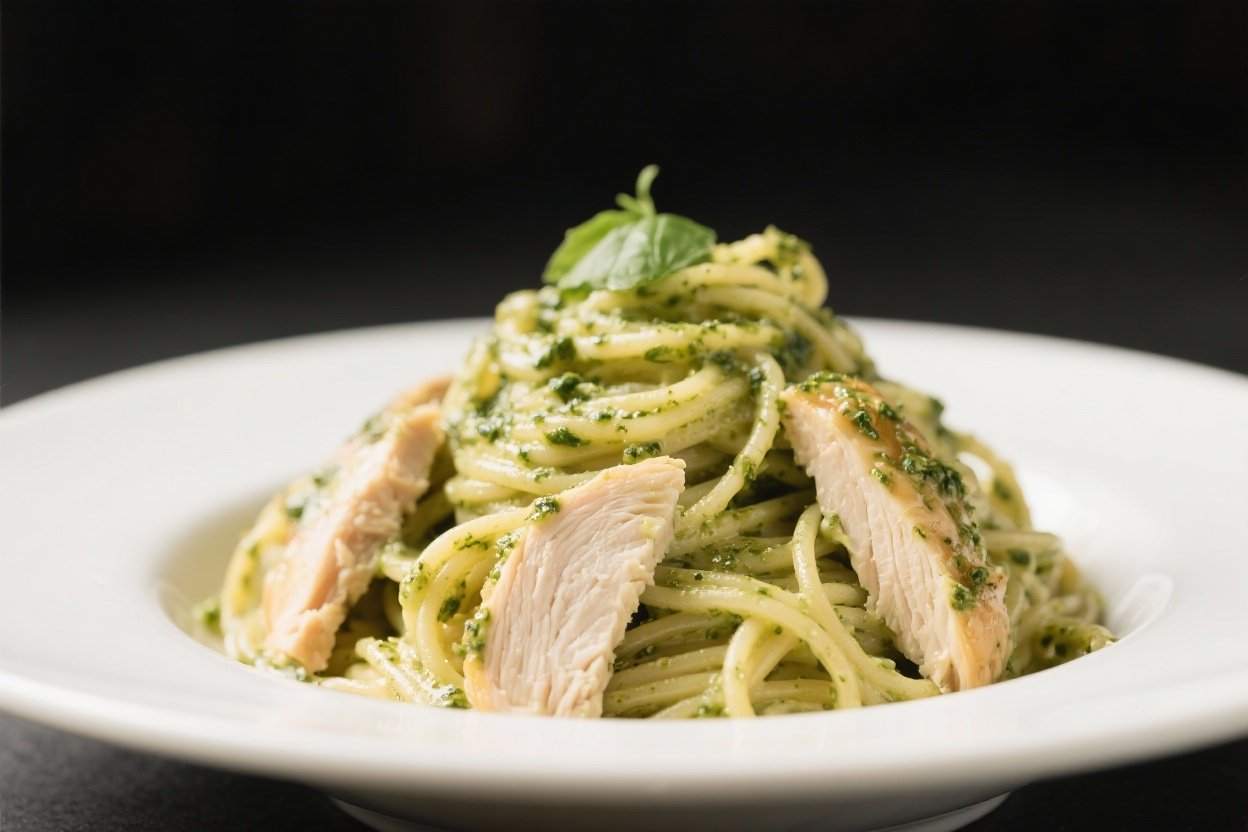
Creamy Pesto Chicken Spaghetti – Cozy, Saucy, and Weeknight-Friendly
This is the kind of pasta that makes everyone at the table quiet for a minute. It’s creamy, garlicky, and full of fresh basil flavor, with tender bites of chicken tucked into every twirl. The sauce clings to the spaghetti just right, and a sprinkle of Parmesan brings it all together.
It feels special, but it’s easy enough for a Tuesday night. If you’re craving comfort with a bright, herby twist, this one’s for you.
What Makes This Special
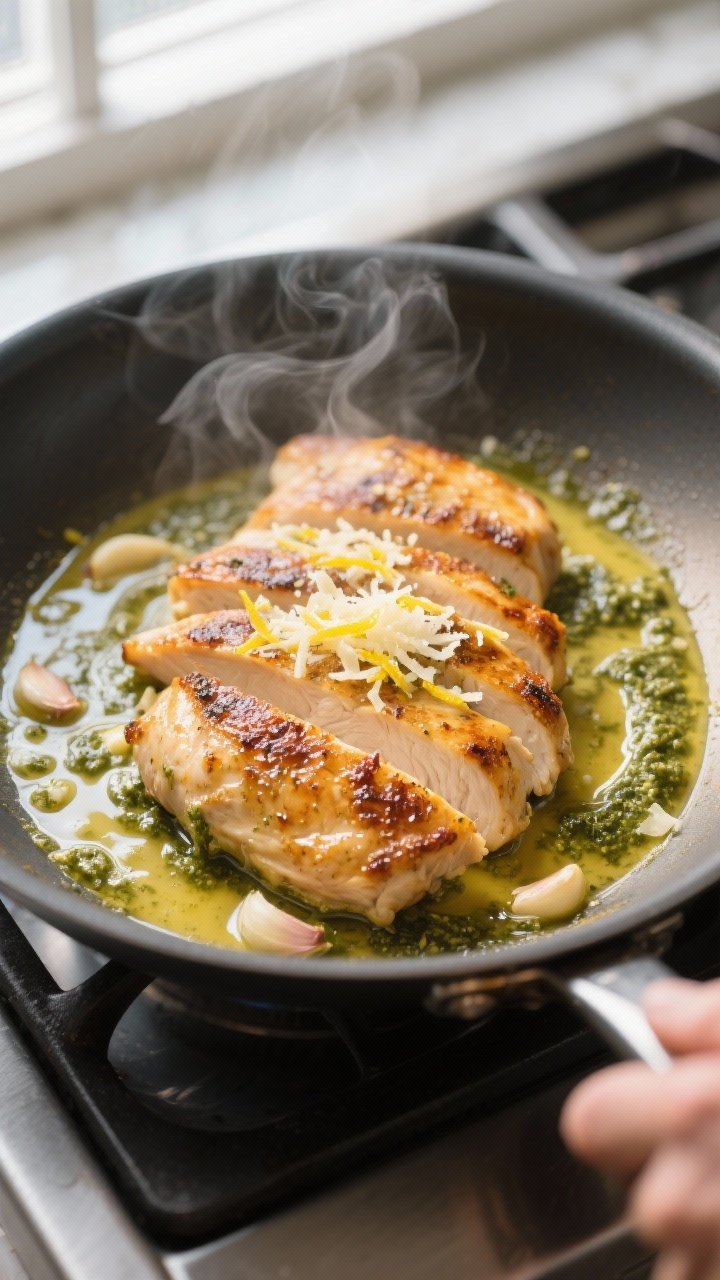
Lots of creamy pasta recipes lean heavy, but this one stays balanced. The pesto keeps the flavor bright, and the chicken adds protein without weighing it down.
Fresh lemon and a touch of pasta water make the sauce glossy and light. It’s also flexible—use rotisserie chicken, store-bought pesto, or homemade. You’ll get big flavor with minimal fuss.
Shopping List
- Spaghetti: 12 ounces (about three-quarters of a standard box)
- Chicken: 1 pound boneless, skinless chicken breasts (or thighs), thinly sliced
- Olive oil: 2 tablespoons
- Butter: 1 tablespoon
- Garlic: 3–4 cloves, minced
- Heavy cream: 1 cup
- Chicken broth: 1/2 cup (low sodium)
- Pesto: 1/2 cup (homemade or good-quality store-bought)
- Parmesan cheese: 1/2 cup, finely grated, plus extra for serving
- Lemon: 1 (zest and 1–2 teaspoons juice)
- Salt and black pepper
- Red pepper flakes: a pinch (optional)
- Fresh basil: a handful, torn or chopped
Step-by-Step Instructions
- Boil the pasta. Bring a large pot of well-salted water to a rolling boil.
Add the spaghetti and cook until just shy of al dente (about 1 minute less than package directions). Reserve 1 cup of pasta water, then drain.
- Prep the chicken. Pat the chicken dry and season with 1 teaspoon salt and 1/2 teaspoon black pepper. If you like heat, add a pinch of red pepper flakes.
- Sear the chicken. Heat 1 tablespoon olive oil in a large skillet over medium-high.
Add half the chicken in a single layer and sear until golden and cooked through, 3–4 minutes per side. Transfer to a plate. Repeat with the remaining oil and chicken.
Don’t crowd the pan.
- Build the sauce base. Reduce heat to medium. Add butter to the skillet. When melted, stir in garlic and cook 30–45 seconds until fragrant.
Pour in chicken broth, scraping up any browned bits. Simmer for 1–2 minutes.
- Add cream and pesto. Stir in heavy cream and pesto. Bring to a gentle simmer.
The sauce should look smooth and slightly thickened.
- Season and brighten. Add lemon zest and a small squeeze of lemon juice. Taste and season with salt and pepper. Keep it slightly under-seasoned for now—you’ll add Parmesan next.
- Finish the sauce. Stir in Parmesan until melted and silky.
If it gets too thick, whisk in a splash of pasta water to loosen. You want it glossy and pourable, not gloopy.
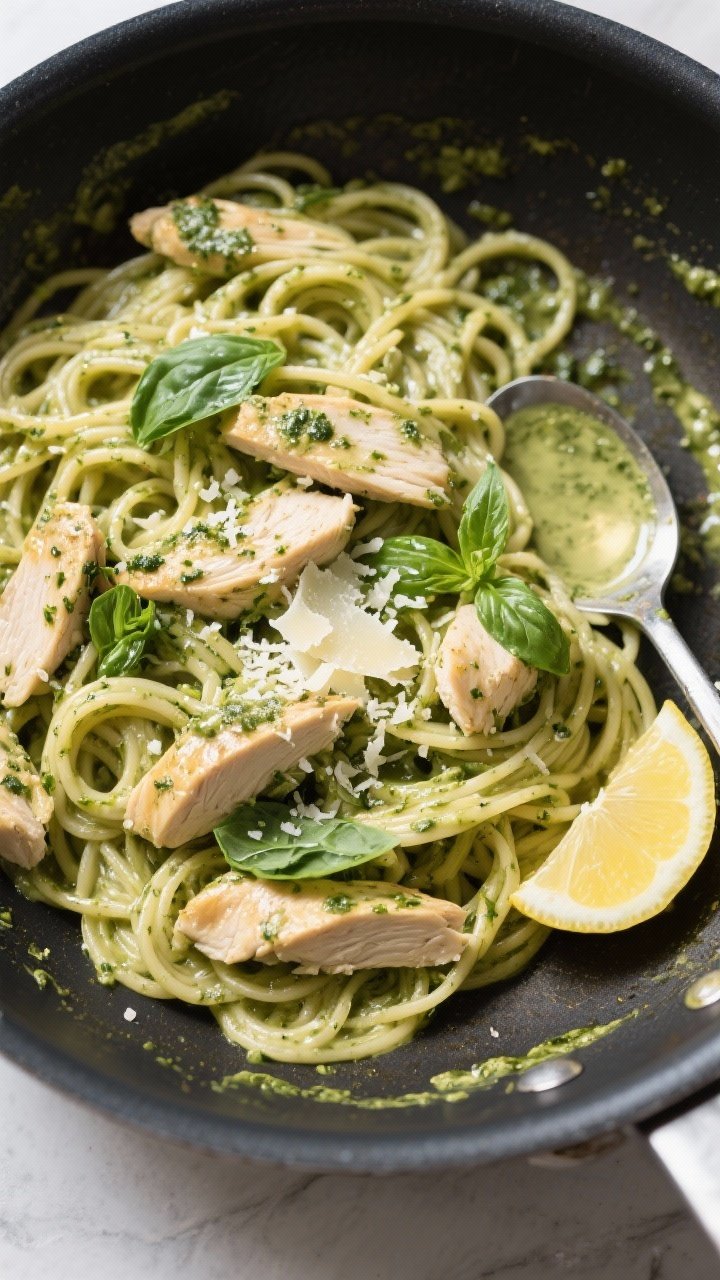
- Combine pasta and chicken. Add the chicken and drained spaghetti to the skillet. Toss everything together over low heat, adding pasta water a little at a time until the sauce coats the noodles.
Keep it moving so it doesn’t clump.
- Final touches. Fold in fresh basil. Taste and adjust salt, pepper, and lemon juice. If you want more pesto punch, stir in an extra spoonful right at the end.
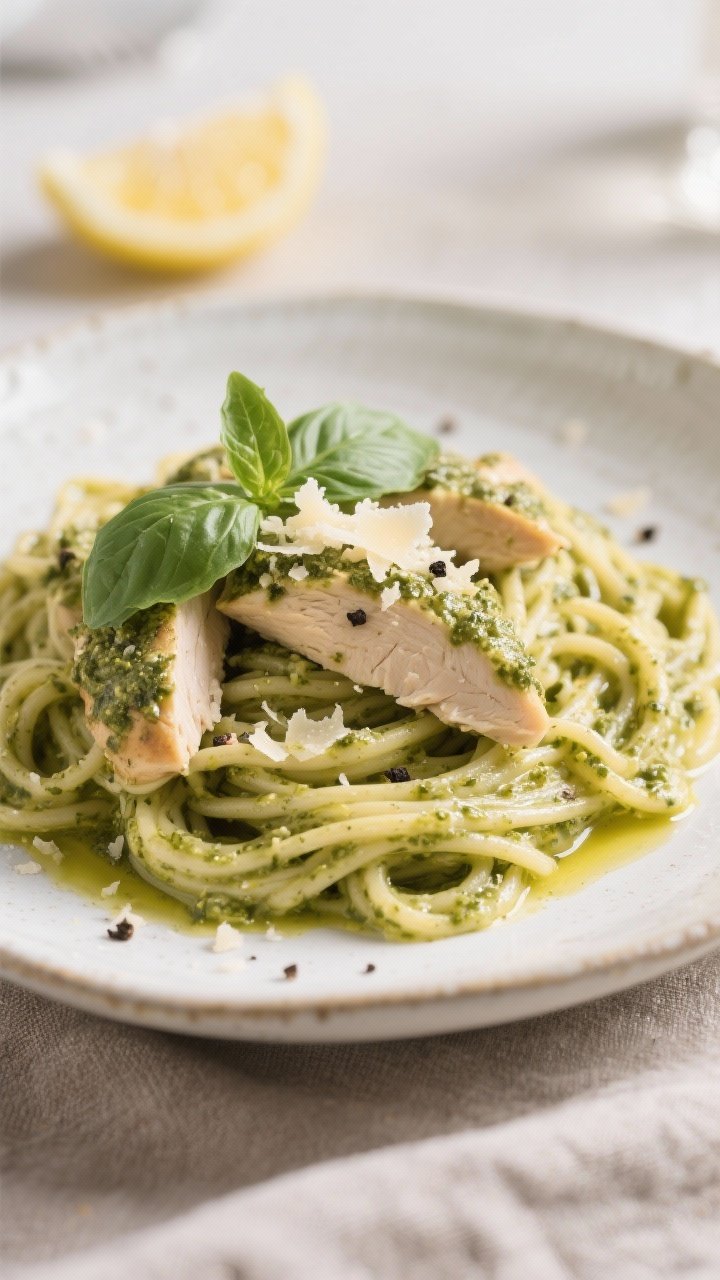
- Serve. Twirl into bowls and finish with extra Parmesan and a drizzle of good olive oil.
Add a crack of black pepper on top.
Keeping It Fresh
Leftovers keep well for 2–3 days in an airtight container. The sauce will thicken in the fridge, so loosen with a splash of water, milk, or broth when reheating. Warm gently on the stove over low heat, stirring often, or microwave in short bursts.
If you plan to meal prep, cook the pasta to just under al dente and store the sauce and noodles separately. Toss together when reheating for the best texture.
Benefits of This Recipe
- Fast and flexible: You can use rotisserie chicken, leftover grilled chicken, or even skip the chicken and add veggies.
- Balanced flavor: Creamy, herby, and bright from lemon—no one-note heaviness.
- Family-friendly: Mild enough for kids, easy to spice up for adults.
- Scales well: Double for guests or halve for a cozy dinner for two.
- Uses pantry staples: Pasta, cream, broth, and pesto carry the dish with minimal fuss.
What Not to Do
- Don’t overcook the pasta. It will finish in the sauce. Overcooked pasta turns mushy fast.
- Don’t skip salting the pasta water. This is your first layer of seasoning.
- Don’t boil the sauce hard after adding cream and Parmesan. A gentle simmer keeps it smooth and prevents splitting.
- Don’t crowd the chicken in the pan. It will steam instead of sear, losing flavor and texture.
- Don’t add all the pasta water at once. Add gradually to control the sauce consistency.
Alternatives
- Protein swaps: Use shrimp (cook quickly until pink), Italian sausage (browned and crumbled), or rotisserie chicken (stir in at the end).
- Pasta options: Fettuccine, bucatini, or short shapes like penne or rotini all work.
Choose shapes that grab sauce.
- Lighter version: Swap half the cream for whole milk or evaporated milk. Thicken with a little extra Parmesan if needed.
- Dairy-free: Use a creamy oat or cashew base and a dairy-free pesto. Nutritional yeast can boost the cheesy vibe.
- Veggie add-ins: Cherry tomatoes, spinach, peas, or sautéed mushrooms fold in nicely.
Blanch broccoli florets with the pasta for the last 2 minutes.
- Herb twists: Stir in a spoonful of sun-dried tomatoes or a handful of arugula at the end for peppery bite.
- Gluten-free: Use gluten-free spaghetti and ensure the pesto and broth are certified GF.
FAQ
Can I use store-bought pesto?
Yes. Choose a refrigerated pesto if possible for fresher flavor. Taste it before adding—some are salty, so adjust your seasoning and Parmesan accordingly.
How do I make it less rich?
Use half cream and half chicken broth, and add extra lemon juice at the end.
You can also skip the butter or reduce the Parmesan slightly.
Will the sauce split?
It shouldn’t if you keep the heat gentle after adding cream and cheese. If it looks too hot, pull the pan off the heat and whisk in a splash of pasta water to bring it back together.
Can I make it ahead?
You can cook the chicken and sauce a few hours ahead and rewarm gently, but cook the pasta right before serving. Combine and heat through with a little pasta water for best texture.
What’s the best way to reheat leftovers?
Stovetop is best.
Add a splash of water or broth and warm over low heat, stirring until creamy. Microwave in short bursts works too—just loosen the sauce first.
Can I use half-and-half instead of cream?
Yes, but simmer gently and avoid boiling to prevent curdling. The sauce will be slightly thinner, so add a bit more Parmesan to thicken.
Is rotisserie chicken okay?
Absolutely.
Shred it and fold it into the sauce at the end just to warm through. It’s a great time-saver and still tastes fantastic.
How do I make homemade pesto quickly?
Blend 2 cups basil, 1/3 cup toasted pine nuts (or walnuts), 1/2 cup grated Parmesan, 1 garlic clove, a squeeze of lemon, salt, and enough olive oil to loosen. Adjust to taste.
What if I don’t have lemon?
Use a splash of white wine vinegar or a bit more pasta water to balance the richness.
A few chopped sun-dried tomatoes can also add brightness.
Can I freeze it?
Cream sauces don’t freeze well—they can separate when thawed. If you must, freeze just the cooked chicken and pesto base without cream, then add cream and Parmesan fresh when reheating.
In Conclusion
Creamy Pesto Chicken Spaghetti brings together comfort and freshness in one skillet. It’s simple, flexible, and consistently satisfying—great for weeknights and still worthy of guests.
Keep the heat gentle, reserve your pasta water, and finish with lemon and basil. With those small steps, you’ll have a silky, vibrant pasta that feels like a hug in a bowl.