Greek Yogurt Caesar Veggie Cups – Crisp, Creamy, and Ready to Snack
Greek Yogurt Caesar Veggie Cups make snack time feel fresh, light, and a little bit fancy. You get all the Caesar flavor you love, without the heavy dressing or greasy croutons. They’re great for lunchboxes, game day, or a quick, make-ahead appetizer.
Each cup is loaded with crunchy veggies and topped with a bright, tangy dressing that takes minutes to whisk together. No blender, no fuss—just easy, satisfying bites.
Why This Recipe Works
This recipe leans on Greek yogurt for a creamy base that’s lighter and higher in protein than mayo. Anchovy paste (or capers) adds that signature Caesar depth without overwhelming the palate.
Fresh lemon and Dijon keep the dressing zippy, while Parmesan adds savory richness. Pre-portioned cups make snacking simple and help with portion control. Plus, using sturdy vegetables keeps everything crisp for days.
Shopping List
- Greek yogurt (plain, 2% or whole milk) – for a creamy, tangy base
- Fresh lemon – zest and juice for brightness
- Dijon mustard – for a little heat and body
- Worcestershire sauce – umami and depth
- Anchovy paste or capers – classic Caesar flavor; optional but recommended
- Garlic – fresh or powder, as you prefer
- Extra-virgin olive oil – for richness
- Parmesan cheese – finely grated
- Salt and black pepper – to taste
- Romaine hearts – crisp base; chop or shred
- English cucumber – diced or sliced
- Cherry or grape tomatoes – halved
- Bell peppers – any color, finely chopped
- Carrots – shredded or matchsticks
- Celery – thinly sliced
- Optional add-ins: chickpeas, grilled chicken, roasted chickpeas, crunchy pepitas
- Small clear cups or jars – 8–12 ounces work best
Instructions
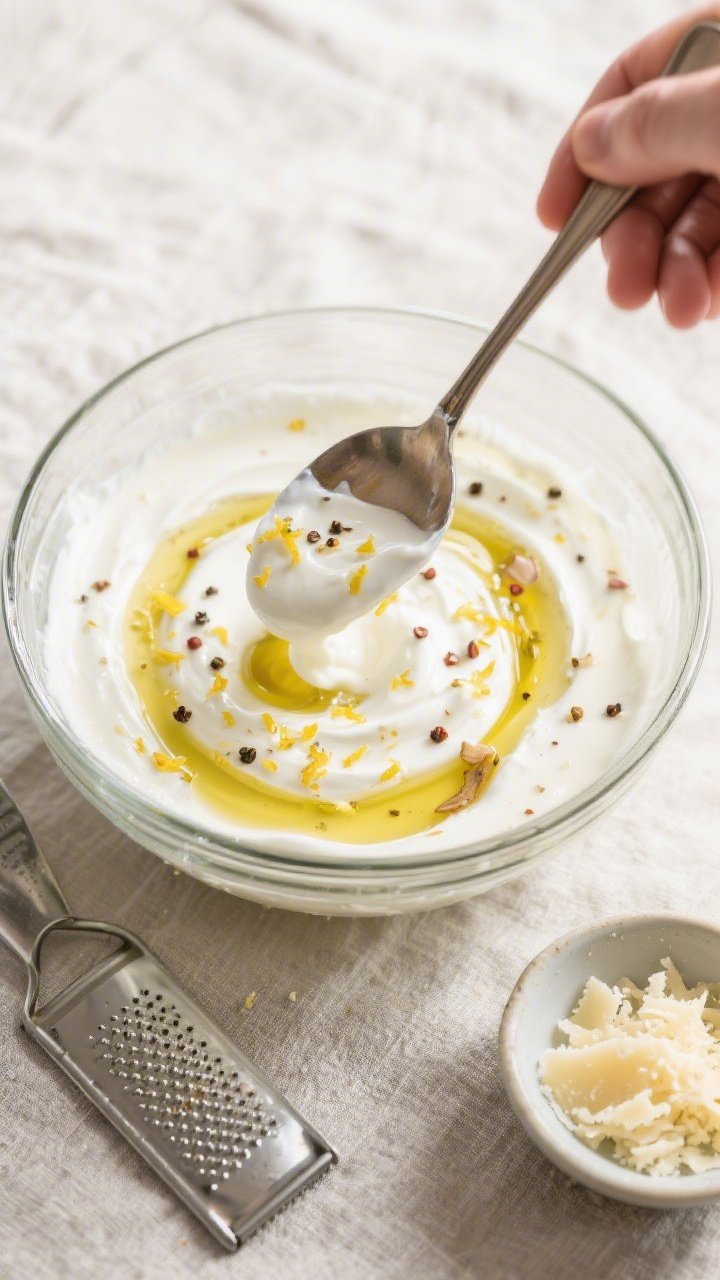
- Make the dressing. In a bowl, whisk 1 cup plain Greek yogurt, 1 tablespoon Dijon, 1–2 teaspoons Worcestershire, 1 small garlic clove (minced) or 1/2 teaspoon garlic powder, 1 teaspoon anchovy paste (or 1 tablespoon finely chopped capers), 2 tablespoons lemon juice, 1 teaspoon lemon zest, 2 tablespoons grated Parmesan, 1 tablespoon olive oil, and a pinch of salt and pepper.
Adjust to taste.
- Thin if needed. If the dressing is too thick, whisk in 1–2 teaspoons cold water or milk until it’s creamy and spoonable.
- Prep the veggies. Chop romaine into bite-size pieces. Dice cucumber and bell pepper. Halve tomatoes.
Slice celery. Shred or julienne carrots. Keep everything dry to maintain crunch.
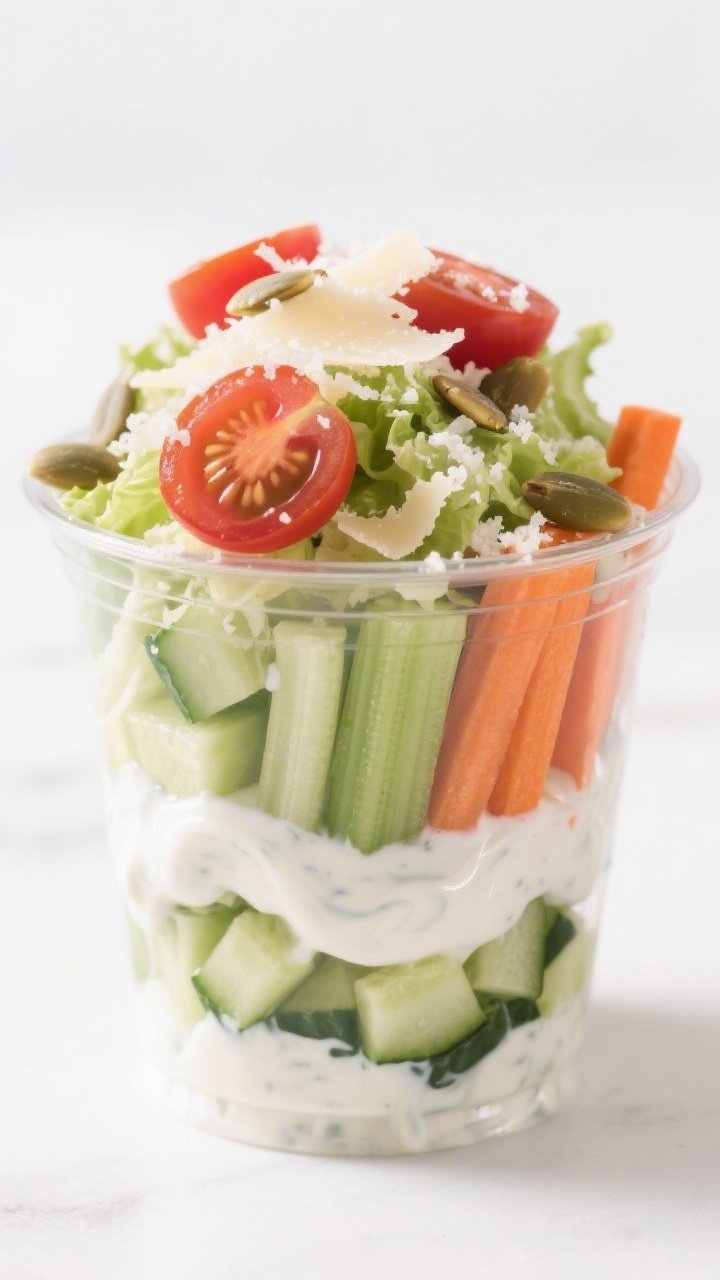
- Layer the cups. Add 1–2 tablespoons of dressing to the bottom of each cup.
This anchors the veggies and prevents wilting at the top.
- Add sturdy vegetables first. Layer celery, carrots, and cucumber over the dressing. These hold up well against moisture.
- Finish with delicate items. Add tomatoes and romaine on top. Sprinkle with a little extra Parmesan if you like.
- Optional protein or crunch. Top with grilled chicken, roasted chickpeas, or pepitas for more substance and texture.
- Seal and chill. Cover cups with lids or wrap tightly.
Refrigerate at least 30 minutes to let flavors meld, or up to 3–4 days.
- Serve. Stir gently in the cup or pour onto a plate to toss. Taste and add a squeeze of lemon or pinch of salt if needed.
How to Store
- Refrigerate: Keep covered cups in the fridge for up to 4 days. The dressing at the bottom helps prevent sogginess.
- Keep it dry: Pat vegetables dry after washing.
Excess water waters down the dressing and softens the greens.
- Hold delicate greens: If making more than 3 days ahead, store romaine separately and add it right before eating.
- Meal prep tip: Portion dressing into the cups in advance, then add veggies the day you plan to eat for maximum crunch.

Health Benefits
- High protein, lighter calories: Greek yogurt offers protein without the heaviness of mayonnaise-based dressings.
- Gut-friendly probiotics: Yogurt may support a healthy gut, depending on the brand and live cultures.
- Fiber-rich crunch: Veggies like carrots, celery, and peppers add fiber for fullness and steady energy.
- Healthy fats: Olive oil and Parmesan contribute satisfying fats that help absorb fat-soluble vitamins.
- Lower sodium control: Making dressing at home lets you control salt, anchovy, and Worcestershire levels.
Pitfalls to Watch Out For
- Watery dressing: If you rinse veggies right before layering, trapped water will thin the dressing. Dry thoroughly with towels or a spinner.
- Overpowering garlic or anchovy: Start small and taste as you go. You can always add more, but you can’t take it out.
- Wilted greens: Don’t pack romaine against the dressing.
Keep it on top and add just before serving if storing longer than 3 days.
- Too tangy or too bland: Balance is key. Use lemon for brightness, Parmesan for savoriness, and a pinch of sugar or honey if it tastes sharp.
- Texture mismatch: Cut vegetables into similar bite-size pieces so you get a balanced forkful every time.
Variations You Can Try
- Protein boost: Add rotisserie chicken, canned tuna, hard-boiled eggs, or grilled shrimp.
- Vegetarian Caesar: Skip anchovies and Worcestershire. Use capers, extra lemon, and a dash of soy sauce or tamari for umami.
- Dairy-free twist: Use a thick dairy-free yogurt and nutritional yeast instead of Parmesan.
Adjust salt to taste.
- Spicy Caesar: Stir in Calabrian chili paste or hot sauce. A pinch of red pepper flakes works too.
- Crunchy toppers: Swap croutons for roasted chickpeas, toasted panko, or crushed Parmesan crisps.
- Herb-forward: Add chopped parsley, chives, or dill to the dressing for a fresh finish.
- Grains for the win: Layer in cooked, cooled farro or quinoa for a more filling lunch cup.
FAQ
Can I make the dressing without anchovies?
Yes. Use chopped capers for a briny note, and add an extra pinch of Parmesan and a dash of soy sauce or tamari to deepen the flavor.
What type of Greek yogurt is best?
Use plain, unsweetened Greek yogurt.
For the creamiest texture, choose 2% or whole milk. Nonfat works, but it may taste tangier and slightly less rich.
How long do these cups stay crisp?
Properly dried veggies stay crisp for 3–4 days. Keep the romaine at the top, and avoid cutting tomatoes too far in advance if you want maximum crunch.
Is there a way to make the dressing egg-free but still “Caesar-like”?
This version is already egg-free because it uses yogurt instead of raw egg.
For a more classic feel, bump up the Parmesan and anchovy slightly.
Can I serve these for a party?
Absolutely. Use clear 8-ounce cups, add a crunchy topper right before serving, and set out lemon wedges. They’re easy to grab and look polished on a tray.
What if my dressing tastes too sharp?
Whisk in a teaspoon of olive oil, a pinch of sugar or honey, and a little more Parmesan.
Salt balances bitterness, so taste and adjust carefully.
How do I make it gluten-free?
The recipe is naturally gluten-free, but double-check Worcestershire and any add-ins. Skip croutons or use gluten-free alternatives.
In Conclusion
Greek Yogurt Caesar Veggie Cups bring creamy, tangy, crunchy satisfaction with a lighter twist. They’re simple to prep, easy to pack, and flexible enough to suit any taste.
Keep a few in the fridge for busy days, or set them out as a fresh party snack. With the right balance of flavor and texture, this is a feel-good bite you’ll want on repeat.