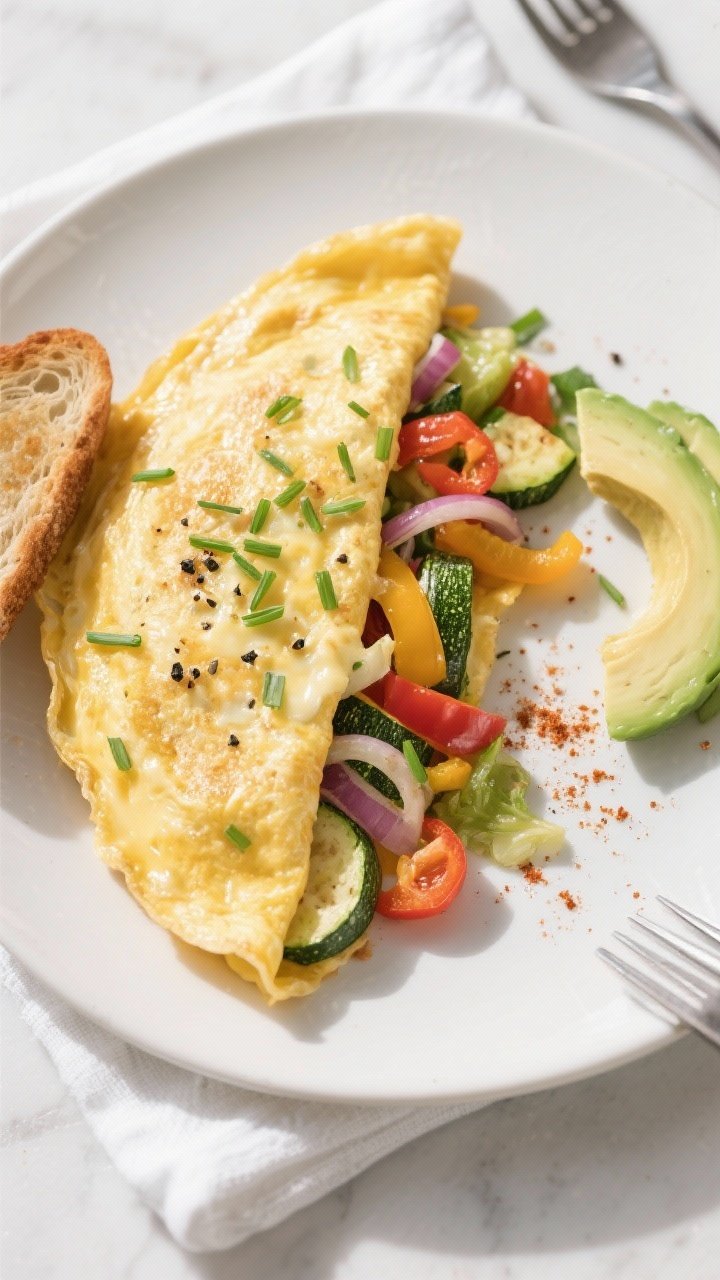
Loaded Veggie Garden Omelette (Zucchini, Peppers, Onions) – Fresh, Colorful, and Satisfying
This loaded veggie garden omelette is a simple way to pack your morning with color, flavor, and freshness. It’s hearty without being heavy, and it uses everyday vegetables you might already have in your fridge. Zucchini, peppers, and onions cook down into a sweet, savory mix that pairs perfectly with fluffy eggs.
Whether you’re cooking for one or feeding a crowd, this omelette is easy to scale and easy to love.
What Makes This Special
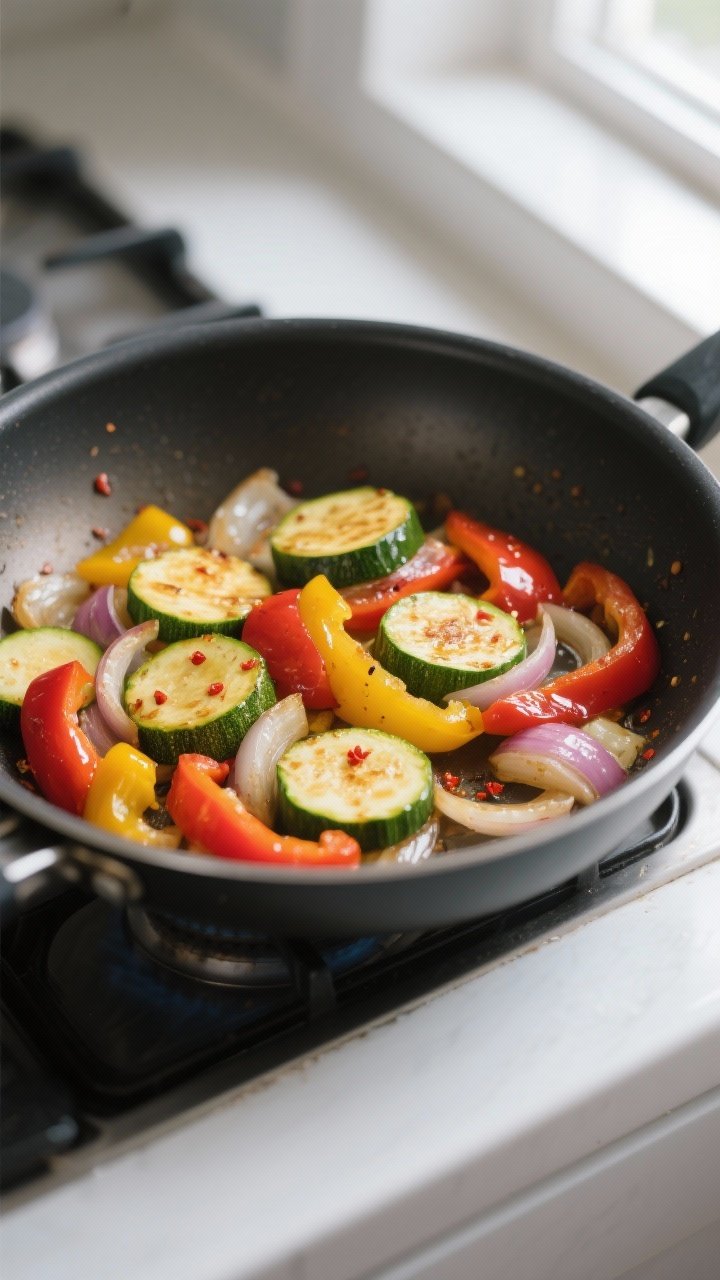
This omelette is all about balance: tender vegetables, creamy eggs, and just enough seasoning to make everything shine. It’s a smart use of garden produce or leftover vegetables from the week. You can customize it in endless ways, but the core trio—zucchini, peppers, onions—gives you brightness, sweetness, and texture.
Plus, it comes together quickly, which makes it perfect for busy mornings or a light dinner.
Ingredients
- 3 large eggs (or 2 eggs + 2 egg whites for a lighter option)
- 1/2 small zucchini, diced
- 1/3 cup bell pepper, diced (any color, or a mix)
- 1/4 cup onion, finely chopped (yellow, white, or red)
- 1 small clove garlic, minced (optional)
- 1–2 tablespoons shredded cheese (cheddar, mozzarella, feta, or goat cheese), optional
- 1 tablespoon olive oil or butter, divided
- 2 tablespoons milk or water (for fluffier eggs)
- Salt and freshly ground black pepper, to taste
- Pinch of red pepper flakes or smoked paprika (optional)
- Fresh herbs for garnish (chives, parsley, or basil), optional
Step-by-Step Instructions

- Prep the vegetables. Dice the zucchini and peppers into small, even pieces. Finely chop the onion. Smaller cuts cook faster and give you a more even bite in the omelette.
- Beat the eggs. In a bowl, whisk the eggs with milk or water, a pinch of salt, and a few grinds of pepper until the mixture is smooth and slightly frothy.
This traps air and makes the omelette tender.
- Sauté the vegetables. Heat half the oil or butter in a nonstick skillet over medium heat. Add onion and peppers with a pinch of salt and cook 2–3 minutes until they soften.
- Add zucchini and garlic. Stir in the zucchini and cook another 2–3 minutes until it’s just tender and lightly golden. Add garlic for the last 30 seconds.
Taste and season. Remove the veggies to a plate.
- Wipe and re-grease the pan. Lightly wipe the skillet if needed. Add the remaining oil or butter and return to medium or medium-low heat.
You want gentle heat for fluffy eggs.
- Pour in the eggs. Add the beaten eggs and let them sit undisturbed for 10–15 seconds. Use a spatula to gently pull cooked edges toward the center, letting uncooked egg flow to the sides.
- Add the filling. When the eggs are mostly set but still slightly glossy on top, sprinkle the sautéed veggies over one half. Add cheese and a pinch of red pepper flakes or smoked paprika if you like.
- Fold and finish. Carefully fold the omelette in half over the filling.
Cook another 20–40 seconds until the cheese melts and the eggs are cooked but still tender. Avoid overcooking.
- Garnish and serve. Slide onto a plate and top with fresh herbs. Add a crack of black pepper and serve with toast, avocado, or a small side salad.
How to Store
- Refrigerate: Let the omelette cool to room temperature, then store in an airtight container for up to 3 days.
- Reheat: Warm gently in a nonstick skillet over low heat with a splash of water and a lid, or microwave in 15–20 second bursts.
Avoid overheating so it doesn’t turn rubbery.
- Prep ahead: Chop the vegetables up to 3 days in advance. You can also sauté a big batch and keep it in the fridge to speed up breakfast.
- Freezing: Not ideal for whole omelettes, but you can freeze cooked veggie filling for up to 2 months and use it as needed.
Health Benefits
- Protein for satiety: Eggs deliver complete protein, which helps keep you full and supports muscle repair.
- Fiber and micronutrients: Zucchini, peppers, and onions add fiber plus vitamins A, C, K, and folate, along with antioxidants that support healthy immune function.
- Heart-friendly fats: Olive oil provides monounsaturated fats that support heart health when used in moderation.
- Balanced energy: The mix of protein, veggies, and a little fat makes this a steady, energizing meal without a mid-morning crash.
- Low-carb friendly: This omelette fits low-carb and gluten-free eating styles, with flexibility for dairy-free options.
Common Mistakes to Avoid
- Using high heat: High heat toughens eggs and burns veggies. Keep it at medium or medium-low for tender results.
- Skipping the sauté: Raw veggies release water and make the omelette soggy.
Cook them first to concentrate flavor.
- Overstuffing: Too much filling makes folding messy and uneven. Aim for a thin, even layer.
- Overcooking the eggs: Pull the omelette from the heat while it’s still slightly glossy. It will finish cooking off the heat.
- Uneven chopping: Big chunks cook slower and create pockets.
Even, small dice gives better texture.
Recipe Variations
- Mediterranean: Add cherry tomatoes, olives, spinach, and feta. Finish with oregano and a squeeze of lemon.
- Southwest: Use poblano or jalapeño, add black beans and cheddar, and top with salsa and cilantro.
- Mushroom and Herb: Sauté cremini mushrooms with thyme and finish with goat cheese and chives.
- Dairy-Free: Skip the cheese and use olive oil. Add avocado slices or a spoon of hummus on the side.
- High-Protein: Add diced turkey or chicken sausage to the veggie mix, or use cottage cheese inside.
- Green Power: Fold in baby spinach or kale during the last minute of sautéing the veggies.
FAQ
Can I use egg whites only?
Yes.
Use 4–5 egg whites for one omelette. The texture will be lighter and a bit drier, so cook gently and consider adding a teaspoon of olive oil or a little extra veggie moisture to keep it tender.
What pan works best for omelettes?
A nonstick skillet, 8–10 inches for a 3-egg omelette, gives you the easiest release and fold. A well-seasoned carbon steel pan also works if you’re comfortable with it.
How do I keep the omelette from tearing?
Don’t rush the eggs.
Cook over medium-low heat and stop stirring once the base sets. Add filling sparingly and fold with a flexible spatula. A tiny splash of water in the eggs can help with tenderness.
Can I add raw spinach directly?
Yes, but add it during the last minute of cooking the veggies so it wilts and releases some moisture before it hits the eggs.
What cheeses pair well?
Cheddar for sharpness, mozzarella for melt, feta or goat cheese for tang, and Parmesan for savory depth.
Use 1–2 tablespoons so it enhances without overpowering.
Is this meal prep friendly?
Yes, but it’s best to prep components. Cook and store the veggie filling and whisked eggs separately. Assemble and cook fresh for the best texture in minutes.
How can I make it spicier?
Add diced jalapeño or a pinch of cayenne to the veggies.
Finish with hot sauce or a drizzle of chili oil.
Can I bake this as a frittata?
Absolutely. Sauté the vegetables, add whisked eggs and cheese, and bake at 350°F (175°C) for 12–18 minutes until just set. Great for serving several people.
Wrapping Up
This loaded veggie garden omelette is a simple, flexible recipe that turns fresh produce into a satisfying meal.
With just a few steps and everyday ingredients, you get a colorful plate that works for breakfast, lunch, or dinner. Make it your own with cheese, herbs, or a favorite spice blend. Once you’ve tried this version, you’ll have a go-to method for any vegetables you’ve got on hand.
Printable Recipe Card
Want just the essential recipe details without scrolling through the article? Get our printable recipe card with just the ingredients and instructions.