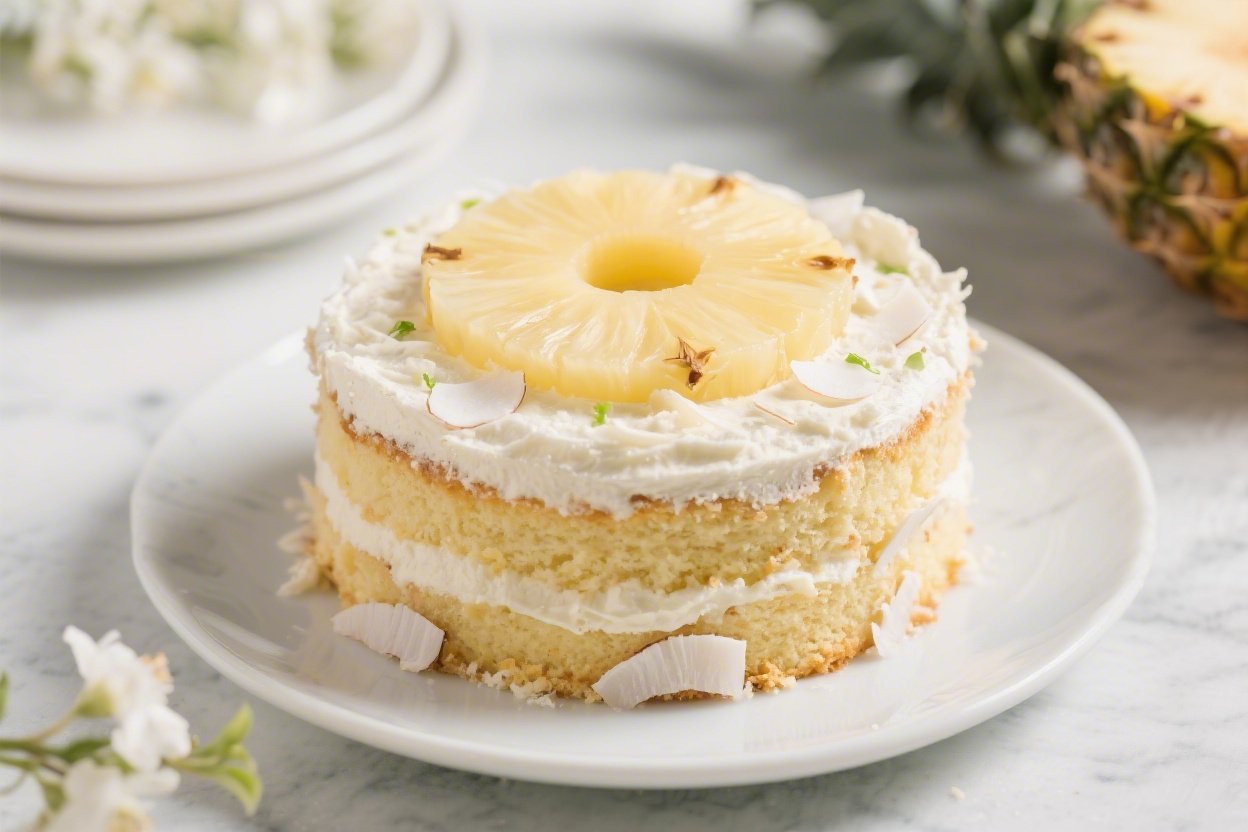
Pineapple Coconut Spring Cake – Bright, Moist, and Perfect for Celebrations
Warm days call for desserts that feel light, sunny, and full of flavor. This Pineapple Coconut Spring Cake checks every box. It’s moist, gently sweet, and bursting with tropical notes that make you think of sunshine even on a gray day.
The texture is tender but sturdy, so it slices beautifully and holds up to a creamy frosting. Whether you’re cooking for a brunch, a birthday, or a casual weekend treat, this cake brings joy without being fussy.
What Makes This Recipe So Good
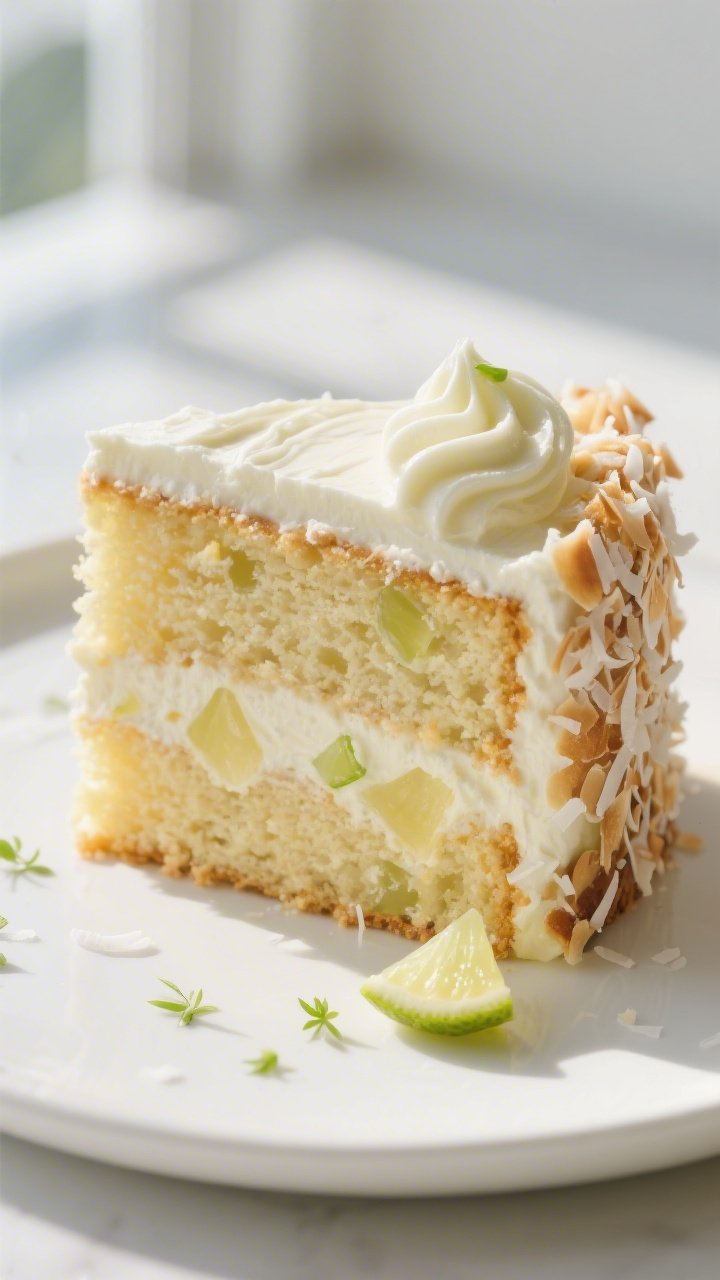
- Ultra-moist crumb: Crushed pineapple adds juicy sweetness and keeps the cake soft for days.
- Balanced flavor: Coconut brings mellow richness while pineapple adds bright, fresh notes. Neither overpowers the other.
- Simple method: No special equipment beyond a couple of bowls and a whisk or mixer.
- Make-ahead friendly: The flavors bloom overnight, and the cake stays tender.
- Versatile finish: Top with cream cheese frosting, whipped cream, or a light glaze—each option works.
Shopping List
- All-purpose flour
- Granulated sugar
- Light brown sugar
- Baking powder
- Baking soda
- Fine sea salt
- Ground cinnamon (optional but lovely)
- Large eggs
- Neutral oil (canola, sunflower, or vegetable)
- Unsweetened coconut milk or whole milk
- Vanilla extract
- Almond extract (optional, for a bakery-style note)
- Crushed pineapple in juice (canned, not drained)
- Unsweetened shredded coconut
- Fresh lime or lemon (zest for brightness)
- Unsalted butter (for frosting, if using)
- Cream cheese (for frosting, if using)
- Powdered sugar (for frosting or glaze)
- Toasted coconut flakes (for garnish, optional)
How to Make It
- Prep the pans and oven: Heat the oven to 350°F (175°C).
Grease and line two 8-inch round cake pans with parchment. Lightly flour the sides to prevent sticking.
- Mix the dry ingredients: In a large bowl, whisk together 2 1/2 cups flour, 3/4 cup granulated sugar, 1/2 cup light brown sugar, 2 teaspoons baking powder, 1/2 teaspoon baking soda, 1/2 teaspoon fine sea salt, and 1/2 teaspoon cinnamon.
- Combine the wet ingredients: In a separate bowl, whisk 3 large eggs, 3/4 cup neutral oil, 3/4 cup coconut milk, 2 teaspoons vanilla, and 1/4 teaspoon almond extract (optional). Add the zest of 1 lime (or lemon) for a fresh finish.
- Add the pineapple and coconut: Stir in one 20-ounce can of crushed pineapple with its juice and 1 cup unsweetened shredded coconut to the wet mixture.
The batter will look slightly thick and textured—perfect.
- Bring it together: Pour the wet mixture into the dry ingredients. Stir with a spatula until just combined. Do not overmix. A few small lumps are fine.
- Fill and bake: Divide batter evenly between the pans.
Bake for 28–34 minutes, or until the tops are golden and a toothpick comes out with a few moist crumbs.
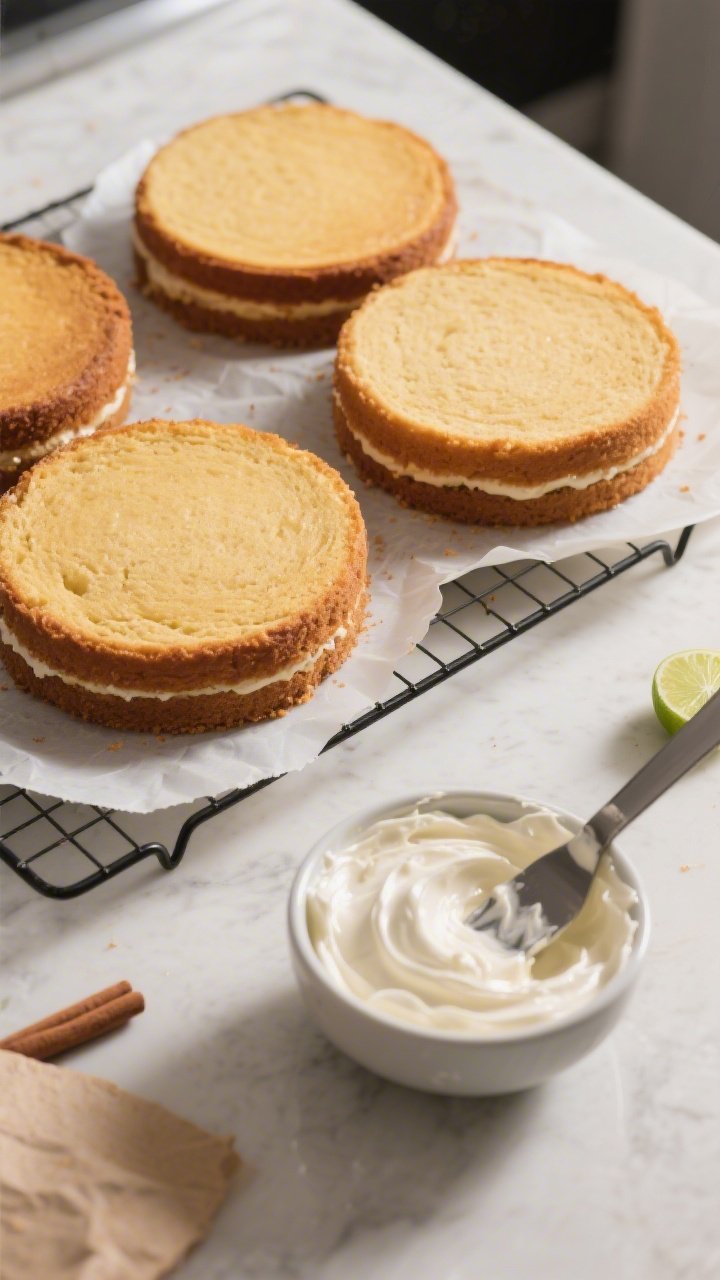
- Cool completely: Let cakes cool in the pans for 10 minutes, then turn them out onto a rack. Peel off parchment and cool fully before frosting.
- Make the frosting (optional but recommended): Beat 8 ounces cream cheese and 1/2 cup unsalted butter until smooth. Sift in 3–3 1/2 cups powdered sugar, a pinch of salt, 1 teaspoon vanilla, and 1–2 teaspoons fresh lime juice.
Beat until creamy and spreadable.
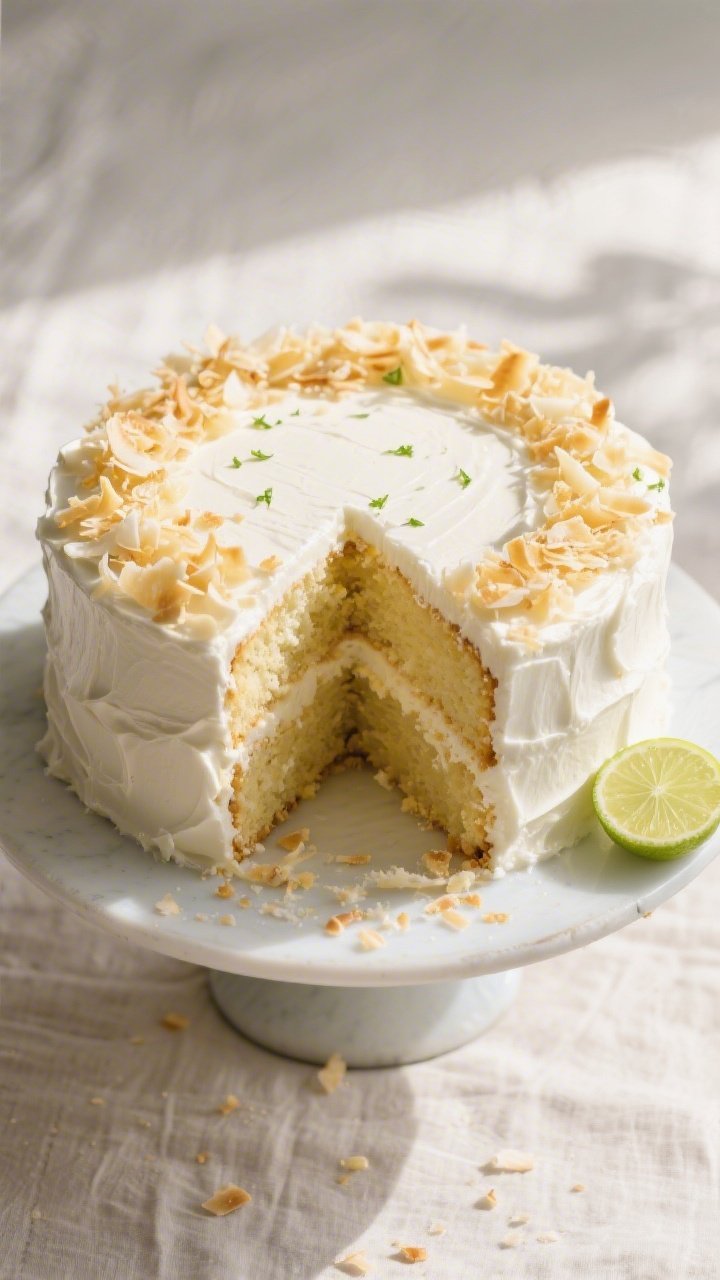
- Assemble: Place the first layer on a plate, spread with frosting, then add the second layer and frost the top and sides. Press toasted coconut flakes onto the sides or sprinkle on top for crunch.
- Set and serve: Chill for 20–30 minutes to set clean slices. Serve slightly cool or at room temperature.
Keeping It Fresh
The cake stays moist for several days, thanks to the pineapple.
If frosted with cream cheese, refrigerate, covered, for up to 4 days. For best texture, let slices sit at room temperature for 15–20 minutes before serving.
Unfrosted layers can be wrapped tightly and frozen for up to 2 months. Thaw overnight in the fridge, then bring to room temp before frosting.
If you made a simple glaze instead of cream cheese frosting, the cake can sit at room temperature for 2 days, covered.
Benefits of This Recipe
- Seasonal appeal: Light flavors and citrusy notes fit spring gatherings and holidays.
- Beginner-friendly: The batter comes together quickly, with pantry staples and one canned ingredient.
- Moist and forgiving: Pineapple adds natural moisture, so the cake is less likely to dry out.
- Adaptable frosting: Choose cream cheese for tang, whipped cream for airiness, or a glaze for simplicity.
- Crowd-pleasing: Not too sweet, with a soft crumb that works for adults and kids alike.
Pitfalls to Watch Out For
- Overmixing: This leads to a tough crumb. Stop as soon as the dry streaks disappear.
- Draining the pineapple: Don’t. The juice is part of the moisture balance and flavor.
- Skipping the parchment: Pineapple-heavy cakes can stick.
Line the pans for easy release.
- Overbaking: Check early. Pull the cake when a toothpick shows a few moist crumbs, not bone-dry.
- Warm frosting on a warm cake: Let layers cool fully or the frosting will melt and slide.
Variations You Can Try
- Pineapple-lime sheet cake: Bake the batter in a 9×13-inch pan for 32–38 minutes. Frost in the pan.
- Coconut whipped cream: Swap cream cheese frosting for lightly sweetened whipped cream and a sprinkle of toasted coconut.
- Nutty crunch: Fold 1/2 cup chopped macadamias or pecans into the batter for texture.
- Pineapple curd layer: Spread a thin layer of pineapple or lemon curd between cakes for extra zing.
- Dairy-free: Use coconut milk, plant-based butter, and vegan cream cheese or a coconut milk whipped topping.
- Gluten-free: Replace flour with a cup-for-cup gluten-free blend.
Add 1 tablespoon milk if batter seems very thick.
FAQ
Can I use fresh pineapple instead of canned?
Yes, but chop it very fine and include any juices to keep the batter moist. Aim for the same volume as a 20-ounce can and avoid large chunks, which can create soggy pockets.
Do I need to toast the coconut for the garnish?
No, but it adds a lovely crunch and a deep, nutty aroma. Toast in a dry skillet over medium heat for 3–5 minutes, stirring often, until golden.
Can I make this as cupcakes?
Absolutely.
Fill liners two-thirds full and bake at 350°F (175°C) for 18–22 minutes. Start checking at 16 minutes and pull when the tops spring back lightly.
What if I only have sweetened shredded coconut?
You can use it, but reduce the granulated sugar by 2–3 tablespoons to balance the sweetness. The texture will be slightly chewier but still delicious.
Is the almond extract necessary?
No.
It adds a subtle bakery-style note, but vanilla alone works great. If you use almond extract, keep it light so it doesn’t outshine the pineapple.
How do I prevent a domed top?
Use baking strips around the pans, or lower the oven rack to the lower-middle position. You can also gently level cooled layers with a serrated knife before stacking.
Can I add coconut flakes on the inside?
Yes.
The recipe already includes shredded coconut in the batter, but you can add extra between layers for texture. Just avoid thick, hard-to-slice layers.
What frosting pairs best?
Cream cheese frosting is classic and complements the tang of pineapple. For a lighter option, try stabilized whipped cream with a hint of lime zest.
How do I keep the cake from being too sweet?
Use unsweetened coconut, avoid overly sweet frostings, and lean on citrus zest and juice to brighten without adding sugar.
A simple lime glaze is a great minimal-sugar finish.
Can I make it a day ahead?
Yes. In fact, it tastes even better the next day. Assemble, cover, and refrigerate.
Let it sit out briefly before slicing for the best texture.
In Conclusion
This Pineapple Coconut Spring Cake brings fresh flavor, easy technique, and a sunny personality to your table. It’s tender, not fussy, and adaptable to whatever you have on hand. Whether you frost it tall for a celebration or keep it simple as a sheet cake, it’s the kind of dessert people remember.
Make it once, and it may become your go-to spring tradition.