Spring Vegetable Pasta With Spinach, Lemon & Garlic – Bright, Fresh, and Satisfying
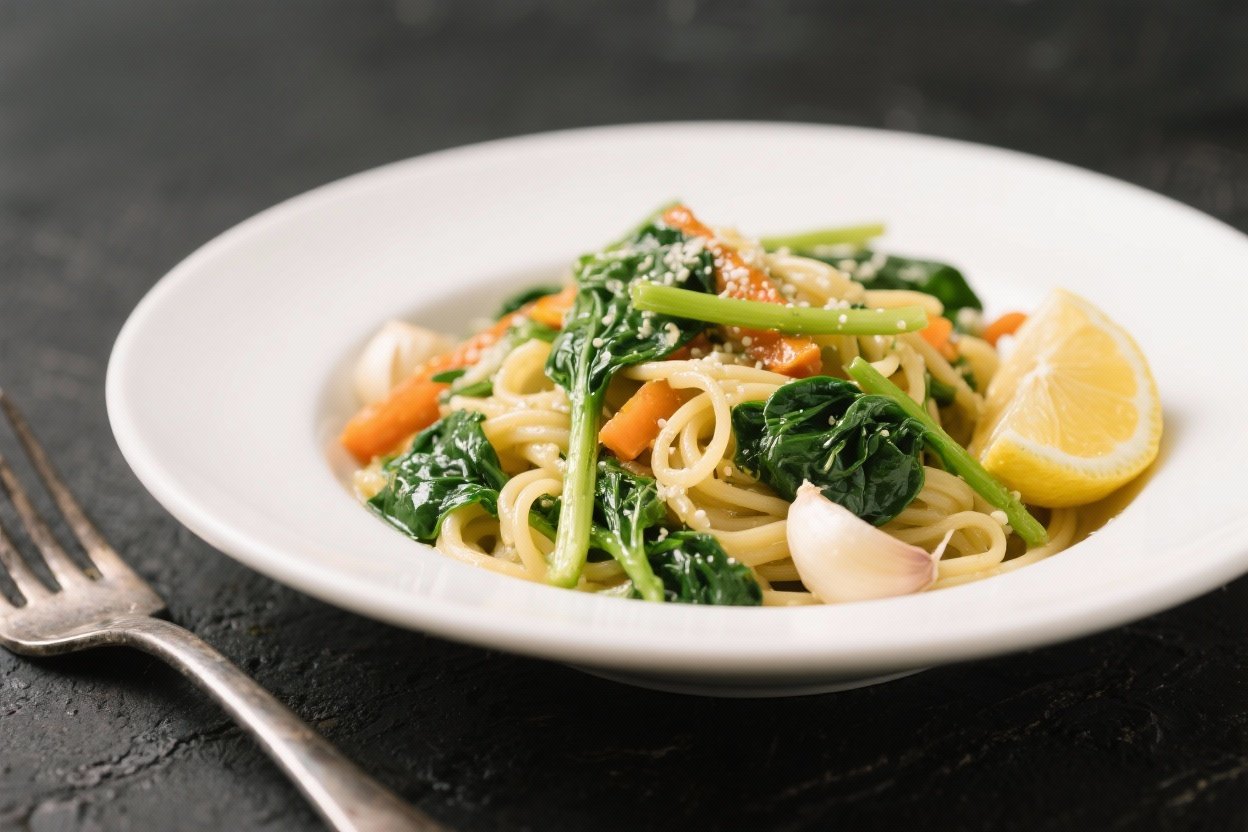
This is the kind of pasta you make when you want something light but still comforting. It’s bright with lemon, fragrant with garlic, and packed with tender spring vegetables. The sauce is simple—just good olive oil, pasta water, and a squeeze of citrus—but it clings beautifully to every strand.
You can put it on the table in under 30 minutes, and it feels like sunshine in a bowl. Whether you’re cooking for yourself or a small crowd, this one is easy, flexible, and full of flavor.
What Makes This Recipe So Good
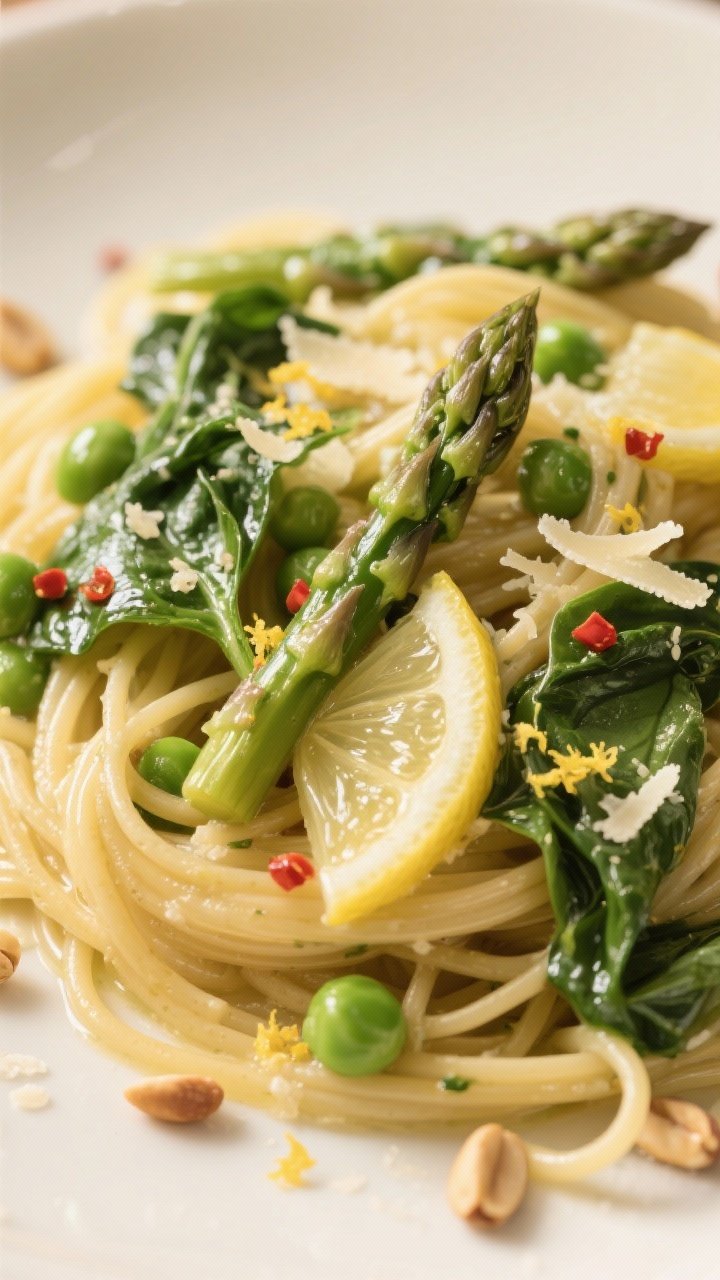
- Fresh, clean flavors: Lemon and garlic keep things lively without overpowering the vegetables.
- Weeknight-fast: Most of the prep happens while the pasta cooks, so it comes together quickly.
- Flexible vegetables: Use what’s in season—spinach, peas, asparagus, or zucchini all shine here.
- Light but filling: Olive oil, greens, and pasta create a satisfying, not-heavy meal.
- Great leftover potential: It reheats well and tastes just as good at room temperature.
Ingredients
- 12 ounces pasta (spaghetti, linguine, or short pasta like orecchiette)
- 3 tablespoons extra-virgin olive oil, plus more for finishing
- 4 cloves garlic, thinly sliced
- Zest of 1 large lemon
- Juice of 1 large lemon (about 3 tablespoons), plus more to taste
- 1 bunch asparagus, trimmed and cut into 1-inch pieces (about 2 cups)
- 1 cup fresh or frozen peas
- 5 ounces baby spinach (about 5 packed cups)
- 1/2 teaspoon red pepper flakes (optional, to taste)
- 1/2 cup grated Parmesan or Pecorino Romano, plus more for serving
- 1/4 cup fresh basil or parsley, chopped
- Kosher salt and freshly ground black pepper
- Reserved pasta water (about 1 to 1 1/2 cups)
- Optional add-ins: 1/4 cup toasted pine nuts or almonds, 2 tablespoons butter, or shaved Parmesan
Instructions
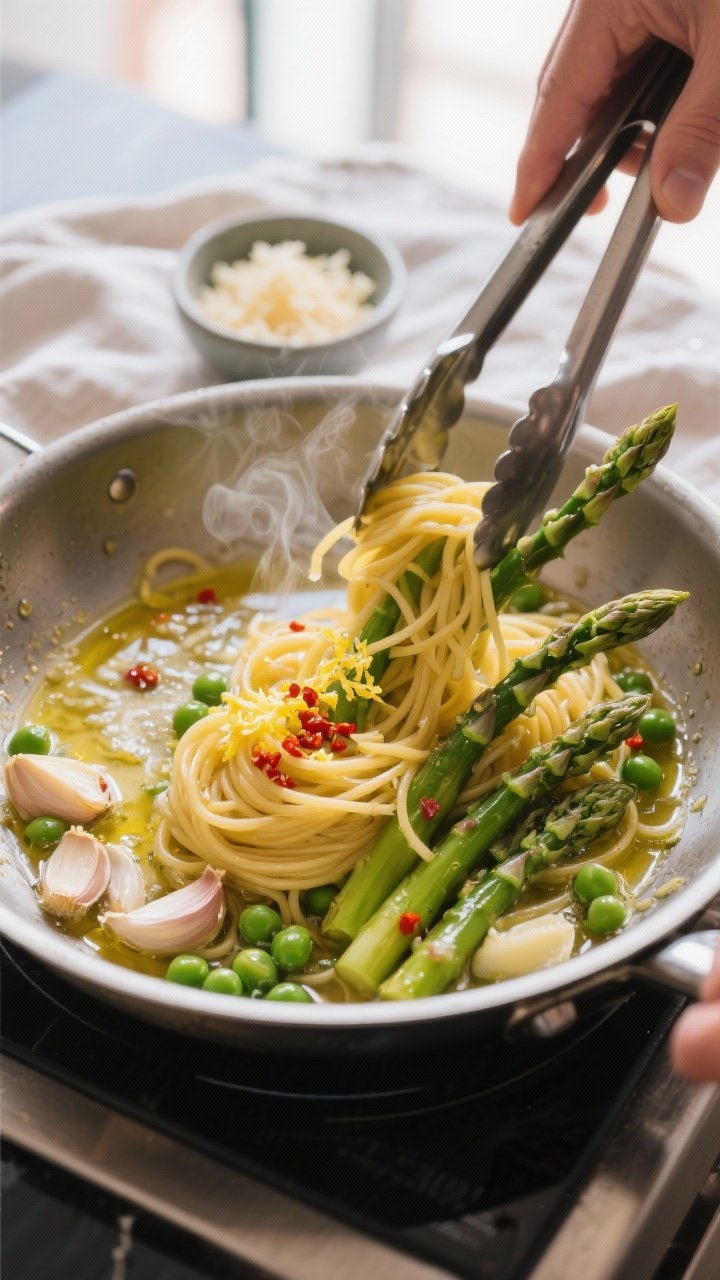
- Boil the pasta: Bring a large pot of well-salted water to a rolling boil. Add pasta and cook until just shy of al dente according to package directions.
Before draining, reserve 1 to 1 1/2 cups pasta water.
- Blanch the asparagus and peas: In the last 2 minutes of pasta cooking, add the asparagus to the pot. Add peas in the final 45–60 seconds. Drain everything together and set aside.
- Sauté the aromatics: In a large skillet or Dutch oven, warm the olive oil over medium heat.
Add the sliced garlic and red pepper flakes. Cook 60–90 seconds, stirring often, until the garlic is fragrant and just turning golden. Don’t let it brown.
- Build the sauce: Add the lemon zest and about 3/4 cup reserved pasta water to the skillet.
Bring to a lively simmer for a minute to emulsify the oil and water.
- Add greens and pasta: Add the spinach, cooked pasta, asparagus, and peas to the skillet. Toss gently with tongs. The spinach will wilt in about a minute.
- Finish with lemon and cheese: Add the lemon juice and Parmesan.
Toss and add more pasta water, a splash at a time, until the sauce lightly coats the pasta. Season with salt and black pepper to taste.
- Herbs and extras: Fold in the chopped basil or parsley. If using, add a knob of butter for richness or toss with toasted nuts for crunch.
- Serve: Plate immediately with extra cheese, a drizzle of olive oil, and more lemon if you like it extra bright.
Keeping It Fresh
- Storage: Keep leftovers in an airtight container for up to 3 days.
Add a splash of water or a squeeze of lemon when reheating to revive the sauce.
- Best reheating method: Warm gently in a skillet over medium-low heat with a tablespoon of water or olive oil. Microwave works too—about 60–90 seconds, stirring halfway.
- Make-ahead tips: You can blanch the asparagus and peas up to a day early. Store in the fridge and add them during the final toss.
- Don’t overcook: Al dente pasta holds up longer and doesn’t turn mushy after sitting.
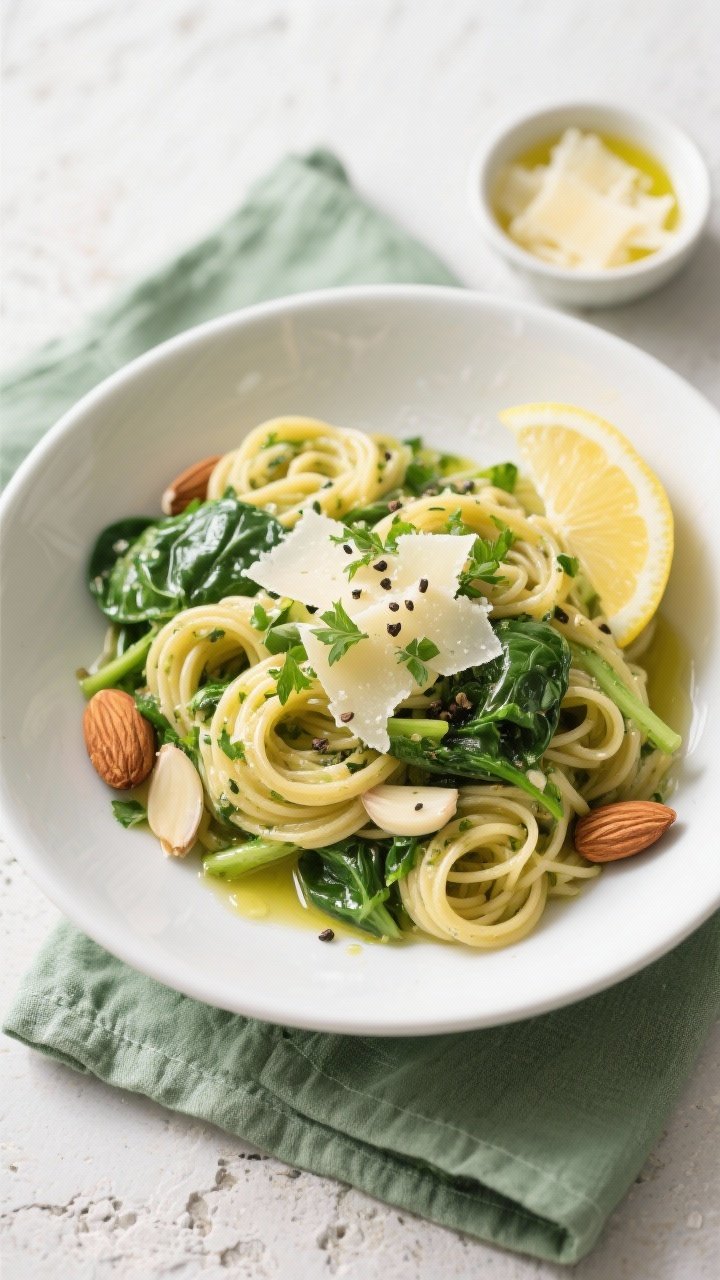
Health Benefits
- Leafy greens and fiber: Spinach and peas add fiber, folate, and iron, supporting energy and digestion.
- Antioxidants: Asparagus, lemon zest, and herbs bring antioxidants that support overall wellness.
- Healthy fats: Olive oil provides heart-friendly monounsaturated fats and helps absorb fat-soluble nutrients.
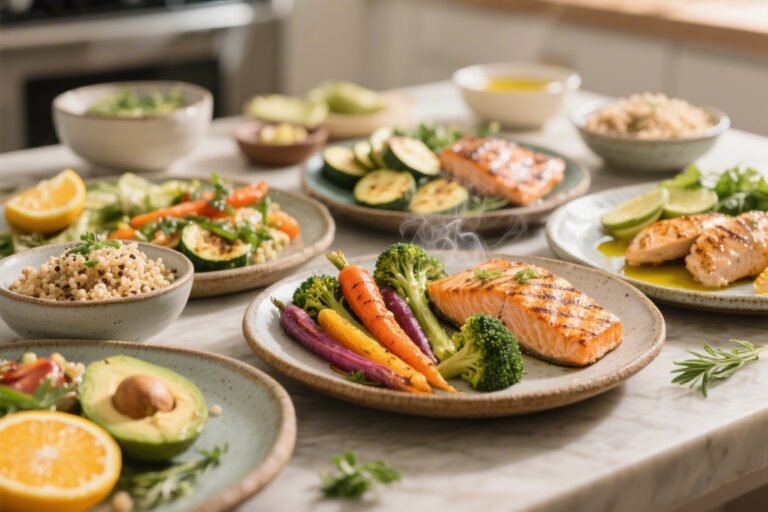
- Balanced plate: Pair with grilled chicken, shrimp, or chickpeas for a boost of protein while keeping the dish light.
Pitfalls to Watch Out For
- Overcooking the vegetables: Asparagus and peas should stay crisp-tender and bright green.
A minute too long can make them dull and soft.
- Skipping pasta water: That starchy liquid is key to a silky, clingy sauce. Don’t drain it all.
- Burning the garlic: Golden, not brown. Bitter garlic can throw off the whole dish.
- Under-seasoning: Taste at the end.
Lemon, salt, and cheese need to be balanced so the flavors pop.
Recipe Variations
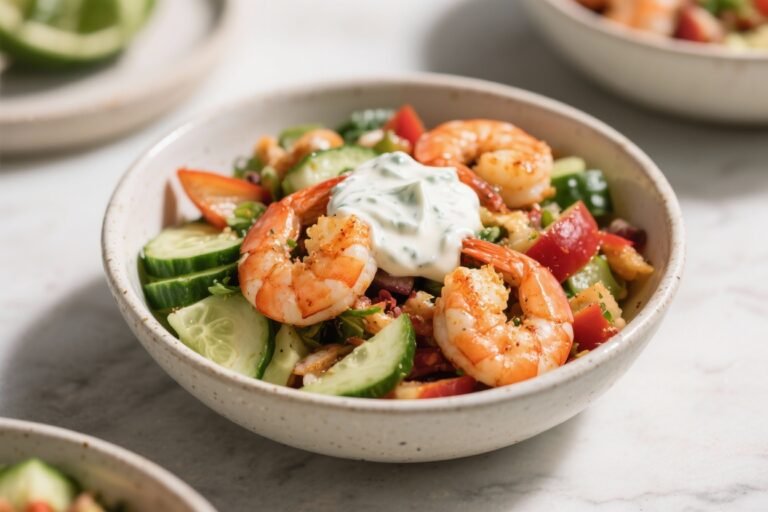
- Protein boost: Add sautéed shrimp, flaked salmon, grilled chicken, or canned chickpeas. Toss in at the end so they don’t overcook.
- Creamy version: Stir in 1/4 cup crème fraîche, ricotta, or a splash of heavy cream with the cheese for a velvety finish.
- Vegan-friendly: Skip the cheese or use a vegan Parmesan. Add toasted breadcrumbs for a savory, crunchy topper.
- Gluten-free: Use a quality gluten-free pasta and keep an eye on cook time—GF pasta goes from perfect to mush quickly.
- Different veggies: Try zucchini ribbons, broccolini, artichoke hearts, or snap peas.
Keep cook times short to preserve texture.
- Herb swap: Mint and dill bring a cool, springy twist. Add at the end so they stay fresh and bright.
- Nutty finish: Sprinkle toasted pine nuts, slivered almonds, or pistachios for crunch and aroma.
FAQ
Can I use frozen vegetables?
Yes. Frozen peas work perfectly, and you can use frozen spinach if you thaw and squeeze out excess water first.
Add them at the end so they don’t get watery.
What pasta shape works best?
Long shapes like spaghetti or linguine are great for a silky sauce, but short shapes like orecchiette or penne catch the peas and asparagus nicely. Use what you have.
How do I make it dairy-free?
Skip the Parmesan and finish with extra olive oil, lemon, and a spoonful of nutritional yeast for savory depth. Toasted breadcrumbs also add a nice textural lift.
Can I add wine?
Absolutely.
Add 1/4 cup dry white wine after the garlic and let it reduce by half before adding pasta water. It adds a gentle, aromatic note.
How do I keep the lemon from tasting bitter?
Use fresh zest (avoid the white pith) and add the juice toward the end of cooking. Taste and balance with salt, cheese, and a little extra olive oil if needed.
Is this good for meal prep?
Yes.
It holds up for 2–3 days. For the best texture, cook the pasta al dente and refresh with a splash of water and lemon when reheating.
Final Thoughts
Spring Vegetable Pasta with Spinach, Lemon & Garlic feels like a cheat code for easy, fresh cooking. It’s fast, flexible, and tastes like it took more effort than it did.
Keep the basics—good olive oil, lemon, garlic, and pasta—and build around whatever greens you have. With a little heat and a handful of herbs, you’ll have a bright, satisfying bowl any night of the week.
Printable Recipe Card
Want just the essential recipe details without scrolling through the article? Get our printable recipe card with just the ingredients and instructions.