High-Fiber Breakfast Flatbread – A Warm, Satisfying Start to Your Day
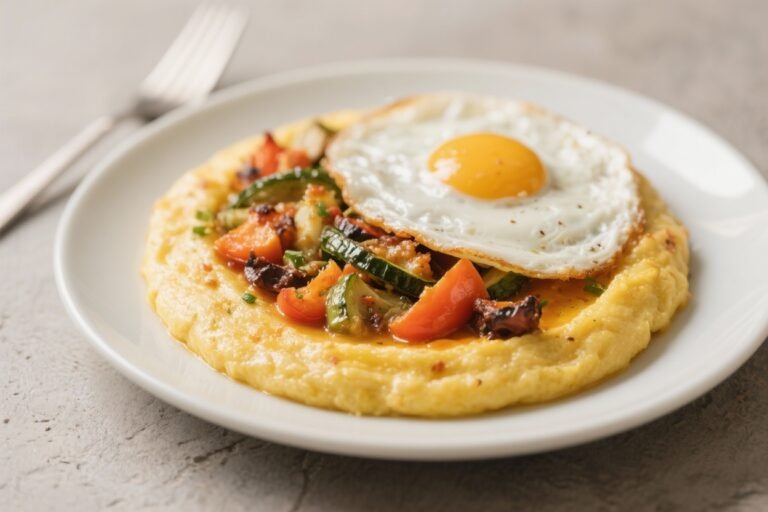
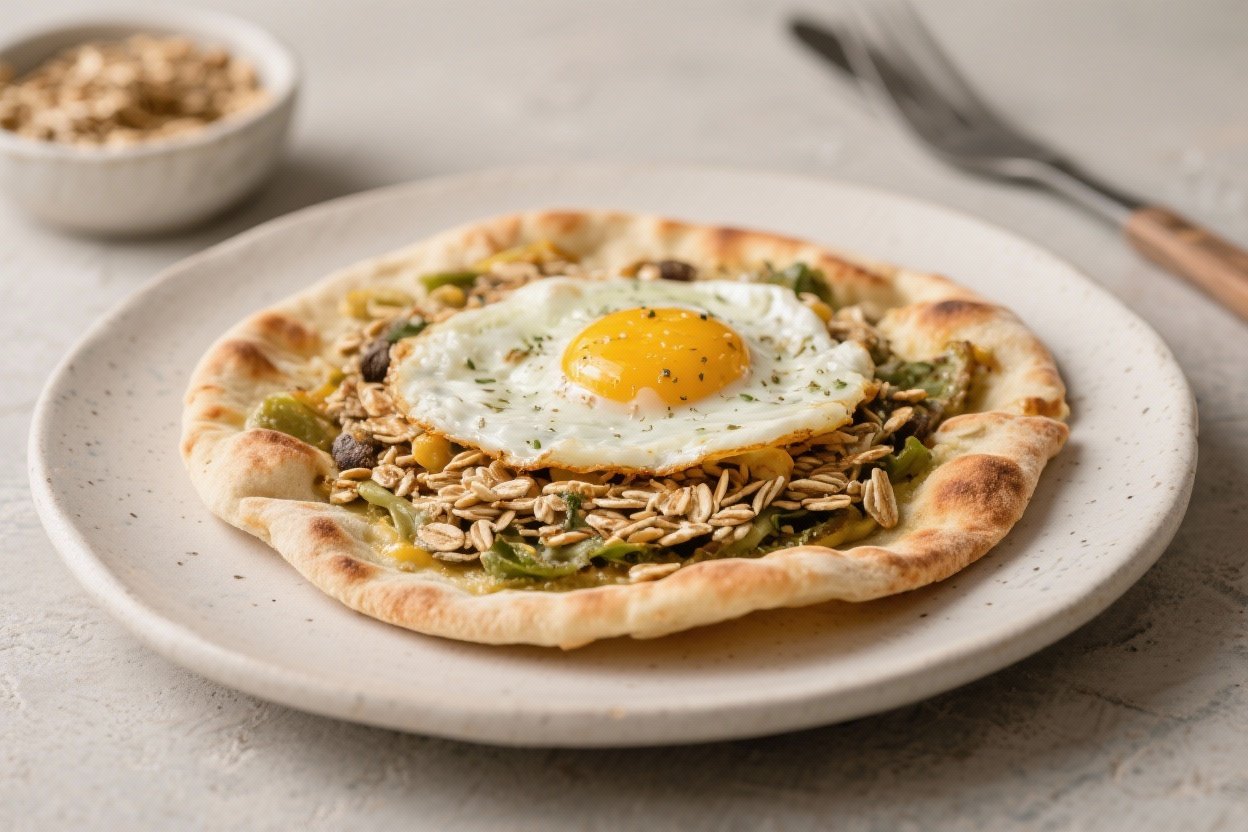
This flatbread brings together hearty whole grains, seeds, and a touch of yogurt for a warm breakfast that actually keeps you full. It cooks quickly on the stovetop, so you can make it on a weekday morning without stress. The texture is soft with a pleasant chew, and the flavor is mild and nutty, making it easy to pair with eggs, avocado, or a smear of nut butter.
If you’re trying to add more fiber without eating a bowl of bran cereal, this is a tasty way to do it. The dough is simple, forgiving, and perfect for beginners.
Why This Recipe Works
This flatbread uses a blend of whole-wheat flour, oat flour, and ground flax for a naturally high-fiber base that stays tender. A spoonful of Greek yogurt softens the dough and adds protein, while a bit of olive oil keeps it flexible and easy to roll.
Baking powder gives a slight lift, so the bread isn’t dense. The dough rests briefly, which allows the flour to hydrate and makes rolling smoother. Cooked in a hot skillet, each flatbread gets golden spots and a toasty aroma in just a few minutes.
Shopping List
- Whole-wheat flour (stone-ground if possible)
- Oat flour (or rolled oats to blend into flour)
- Ground flaxseed (golden or brown)
- Chia seeds (optional, for extra fiber)
- Baking powder
- Fine sea salt
- Plain Greek yogurt (2% or whole)
- Warm water
- Olive oil (plus a little for the pan, if needed)
- Optional toppings: sliced avocado, fried or scrambled eggs, cottage cheese, peanut or almond butter, berries, honey, everything bagel seasoning
Step-by-Step Instructions
- Make the oat flour if needed. If you don’t have oat flour, blend rolled oats in a blender until fine.
Measure after blending.
- Mix the dry ingredients. In a bowl, whisk 1 cup whole-wheat flour, 1/2 cup oat flour, 2 tablespoons ground flaxseed, 1 teaspoon chia seeds (optional), 1 teaspoon baking powder, and 1/2 teaspoon salt.
- Add the wet ingredients. Stir in 1/2 cup plain Greek yogurt, 1 tablespoon olive oil, and about 1/3 cup warm water. Start with less water and add a splash at a time until the dough comes together.
- Knead briefly. Turn the dough onto a lightly floured surface and knead for 1–2 minutes until smooth. It should be soft, not sticky.
If sticky, dust with a touch more flour.
- Rest the dough. Cover and let it rest for 10–15 minutes. This makes rolling easier and improves texture.
- Divide and shape. Cut into 4 equal pieces for larger flatbreads or 6 for smaller ones. Roll each piece into a ball, then flatten.
- Roll it out. With a rolling pin, roll each piece to about 1/8 inch thick.
Don’t worry about perfect circles—rustic is fine.
- Preheat the pan. Heat a cast-iron or heavy skillet over medium to medium-high. You want it hot enough to form golden spots quickly. Lightly brush with oil if your pan isn’t well-seasoned.
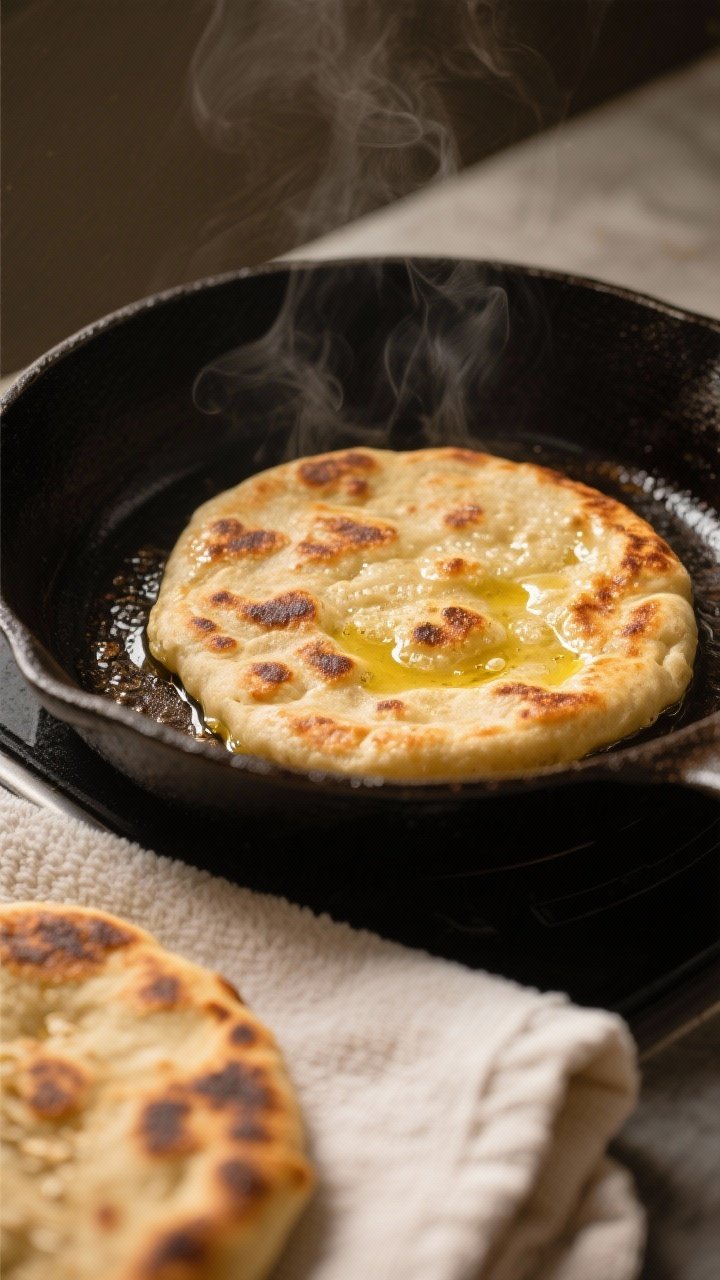
- Cook the flatbreads. Lay one flatbread in the hot pan.
Cook 1–2 minutes until bubbles form and the underside has browned spots. Flip and cook another 1–2 minutes. Adjust heat as needed to prevent burning.
- Keep them soft. Stack cooked flatbreads in a clean towel to keep warm and pliable while you finish the batch.
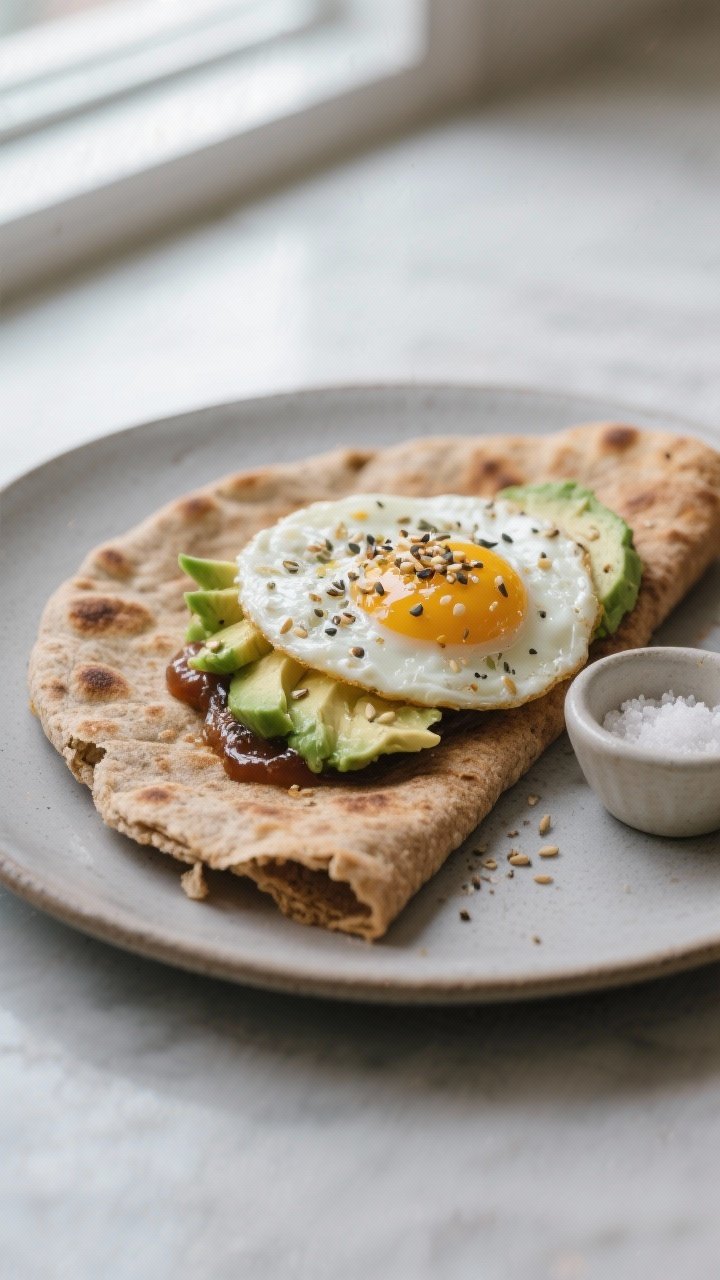
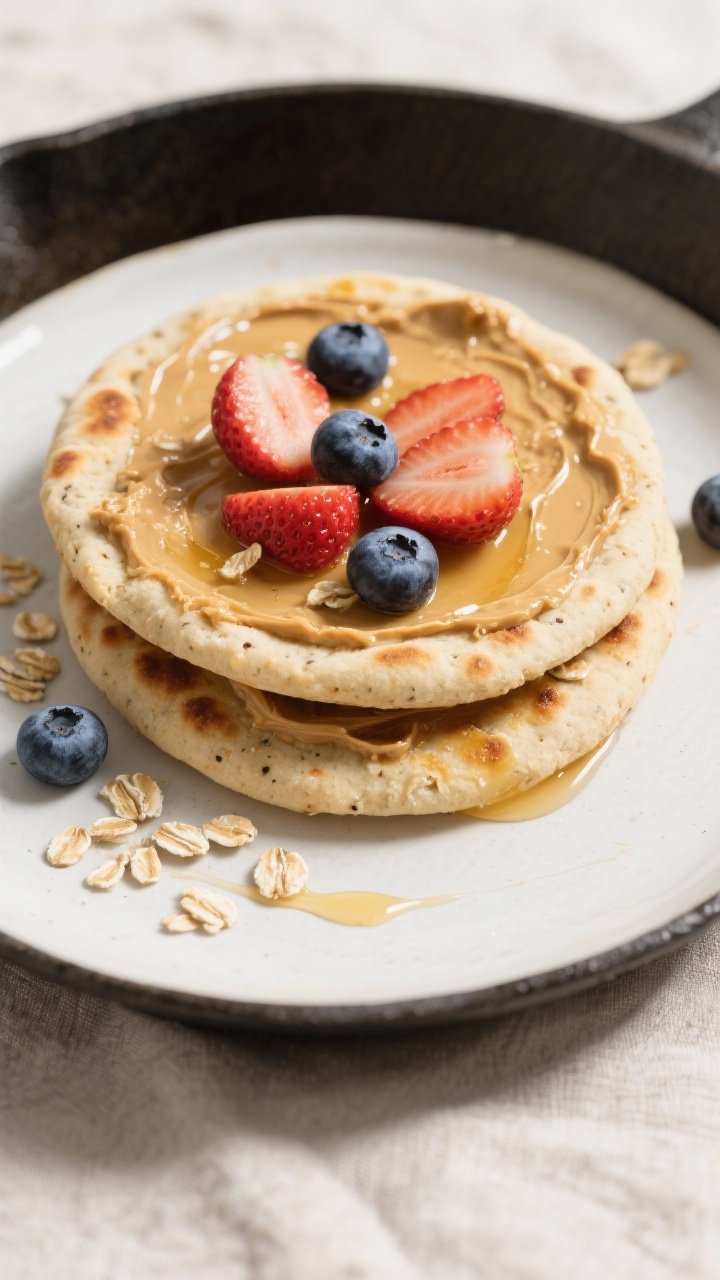
- Serve your way. Top with avocado and egg for a savory breakfast, or spread with nut butter and berries for something sweeter.
A sprinkle of everything bagel seasoning is great either way.
Keeping It Fresh
Store leftovers tightly wrapped at room temperature for up to 24 hours, or in the fridge for 3–4 days. For longer storage, freeze flatbreads between sheets of parchment in a zip-top bag for up to 2 months. Reheat in a hot dry skillet for 30–60 seconds per side, or wrap in a damp paper towel and microwave in 10–15 second bursts.
Avoid over-microwaving, which can make them tough.
Why This is Good for You
This recipe packs in soluble and insoluble fiber from whole-wheat flour, oats, flax, and chia. Fiber supports steady energy, gut health, and fullness, which can help curb mid-morning snacking. Flax and chia contribute omega-3s, while Greek yogurt adds protein for a more balanced breakfast.
Compared to many store-bought breads, this version is lower in additives and easy to tailor to your needs.
Pitfalls to Watch Out For
- Dry dough: If the dough cracks while rolling, it needs more moisture. Add a teaspoon of water at a time and knead in.
- Sticky dough: If it sticks to your hands or the pin, dust lightly with flour. Too much flour will make it tough.
- Pan too hot: Burnt spots before bubbles form means the heat is too high.
Lower it slightly.
- Skipping the rest: Rolling right away can make the dough spring back. A short rest relaxes the gluten.
- Under-seasoning: A pinch more salt can make a big difference. Taste a cooked piece and adjust next time.
Recipe Variations
- Gluten-free version: Use a 1:1 gluten-free baking blend in place of whole-wheat flour and keep the oat flour, flax, and chia.
Add an extra tablespoon of yogurt if the dough feels crumbly.
- Seeded flatbread: Mix 1–2 tablespoons of sesame or sunflower seeds into the dough for crunch.
- Herb and garlic: Add 1 teaspoon garlic powder and 1 tablespoon chopped fresh parsley or chives to the dry mix.
- Sweet breakfast flatbread: Stir in 1 teaspoon cinnamon and 1–2 teaspoons honey or maple syrup, then serve with berries and yogurt.
- Extra protein: Replace 2 tablespoons of flour with unflavored whey or plant protein. You may need an extra splash of water.
- Overnight prep: Mix the dough the night before and refrigerate. Let it sit at room temp for 10 minutes before rolling.
FAQ
Can I bake these instead of cooking on the stovetop?
Yes.
Bake on a preheated sheet at 450°F (230°C) for 5–7 minutes, flipping halfway. They won’t get the same toasted spots, but they’ll puff slightly and cook through.
What can I use instead of Greek yogurt?
Use plain regular yogurt drained briefly, kefir (a little less, because it’s thinner), or a dairy-free yogurt. You can also use more water and 1 extra tablespoon of olive oil for a vegan version.
Do I need yeast?
No.
Baking powder provides enough lift for a tender, quick-cooking flatbread. Yeast would require a rise and change the texture.
How much fiber is in each flatbread?
Exact numbers vary by brand, but a typical piece made as written lands around 5–7 grams of fiber, especially if you include chia and flax. Using more oat flour or adding seeds can nudge it higher.
My flatbread is tough.
What went wrong?
Likely too much flour or overcooking. Keep the dough slightly soft, rest it before rolling, and cook just until you see golden spots. Covering the cooked breads with a towel helps them stay supple.
Can I make the dough ahead?
Yes.
Mix the dough up to 24 hours in advance and refrigerate, well wrapped. Let it warm slightly before rolling so it doesn’t crack.
Wrapping Up
This High-Fiber Breakfast Flatbread is simple to make, satisfying, and endlessly adaptable. It turns basic pantry staples into a warm, wholesome base for whatever toppings you like.
Batch-cook on Sunday, stash them in the freezer, and you’ll have an easy, nutritious breakfast ready whenever you are. Once you try it, you might not go back to store-bought wraps or toast.
Printable Recipe Card
Want just the essential recipe details without scrolling through the article? Get our printable recipe card with just the ingredients and instructions.