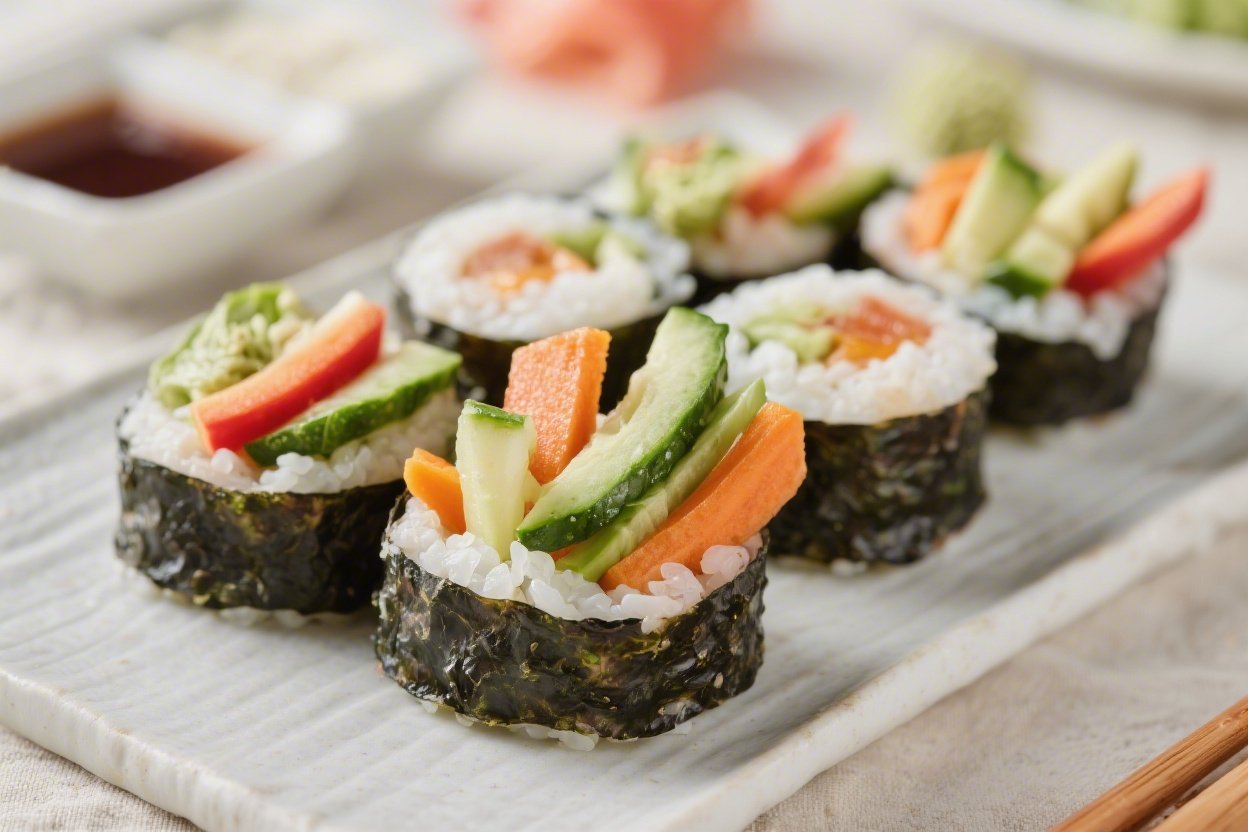
Vegan Veggie Sushi Rolls – Fresh, Colorful, and Simple
Sushi at home sounds fancy, but it’s actually simple once you try it. These Vegan Veggie Sushi Rolls are crisp, colorful, and satisfying, with a perfect balance of chewy rice and fresh vegetables. You don’t need special tools beyond a rolling mat and a sharp knife.
The flavors are clean and bright, and the textures make every bite fun. If you’re looking for a light lunch, a snack, or a party platter, this recipe fits right in.
What Makes This Recipe So Good
- Approachable for beginners: The process is straightforward, and the ingredients are easy to find.
- Endlessly customizable: Swap in whatever veggies you like. It’s a great clean-out-the-fridge meal.
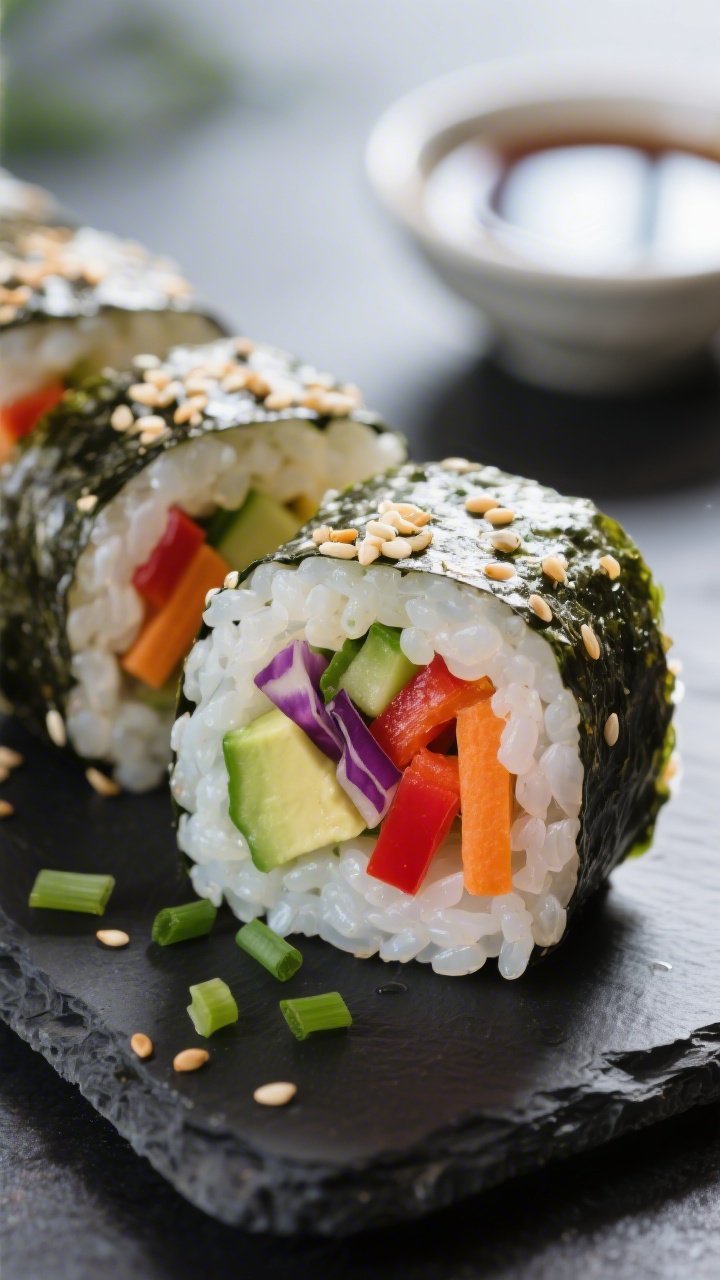
- Balanced texture: Creamy avocado, crisp cucumber, and tender rice make each roll satisfying.
- Naturally vegan and gluten-free-friendly: Use gluten-free tamari or coconut aminos in place of soy sauce if needed.
- Meal-prep friendly: You can prep the rice and veggies ahead to make rolling quick during the week.
Ingredients
- For the sushi rice:
- 1 1/2 cups sushi rice (short-grain Japanese rice)
- 2 cups water
- 3 tablespoons rice vinegar
- 1 tablespoon sugar (or maple syrup)
- 1/2 teaspoon fine sea salt
- For the rolls:
- 5–6 sheets nori (seaweed)
- 1 small cucumber, julienned (seeds removed if watery)
- 1 medium carrot, julienned
- 1 ripe avocado, sliced
- 1/2 red bell pepper, thinly sliced
- 1/2 cup purple cabbage, shredded thin
- 2 green onions, cut into matchsticks
- 2–3 tablespoons toasted sesame seeds
- For serving:
- Soy sauce, tamari, or coconut aminos
- Pickled ginger
- Wasabi (optional)
- Sriracha or vegan mayo mixed with sriracha (optional)
Step-by-Step Instructions
- Rinse the rice: Place the sushi rice in a bowl and cover with cold water.
Swirl, drain, and repeat 3–4 times until the water runs mostly clear. This removes excess starch and keeps the rice fluffy.
- Cook the rice: Combine rinsed rice and 2 cups water in a pot. Bring to a boil, reduce to low, cover, and cook 15 minutes.
Turn off heat and let steam, covered, for 10 minutes. Do not stir.
- Season the rice: In a small bowl, mix rice vinegar, sugar, and salt until dissolved. Transfer hot rice to a wide bowl.
Gently fold in the vinegar mixture with a spatula, using slicing motions to avoid mashing. Fan or cool to room temperature. The rice should be slightly sticky, glossy, and warm—not hot.
- Prep the veggies: Cut cucumber, carrot, bell pepper, avocado, and green onion into thin matchsticks.
Shred the cabbage finely. Keep everything dry; blot with a paper towel if needed.
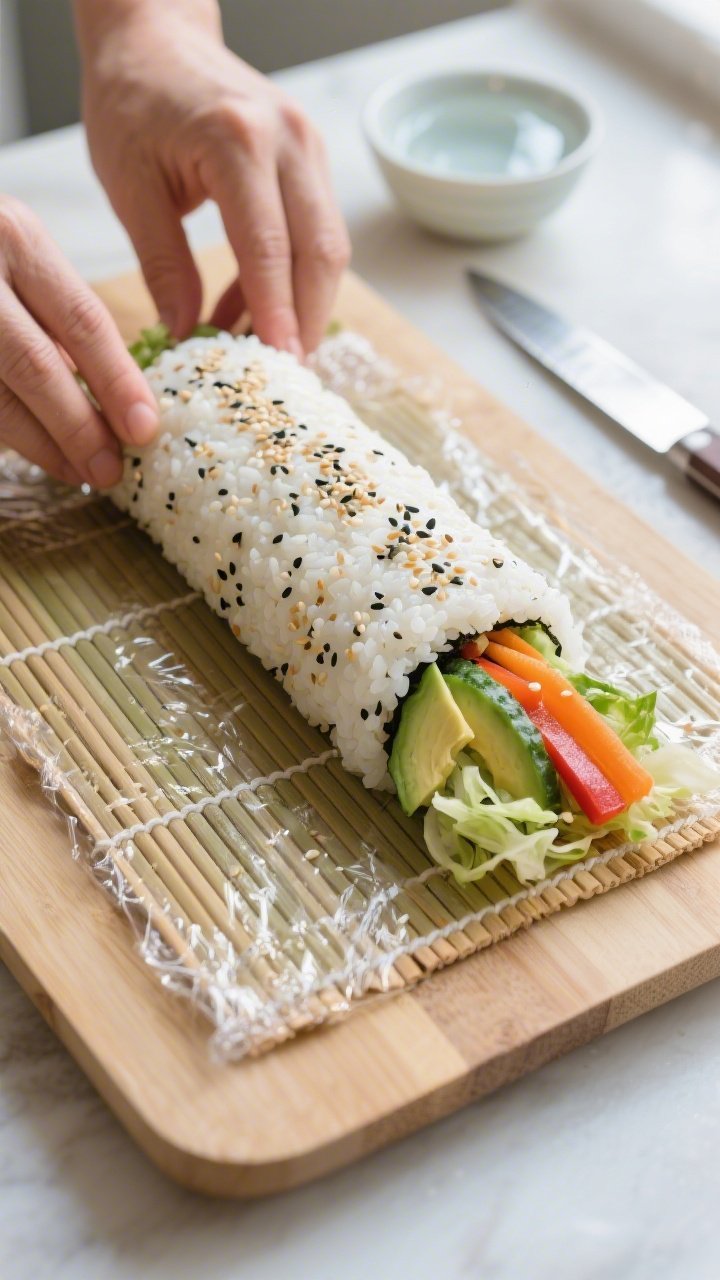
- Set up your station: Place a bamboo sushi mat on your counter and cover it with plastic wrap to prevent sticking. Keep a small bowl of water nearby to moisten your fingers and a sharp knife ready.
- Lay the nori: Place one nori sheet, shiny side down, on the mat with the lines running horizontally.
- Spread the rice: With damp fingers, spread about 3/4 cup rice over the nori, leaving a 1-inch strip bare at the top edge.
Don’t pack the rice; a thin, even layer is best.
- Add fillings: Sprinkle sesame seeds over the rice. Arrange a few strips of cucumber, carrot, bell pepper, avocado, cabbage, and green onion in a line across the bottom third of the rice.
- Roll it up: Lift the edge of the mat closest to you and roll it over the fillings, tucking as you go. Use gentle, even pressure to form a tight cylinder.
Pull the mat away as needed while continuing to roll.
- Seal: Moisten the bare nori strip with water and press to seal the roll.
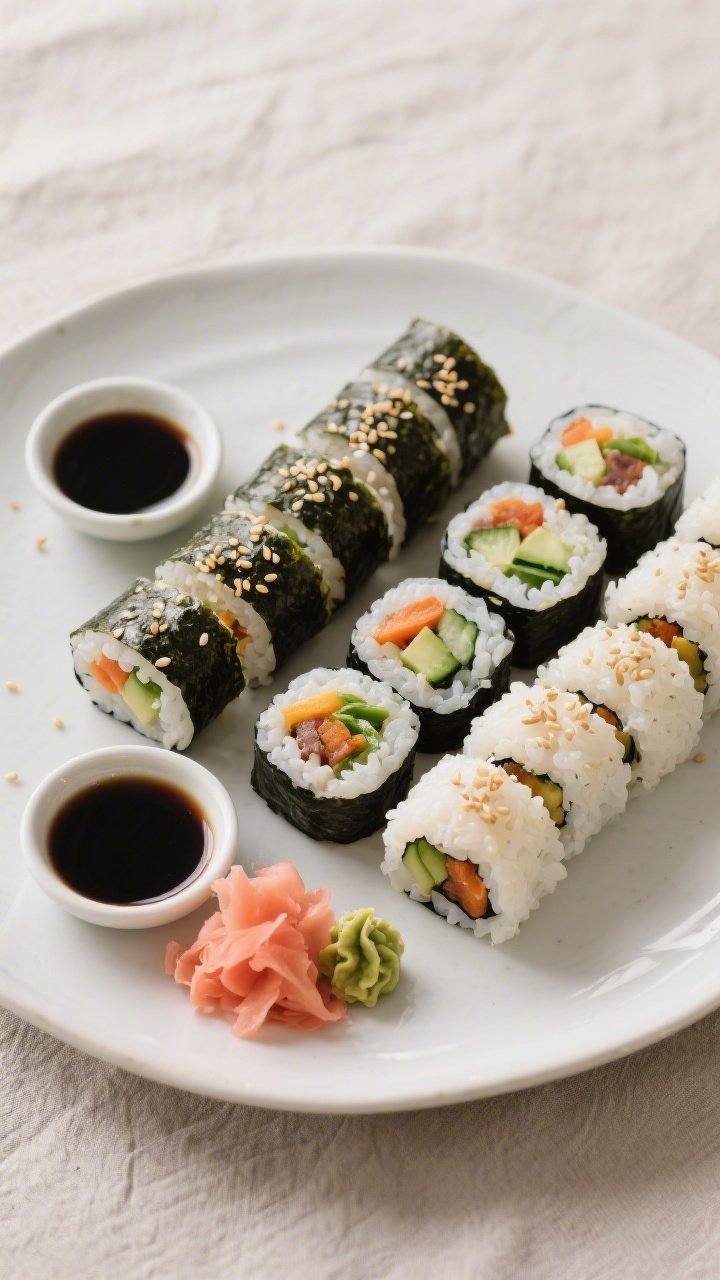
- Slice: Transfer the roll to a cutting board. Use a very sharp, damp knife to slice into 6–8 pieces, wiping the blade between cuts to keep clean edges.
- Repeat: Continue with remaining nori, rice, and vegetables. Serve immediately with soy sauce, pickled ginger, and wasabi if you like heat.
How to Store
- Short-term: Keep sliced rolls in an airtight container in the fridge for up to 24 hours.
Place a lightly damp paper towel on top to prevent the rice from drying.
- Make-ahead components: Cook and season the rice up to 1 day ahead, then cool and store covered at room temperature for a few hours or in the fridge. Bring to room temp before rolling. Slice veggies up to 2 days ahead and store them dry.
- Avoid freezing: Freezing affects the texture of rice and avocado, so it’s not recommended.
Why This is Good for You
- Fiber-rich veggies: Cucumber, carrot, cabbage, and bell pepper offer fiber that helps with digestion and keeps you full longer.
- Healthy fats: Avocado provides monounsaturated fats that support heart health and help absorb fat-soluble vitamins.
- Mineral boost: Nori contains iodine, iron, and trace minerals that support thyroid and overall health.
- Lower in calories, big on nutrients: The rolls feel light yet satisfying, especially compared to heavy takeout options.
Pitfalls to Watch Out For
- Rice too wet or too dry: Measure carefully.
Overcooked rice gets mushy; undercooked rice won’t stick. Rinse thoroughly and follow the cook/steam timing.
- Overfilling the roll: Too many fillings make it hard to roll and slice. Use a modest line of veggies.
- Knife not sharp enough: A dull knife will crush the roll.
Wet the blade and wipe between cuts for clean slices.
- Using hot rice: Hot rice softens the nori and turns it gummy. Let the rice cool to warm or room temp before rolling.
- Soggy veggies: Pat veggies dry. Excess moisture makes the rice slip and the nori tear.
Recipe Variations
- Spicy Avocado: Toss avocado slices with sriracha and a squeeze of lime before adding to the roll.
- Mango Crunch: Add thin mango strips and swap cabbage for julienned radish for a sweet-crisp combo.
- Tofu Boost: Add baked or air-fried tofu strips for extra protein.
Season with soy sauce and sesame oil.
- Inside-Out (Uramaki): Spread rice on the outside of the nori, sprinkle sesame seeds, flip, and fill. Roll using plastic wrap to prevent sticking.
- Brown Rice: Use short-grain brown rice for more fiber. Cook a bit longer and expect a slightly firmer bite.
- Herb Lift: Add fresh cilantro, basil, or shiso leaves for a bright herbal note.
FAQ
Do I Need a Bamboo Mat to Roll Sushi?
You can use a clean kitchen towel wrapped in plastic wrap as a substitute.
It won’t be quite as firm as a bamboo mat, but it gets the job done for home rolls.
What If I Can’t Find Sushi Rice?
Short-grain Japanese rice is best for the right stickiness and texture. In a pinch, use short-grain Calrose rice. Long-grain varieties won’t hold together well.
How Do I Keep the Rice From Sticking to My Hands?
Keep a small bowl of water nearby and dip your fingers often.
Slightly damp hands prevent sticking without adding too much moisture to the rice.
Can I Make These Gluten-Free?
Yes. Use gluten-free tamari or coconut aminos instead of soy sauce. Nori and plain rice are naturally gluten-free.
How Can I Make My Rolls Look Neater?
Cut fillings evenly, avoid overstuffing, and use a very sharp, damp knife.
Roll with firm, even pressure, and wipe the blade between each slice.
What’s the Best Way to Season the Rice Without Sugar?
Use maple syrup or agave in place of sugar, or reduce the sweetener and add a touch more vinegar and a pinch of salt. Balance is key to classic sushi rice flavor.
Can I Add Fruit to These Rolls?
Absolutely. Mango, strawberry, or even thin apple slices pair nicely with avocado and cucumber.
Keep the pieces thin so the roll stays tight.
How Many Rolls Does This Make?
With 1 1/2 cups of uncooked rice and moderate fillings, you’ll get about 5–6 rolls, or 30–48 pieces depending on how you slice them.
In Conclusion
Vegan Veggie Sushi Rolls are fresh, colorful, and easier than you might think. With a little prep and a few simple techniques, you can roll crisp, clean flavors at home any night of the week. Keep the rice balanced, the fillings simple, and your knife sharp.
Once you make a batch, you’ll want to keep the ingredients on hand for quick, feel-good meals.
Printable Recipe Card
Want just the essential recipe details without scrolling through the article? Get our printable recipe card with just the ingredients and instructions.